
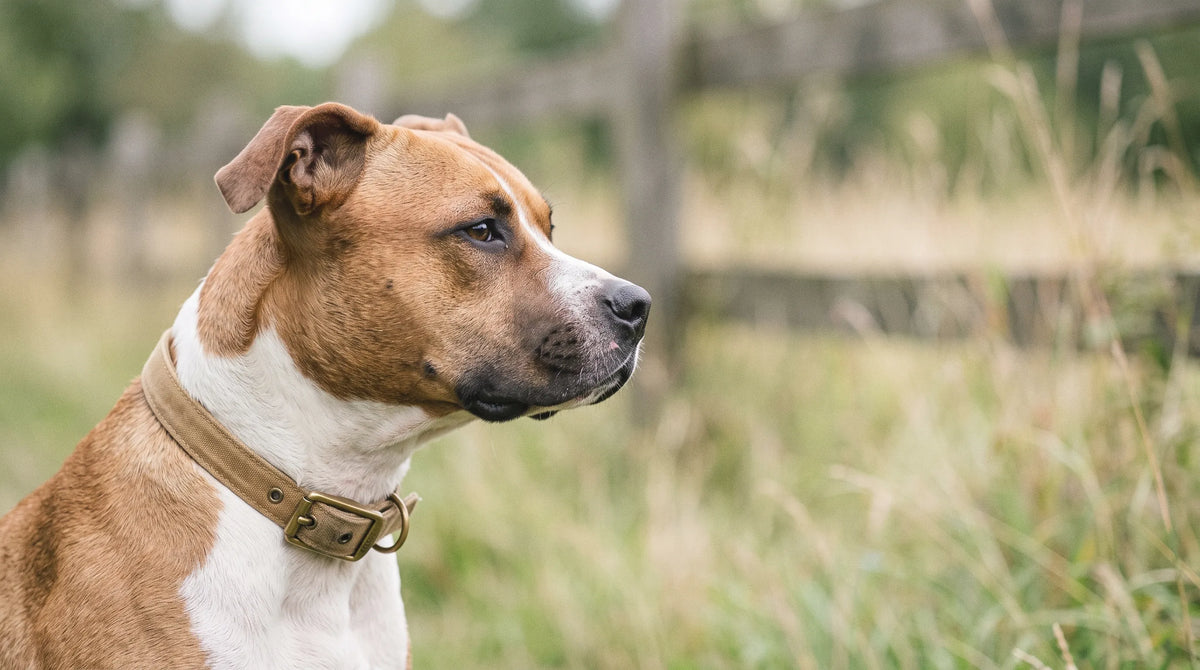
American Pit Bull Terrier
- Medium
- UKC Terrier Group
Courageous, athletic, and famously fond of children, the American Pit Bull Terrier is a medium-sized dog with a square head and a strong, muscular build. Loyal and eager to please, it thrives with an active family.
- Height
- 17 to 22
- inches at the shoulder
- Weight
- 30 to 66
- pounds, adult
- Life expectancy
- 12 to 14
- years, median 13
- Senior from
- 9.8
- years, about
Senior starts in the last quarter of a breed's expected lifespan, following the 2019 AAHA canine life stage guidelines. Individual dogs vary.
About the breed
- Origin
- United States
- Recognized
- 1898
The American Pit Bull Terrier (APBT) is a courageous, athletic dog known for its loyalty and love of children. These eager-to-please dogs have an enthusiastic, friendly nature.
Medium-sized, the APBT stands 17 to 22 inches tall and weighs 30 to 66 pounds, with a large, square head and a strong, athletic build. Affectionate and joyful, the breed forms close bonds with its people and is loving and protective around children. That friendliness extends even to strangers, which often makes APBTs ill-suited as guard dogs.
The breed dates back to 19th-century England, where fanciers crossed various terriers and bulldogs to create a dog with gameness, athleticism, and courage. The resulting dogs reached the United States in the late 1800s, and although early pit dogs were used for fighting, they had a gentle, hard-working nature. Farmers soon put them to work as herders, guardians, hunters, and companions.
A major US kennel registry was the first to recognize the breed, in 1898, registering the registry founder's own dog first; another US breed association accepted the APBT in 1909. The breed has since appeared in TV shows, advertising, and World War propaganda posters. One major US registry's reluctance to register a breed once tied to dog fighting led to the creation of the related but distinct American Staffordshire Terrier in 1936. Today the APBT serves as a working dog, a therapy dog, and a devoted family companion.
Care
The routines that matter most for this breed. Open one at a time.
Nutrition
American Pit Bull Terriers do well on a high-quality diet suited to their life stage. During puppyhood, consider a large-breed puppy formula so your dog grows at a moderate, steady pace rather than too fast. Most adult Pit Bulls do well on two meals a day, one in the morning and one in the evening, while puppies and senior dogs may benefit from smaller, more frequent feedings on a regular schedule.
Finding the right amount of food is a balancing act, since energy level, activity, age, and overall health all play a role. Most dog food packaging lists feeding amounts based on weight, which gives you a starting point, though some adjustment is usually needed. Watch your dog's body condition: a healthy Pit Bull is lean and muscular, with a noticeable waist and ribs that can be felt but not seen. Reduce portions if your dog gains excess weight, and keep treats to no more than 10% of daily calories. Regular veterinary visits help confirm your dog is getting a balanced, nutritious diet throughout life.
Supplements can complement a Pit Bull's diet, but they should never replace a balanced, complete diet:
- Glucosamine and chondroitin to support joint health
- Omega-3 fatty acids to support skin, coat, and immune health
- Vitamin E, an antioxidant that supports the immune system and skin and coat health
- Probiotics to support digestive and gut health
Because of their strong jaws, Pit Bulls may do better with heavy-duty stainless steel or ceramic bowls, which resist chewing and damage better than plastic.
Grooming
The APBT's short coat is low-maintenance. Weekly brushing with a soft-bristled brush, every week or two, removes loose hair and dirt; if your Pit Bull sheds more, brush more often. The short, thick coat shields the skin well, so Pit Bulls generally do not need special skin care, though like all dogs they can develop irritations after contact with grass, chemicals, or parasites. If you notice excessive licking, redness, swelling, or flaking, contact your veterinarian.
Pit Bulls do not need frequent baths, but you can bathe as needed to keep them clean. Use a gentle, dog-specific shampoo and avoid getting soap or water in the eyes, ears, and nose.
Check the ears regularly and clean them as needed to remove wax and debris, since warm, moist ear canals can let bacteria and yeast build up. Use a cotton ball or soft cloth moistened with a gentle, vet-approved solution to wipe the inside of the ear flap, and avoid cotton swabs, which can damage the delicate canal. Watch for redness, swelling, discharge, or odor, which can signal an infection, and see the vet if any appear.
Make nail trims part of the routine, since overly long nails can cause pain and make running or walking difficult. Some Pit Bulls are prone to tear stains, the dark, rust-colored marks under the eyes, so keep that area clean and dry with a cloth or dog-safe eye wipe. For dental care, build an at-home routine of regular teeth brushing and vet-recommended dental chews alongside professional cleanings.
Exercise
As athletic dogs, American Pit Bull Terriers need daily exercise to stay happy and healthy. Strong options include long leashed walks, runs (APBTs make excellent jogging buddies), or chasing a ball in the backyard. These sporty dogs also enjoy agility, flyball, rally, lure coursing, and dock jumping.
The right home for a Pit Bull is one with an active family who enjoys time outdoors. Be ready to devote time and attention to exercise and play, and to channel that high energy. Because they are big and energetic, Pit Bulls often do well in a home without small children, since they can be too exuberant and may unintentionally knock over smaller kids.
Mental exercise matters as much as physical activity. Competitive obedience training is a good fit, reinforcing desired behaviors while giving your dog something to think about.
Training
American Pit Bull Terriers are eager to please and relatively easy to train, though they can be a little stubborn and strong-willed. The breed responds well to firm, dedicated training that uses positive, reward-based methods. Brave and confident, these dogs need early socialization and obedience training to develop into predictable, well-mannered adults, and they may need help learning how to behave in new situations.
Well-trained and socialized Pit Bulls are often good with children and other pets, though you should supervise interactions between kids and dogs whatever the breed. With their high energy and intelligence, plan to put extra effort into keeping a Pit Bull entertained, well exercised, and mentally stimulated.
Pit Bulls are often called Velcro dogs for their strong bond with their people and their desire to stay close. That always-at-your-side trait can make them especially fun for older children who want a constant companion.
Health conditions
5 conditions are documented for the American Pit Bull Terrier.
A predisposition is not a diagnosis. Ask your vet which screenings make sense for your dog's age.
- AllergiesImmune System
- CataractsEye
- Hip DysplasiaBone & Joint
- MethemoglobinemiaBlood
- ObesityMetabolic
Sources
Thank you. Your report is in, and we will check this page.
Longevity & Vitality soft chew
Longevity & Vitality is a daily chew built on five active ingredients. Each chew carries Turkey Tail at 600mg, Curcuvet® curcumin at 75mg, Quercefit® quercetin at 40mg, Fibalance® at 275mg and EpiCor® at 50mg. The daily serving follows your dog's weight, from half a chew to three.
