
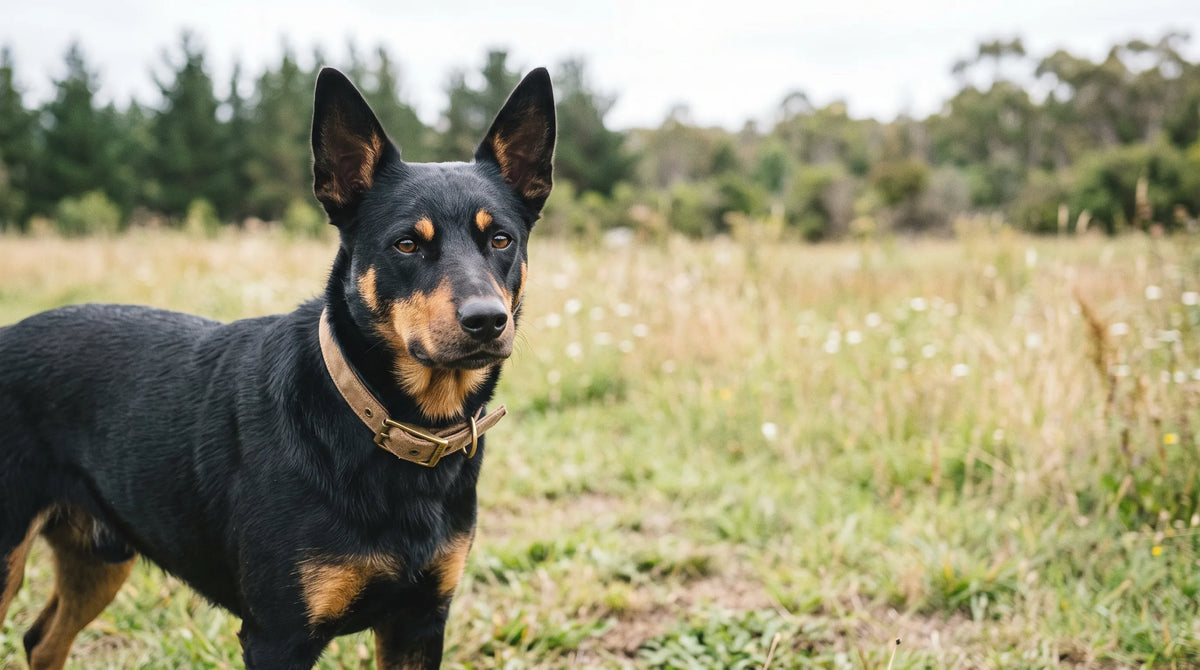
Australian Kelpie
- Medium
- Foundation Stock Service
The Australian Kelpie is a medium-sized Australian herding dog bred to work sheep across vast, sun-baked country. Alert, loyal, and intelligent, this high-energy partner thrives when given a job and daily exercise.
- Height
- 17 to 20
- inches at the shoulder
- Weight
- 35 to 50
- pounds, adult
- Life expectancy
- 10 to 13
- years, median 11.5
- Senior from
- 8.6
- years, about
Senior starts in the last quarter of a breed's expected lifespan, following the 2019 AAHA canine life stage guidelines. Individual dogs vary.
About the breed
- Temperament
- Alert, loyal, intelligent
- Coat
- Double, Smooth, short
- Origin
- Australia
The Australian Kelpie is a herding dog, intensely loyal and devoted to its work. It has a natural instinct and aptitude for working sheep, whether in open fields or enclosed yards.
This is a medium-sized dog, standing about 17 to 20 inches tall and weighing roughly 35 to 50 pounds. The breed wears a short, weatherproof double coat, and most lines are described as alert, loyal, and intelligent.
The Kelpie traces back to Collie-type dogs imported from Scotland. From there it was developed to withstand the harsh heat and dry conditions of Australia's wide open spaces, where it earned its reputation as a tireless worker that could run all day in tough country.
Temperament and needs
Scored 1 to 5 for the breed overall. Individual dogs vary.
- Affectionate with family3 out of 5
- Good with young children3 out of 5
- Good with other dogs3 out of 5
- Openness to strangers3 out of 5
- Playfulness3 out of 5
- Watchdog and protective nature4 out of 5
- Adaptability3 out of 5
- Trainability4 out of 5
- Energy level5 out of 5
- Mental stimulation needs4 out of 5
- Barking level1 out of 5
- Shedding3 out of 5
- Grooming frequency1 out of 5
- Drooling1 out of 5
Care
The routines that matter most for this breed. Open one at a time.
Nutrition
The Australian Kelpie does well on a high-quality dog food, whether commercially manufactured or home-prepared with your veterinarian's supervision and approval. Match the diet to the dog's life stage (puppy, adult, or senior), and consider a formula made for active breeds. Keep clean, fresh water available at all times.
These high-energy dogs don't tend to put on weight easily, but some individuals are prone to it, so watch calorie intake and body condition. Portion meals with a measuring cup rather than free-feeding, and keep treats to no more than 10 percent of daily calories. Treats are a useful training aid, but too many lead to obesity, and it helps to learn which human foods are safe for dogs and which are not.
A simple feeding rhythm works well:
- Adults: a measured amount twice a day
- Puppies: three or four measured meals a day
Caloric needs vary with size, metabolism, neuter status, activity level, and overall health, so the feeding guide on the food label is a starting point, not a rule. Talk with your veterinarian to calculate the right amount for your specific dog and to raise any weight or diet concerns.
Australian Kelpies may benefit from added omega-3 fatty acids, found in fish oil, some skin and joint supplements, and certain dog foods formulated to include them. These fatty acids support the skin, coat, kidneys, joints, and heart. Always speak with your vet before starting any supplement.
Grooming
The Australian Kelpie has a waterproof double coat with a short, dense undercoat. The outer coat lies close and flat, with each hair straight and hard, so it sheds rain well. Coat care is minimal: brush or comb at least once a week to remove dead hair and limit shedding.
During spring and fall, when these dogs blow their coats, reach for an undercoat rake several times a week. Most Kelpies need a bath only a few times a year, unless they get particularly dirty or smelly from time outside. They tend to have healthy skin and need no special skin care.
Clean the ears every two weeks to help keep them comfortable. If you notice heavy ear debris, head shaking, or scratching at the ears, take your dog to the vet. Keep the nails trimmed, and although no special eye grooming is needed, contact your veterinarian if you see squinting or eye discharge.
Like all breeds, Kelpies benefit from regular dental care, including at-home teeth brushing and professional cleanings.
Exercise
Australian Kelpies need a lot of exercise to be at their happiest. A good jog or long workout, paired with the mental work of obedience lessons, should be part of most days. Without enough activity, the breed can grow bored and destructive, and excess energy often surfaces as anxiety that leads to chewing and digging.
Kelpies prefer to have a job, but they also have an off switch. They can run five miles and then settle on the couch with the family to watch a movie. They are not suited to apartment living, since they need room to burn off their energy, and a short stroll around the block is not enough. Take them hiking, running, or swimming, or let them race around the dog park, and they will be ready to relax once they are well exercised.
These intelligent dogs also shine in dog sports such as agility, obedience, rally, dock diving, and herding. Mental stimulation matters just as much as physical work, so puzzle toys and games like hide and seek help keep their minds engaged.
Training
Australian Kelpies are intelligent and eager, which makes them strong students. They are keen for a job, so training keeps them happy and involved. Lean on positive reinforcement and rewards, and avoid repetitive drills, which make Kelpies lose interest. Fast-paced games and activities hold their attention.
Start obedience training and socialization early. Expose your Kelpie puppy to new things, including children and other animals, in supervised settings while young. This early exposure helps your dog stay comfortable in new situations as it grows, and regular socialization builds confidence around strangers.
Because the Kelpie is loyal and aims to please, training tends to be less of a struggle. When socialized well, most Kelpies do well with children and other pets, though their herding instinct may tempt them to herd whoever is moving. Proper training and supervision teach your dog that kids and other pets aren't for herding. Alongside training, a steady job or dog sport keeps their minds active and their bodies tired, which goes a long way toward heading off unwanted behavior.
Health conditions
6 conditions are documented for the Australian Kelpie.
A predisposition is not a diagnosis. Ask your vet which screenings make sense for your dog's age.
- Cerebellar AbiotrophyNervous System & Behavioral
- Collie Eye AnomalyEye
- Hip DysplasiaBone & Joint
- Intestinal Lipid MalabsorptionDigestive
- Patellar LuxationBone & Joint
Show all 6 conditions Show fewer
Sources
Thank you. Your report is in, and we will check this page.
Longevity & Vitality soft chew
Longevity & Vitality is a daily chew built on five active ingredients. Each chew carries Turkey Tail at 600mg, Curcuvet® curcumin at 75mg, Quercefit® quercetin at 40mg, Fibalance® at 275mg and EpiCor® at 50mg. The daily serving follows your dog's weight, from half a chew to three.
