
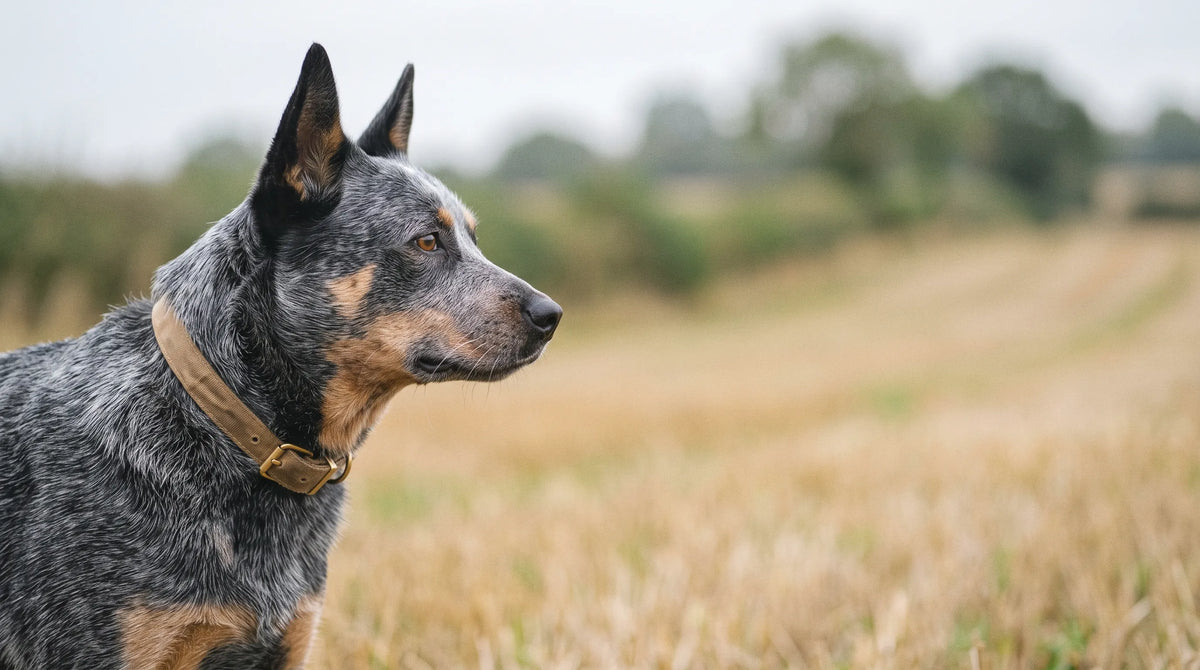
Australian Stumpy Tail Cattle Dog
- Medium
- Foundation Stock Service
The Australian Stumpy Tail Cattle Dog is a medium herding breed with high energy, intelligence, and stamina. Loyal and alert, this Velcro dog bonds hard with its people and needs a real job to thrive.
- Height
- 17 to 20
- inches at the shoulder
- Males 18 to 20, females 17 to 19 in
- Weight
- 32 to 45
- pounds, adult
- Life expectancy
- 12 to 15
- years, median 13.5
- Senior from
- 10.1
- years, about
Senior starts in the last quarter of a breed's expected lifespan, following the 2019 AAHA canine life stage guidelines. Individual dogs vary.
About the breed
- Temperament
- Alert, active, bidable
- Coat
- Double, short
- Origin
- Australia
The Australian Stumpy Tail Cattle Dog is a medium working breed from Australia, standing 17 to 20 inches and weighing 32 to 45 pounds. Despite the name, it is not an Australian Cattle Dog that lost its tail. It is a natural bob-tail breed, and some pups are even born with long tails. The two breeds share common ancestors but are entirely distinct.
Thought to be the first breed developed in Australia, the Stumpy traces its origins to the 1840s, when local working dogs were crossed with imported ones. The breed joined the Foundation Stock Service of the major US kennel registry in 2018. Over the years Stumpies have served in herding, search and rescue, service, therapy, police, and military roles, though they do not need an official job to thrive.
In temperament these dogs are alert, active, and biddable, with a short double coat. They are not always outwardly affectionate, but they are loyal, obedient companions who prefer to stay close to their people, which earns them the nickname Velcro dog. Strangers are another story, as most Stumpies need time to warm up to people they do not know.
Temperament and needs
Scored 1 to 5 for the breed overall. Individual dogs vary.
- Affectionate with family1 out of 5
- Good with young children3 out of 5
- Good with other dogs1 out of 5
- Openness to strangers1 out of 5
- Playfulness3 out of 5
- Watchdog and protective nature3 out of 5
- Adaptability3 out of 5
- Trainability3 out of 5
- Energy level5 out of 5
- Mental stimulation needs5 out of 5
- Barking level1 out of 5
- Shedding3 out of 5
- Grooming frequency3 out of 5
- Drooling1 out of 5
Care
The routines that matter most for this breed. Open one at a time.
Nutrition
Feed a high-quality dog food suited to your dog's life stage, whether puppy, adult, or senior. A food formulated for all life stages works well, as does one made for active breeds. Because these dogs are so active, feeding amounts vary with daily activity level, and a high-energy feed with non-GMO grains suits them. Transitioning from puppy food to adult food is not strictly necessary.
Most adult Stumpies eat two meals a day, one in the morning and one in the evening. Free feeding works as long as the dog does not gain weight. Puppies have a higher metabolism and may need three or four meals a day, so ask your vet to help set the schedule.
To decide how much to feed, do two things:
- Check the nutrition label on the food bag for a general calorie guide based on your dog's weight.
- Talk to your veterinarian for a personalized recommendation based on weight, body condition score, lifestyle, and health needs.
Though these highly active dogs are not known for being overweight, portion food with a measuring cup and keep treats to no more than 10 percent of daily calories so you do not overfeed. A Stumpy should get all the nutrients it needs from a complete and balanced dog food. Even so, your veterinarian may recommend supplements, such as joint supplements, to manage specific health needs. Talk to your vet before adding anything new to your dog's diet.
Grooming
Grooming needs are minimal. Weekly brushing with a slicker brush and a small-tooth comb keeps the short double coat in good condition, and you only need to bathe when the dog gets dirty. Facial whiskers do not need to be removed.
Shedding picks up in spring and fall during the semi-annual shedding seasons. Daily brushing through these stretches helps remove the dead undercoat and limit loose hair around the house.
The breed has fast-growing nails that may need almost-weekly trimming to keep them from becoming overgrown and sharp. If your Stumpy spends a lot of time outdoors, check regularly for burrs and debris that can lodge in the fur, and scan the skin for ticks even with year-round flea and tick prevention.
Stumpies are not prone to ear problems, but call your vet if you notice redness, swelling, discharge, or odor, and ask whether you should clean the ears and which cleaner to use. Watch the eyes for redness or changes in vision. Like all breeds, Stumpies benefit from regular dental care, so start a routine of at-home teeth brushing and professional cleanings to support good oral hygiene throughout their lives.
Exercise
The Stumpy has a very high energy level and needs daily exercise, a secure place to run, and mind-stimulating work. With high stamina, this breed can work stock all day in the tough conditions it was developed for. In the absence of a herding job, it still needs regular, high-intensity activity.
Long walks or runs, trips to the dog park, swimming, and hiking all let these dogs show off their endurance. They are intelligent and excel in herding, agility, rally, competitive obedience, and other dog sports. Puzzle toys and new tricks help satisfy their near-constant need for physical and mental stimulation. Bored, lonely Stumpies with energy to spare are more likely to chew and bark.
Keep all outdoor exercise on a leash or within a securely fenced area. Otherwise your Stumpy may follow its working and herding instincts into danger.
Prospective owners need time for daily mental and physical exercise, secure outdoor handling, close companionship, and veterinary care over a lifespan of 15 years or more.
Training
Stumpies train easily with reward-based methods. Stumpies solve problems, learn readily, and benefit from varied mental challenges. Keep sessions short and fun, but not repetitive, and lean on consistent positive reinforcement. Training also gives your dog mental enrichment and exercise.
Socialization is essential to temper their territorial instincts. Begin socializing and training your puppy as soon as you bring it home by introducing it to new animals, people, environments, activities, and objects, so it feels more comfortable in new situations throughout life. Ask your vet for age-appropriate socialization and training ideas.
Temperament ranges from people-friendly to a bit wary of strangers, and Stumpies are great with the people they know. They can act as a watchdog and alert you to strangers nearing the property. They tend to do best with older children who can safely interact with such a fearless, high-energy dog, and in homes where they can be the only dog, since they can be wary of other dogs.
Health conditions
6 conditions are documented for the Australian Stumpy Tail Cattle Dog.
A predisposition is not a diagnosis. Ask your vet which screenings make sense for your dog's age.
- DeafnessEar & Hearing
- Elbow DysplasiaBone & Joint
- Heat-related illness (including heatstroke)Metabolic
- Hip DysplasiaBone & Joint
- Primary Lens LuxationEye
Show all 6 conditions Show fewer
Sources
- American Kennel Club: Australian Stumpy Tail Cattle Dog
- PetMD: Australian Stumpy Tail Cattle Dog
- Wisdom Panel: Australian Stumpy Tail Cattle Dog
Thank you. Your report is in, and we will check this page.
Longevity & Vitality soft chew
Longevity & Vitality is a daily chew built on five active ingredients. Each chew carries Turkey Tail at 600mg, Curcuvet® curcumin at 75mg, Quercefit® quercetin at 40mg, Fibalance® at 275mg and EpiCor® at 50mg. The daily serving follows your dog's weight, from half a chew to three.
