
Bedlington Terrier
- Small
- Terrier Group
- Popularity rank 147
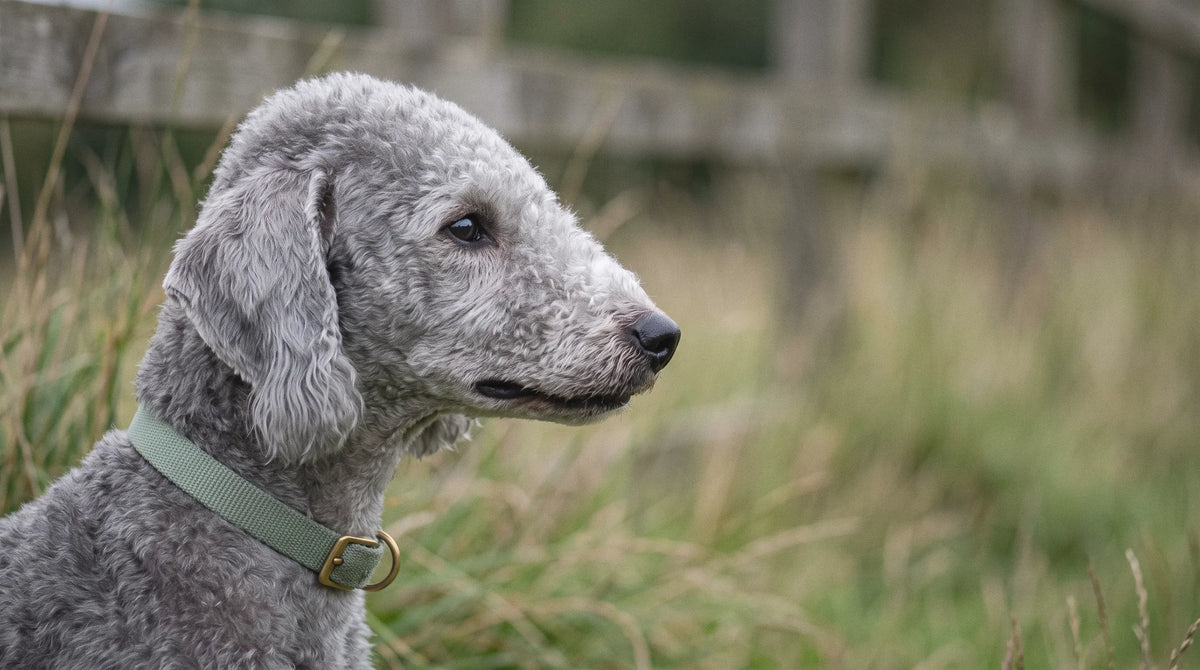
With a curly coat, arched back, and tapering head, the Bedlington Terrier is often mistaken for a lamb. This small, loyal terrier is charming and lively, devoted to its family yet still all hunter at heart.
- Height
- 15 to 17.5
- inches at the shoulder
- Weight
- 17 to 23
- pounds, adult
- Life expectancy
- 11 to 16
- years, median 13.5
- Senior from
- 10.1
- years, about
Senior starts in the last quarter of a breed's expected lifespan, following the 2019 AAHA canine life stage guidelines. Individual dogs vary.
About the breed
- Temperament
- Loyal, charming, frollicking
- Coat
- Curly, medium
- Origin
- United Kingdom
- Recognized
- 1886
2015: rank 146, 2016: rank 138, 2017: rank 151, 2018: rank 141, 2019: rank 153, 2020: rank 141, 2021: rank 133, 2022: rank 152, 2023: rank 149, 2024: rank 134, 2025: rank 147
People often ask if the Bedlington Terrier is a lamb, and the resemblance is real. A curly coat, an arched back, a thin tapering tail, and a pear-shaped head give this elegant breed its distinctive look. The curvy contours also point to sighthound ancestry, most likely Whippet, and Bedlingtons move with a light, springy step that turns fast when they give chase.
The breed comes from the mining town of Bedlington in Northumberland, England, where these terriers were first used to hunt vermin. Over time, their gentle nature and loyalty made them popular companions. The Terrier Group recognized the breed in 1886.
Full-grown, a Bedlington is a small dog that stands about 15 to 17.5 inches and weighs 17 to 23 pounds, with a soft, curly coat, a distinctive topknot, a narrow skull, a tapering muzzle, and almond-shaped eyes. Most live around 11 to 16 years.
The temperament is charming, loving, and loyal. These dogs bond strongly with their family and like to be the center of attention, and they tend to be protective of the people they love. Around strangers they can be reserved and cautious, so consistent socialization from puppyhood matters. They are calm at home, but they are still terriers, with a prey drive that can send them after rabbits, squirrels, and sometimes cats.
Temperament and needs
Scored 1 to 5 for the breed overall. Individual dogs vary.
- Affectionate with family3 out of 5
- Good with young children3 out of 5
- Good with other dogs3 out of 5
- Openness to strangers3 out of 5
- Playfulness3 out of 5
- Watchdog and protective nature4 out of 5
- Adaptability3 out of 5
- Trainability3 out of 5
- Energy level4 out of 5
- Mental stimulation needs3 out of 5
- Barking level3 out of 5
- Shedding1 out of 5
- Grooming frequency3 out of 5
- Drooling1 out of 5
Care
The routines that matter most for this breed. Open one at a time.
Nutrition
The Bedlington does well on a high-quality dog food, whether commercially made or home-prepared with your veterinarian's supervision and approval. Choose a food that meets recognized feed-control nutritional standards, and match it to the dog's life stage. Keep clean, fresh water available at all times.
Meal frequency shifts with age:
- Puppies need frequent meals to fuel growth and high energy.
- Adults generally do well on two meals a day.
- Seniors may handle smaller, more frequent meals more easily.
To set portion sizes, start with the guidelines on the food bag, then factor in age, activity level, and weight. Some Bedlingtons gain weight as they age, so watch calorie intake and keep treats modest, since too many lead to obesity. The distinctive head shape and topknot call for a wide, shallow bowl to prevent the coat from tangling while the dog eats.
Some Bedlingtons benefit from supplements such as omega-3 fatty acids, joint support, copper management, and probiotics. A healthy dog on a complete, balanced diet generally does not need extra supplementation. Talk to your veterinarian before giving any supplement, and check with them about which human foods are safe and about any weight or diet concerns.
Grooming
The crisp, curly Bedlington coat mixes soft and harsh hair, though it is not wiry. It barely sheds, which fastidious owners appreciate, but it grows quickly and needs clipping every two months or so. Some owners learn the process, which uses both electric clippers and scissors, while others prefer a professional groomer.
Between clips, brush or comb the coat once or twice a week, if not daily. Regular grooming distributes the skin's natural oils and prevents matting, which tends to form where there is friction or trapped moisture. Occasional baths with a gentle, hypoallergenic moisturizing shampoo or conditioner help keep the coat clean, and Bedlingtons do not usually need a special skin care routine.
Trim the nails regularly, since overly long nails cause pain and make walking and running difficult. Every dog needs dental care, including at-home tooth brushing and professional cleanings, and good dental hygiene supports long-term health.
Check the ears regularly for redness, irritation, discharge, or odor, and clean them routinely to help avoid problems. The topknot and longer hair around the eyes can obstruct vision, so trimming it improves sight and comfort. Bedlingtons may also develop tear stains, and wiping around the eyes with a damp cloth helps minimize them.
Exercise
Like most terriers, Bedlingtons have a fair amount of energy and need regular exercise to stay fit and happy. They are energetic but not rambunctious, and a Bedlington loves a game of fetch or a long walk or run, then happily curls up on the couch with the family.
Despite the lamb-like looks, these dogs were bred to chase small animals, and that instinct still runs strong. Give them a fenced yard and keep them on a leash for all walks. The hunting background also shows up as a fondness for digging. They are not overly anxious, but they can be sensitive to abrupt changes in their environment.
Those same instincts, paired with easy trainability, make Bedlingtons strong candidates for dog sports. Many enjoy agility, obedience, tracking, and earthdog competitions, all of which give body and mind a good workout.
A Bedlington flourishes in an active, affectionate home with regular exercise, mental stimulation, dedicated grooming, and plenty of attention. Be ready to meet those needs before bringing one home.
Training
Early socialization and puppy training are recommended for every dog. Bedlingtons can be stubborn and independent, like most terriers, but they are also intelligent and eager to please, so they respond well to regular, positive training. Praise and food rewards work far better than harsh methods or physical correction, which can turn training into a battle of wills.
This curious, intelligent dog is generally easy to train. A Bedlington's temperament shapes the process, so understanding its playful, curious nature helps you tailor your approach and build in activities that engage its energy.
Bedlingtons suit families with older children who interact gently and know not to pull fur or tail. They may live with a cat or another pet if introduced properly and early in life, though their strong hunting instinct still makes small outdoor animals potential targets for chasing.
Positive reinforcement, consistency, patience, and challenges for both body and mind lead to strong, lasting training results.
Health conditions
5 conditions are documented for the Bedlington Terrier.
A predisposition is not a diagnosis. Ask your vet which screenings make sense for your dog's age.
- Copper ToxicosisLiver
- Copper Toxicosis (Accumulating)Liver
- Eye ProblemsEye
- Hereditary Footpad HyperkeratosisSkin & Connective Tissue
- Patellar LuxationBone & Joint


Sources
Thank you. Your report is in, and we will check this page.
Longevity & Vitality soft chew
Longevity & Vitality is a daily chew built on five active ingredients. Each chew carries Turkey Tail at 600mg, Curcuvet® curcumin at 75mg, Quercefit® quercetin at 40mg, Fibalance® at 275mg and EpiCor® at 50mg. The daily serving follows your dog's weight, from half a chew to three.
