
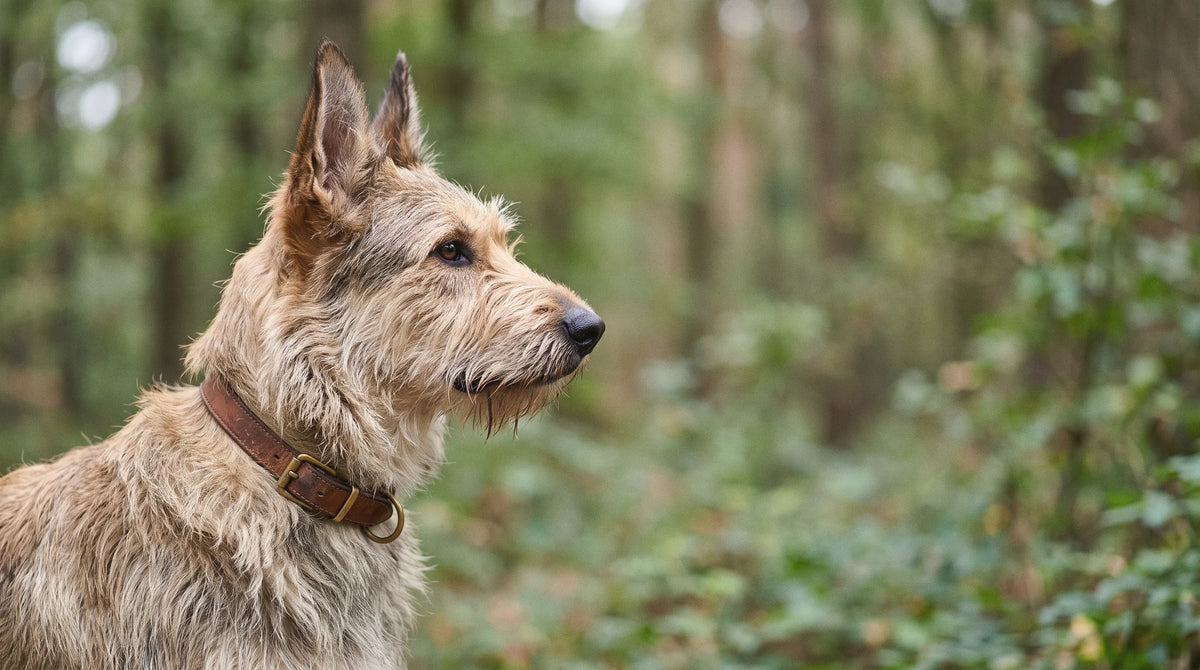
Berger Picard
- Large
- Herding Group
- Popularity rank 166
The Berger Picard is a rugged French herding dog, instantly known by its tall erect ears, shaggy brindle or fawn coat, and bearded, worldly face. Loyal and observant, this large, high-energy companion needs a job and an active home.
- Height
- 21.5 to 25.5
- inches at the shoulder
- Weight
- 50 to 70
- pounds, adult
- Life expectancy
- 12 to 13
- years, median 12.5
- Senior from
- 9.4
- years, about
Senior starts in the last quarter of a breed's expected lifespan, following the 2019 AAHA canine life stage guidelines. Individual dogs vary.
About the breed
- Temperament
- Loyal, good-natured, observant
- Coat
- Wiry, medium
- Origin
- France
- Recognized
- 2015
2016: rank 141, 2017: rank 146, 2018: rank 144, 2019: rank 148, 2020: rank 151, 2021: rank 163, 2022: rank 153, 2023: rank 157, 2024: rank 166, 2025: rank 166
The Berger Picard (pronounced bare-ZHAY pee-CARR) is a French herding dog. Berger is French for shepherd, and Picard refers to the Picardy region of France, so you may also hear them called Picards or Picardy Shepherds. Recognized as a breed in 2015, this member of the Herding Group was bred to move sheep and cattle.
You can spot a Picard from a distance. The erect ears stand 4 to 5 inches high, and the wavy coat comes in fawn or brindle. A rectangular head carries shaggy eyebrows, a beard, and a mustache that frame the dark, glistening eyes. The strong tail tapers to a distinctive J-hook.
This is a large dog, standing about 21.5 to 25.5 inches tall and weighing 50 to 70 pounds, with a muscular build and long legs suited to the work it was made for. Most Picards live around 12 to 13 years.
In temperament, the Picard is loyal, good-natured, and observant. The breed standard also describes them as lively, alert, confident, and even-tempered, traits that served them well in the field and translate nicely to life as an active family's companion.
Temperament and needs
Scored 1 to 5 for the breed overall. Individual dogs vary.
- Affectionate with family3 out of 5
- Good with young children3 out of 5
- Good with other dogs3 out of 5
- Openness to strangers3 out of 5
- Playfulness3 out of 5
- Watchdog and protective nature4 out of 5
- Adaptability3 out of 5
- Trainability4 out of 5
- Energy level4 out of 5
- Mental stimulation needs4 out of 5
- Barking level2 out of 5
- Shedding3 out of 5
- Grooming frequency1 out of 5
- Drooling1 out of 5
Care
The routines that matter most for this breed. Open one at a time.
Nutrition
The Berger Picard does well on a high-quality dog food, whether commercially made or home-prepared under your veterinarian's supervision. Match the food to your dog's life stage, whether puppy, adult, or senior, and consider a diet formulated for active breeds. Keep clean, fresh water available at all times.
Most adult Picards do well on two meals a day, morning and evening. Puppies have a higher metabolism and may need three feedings: morning, midday, and evening. The label on your dog's food gives a rough feeding guide, but your veterinarian can offer more accurate guidance based on your dog's age, weight, body condition score, lifestyle, and health.
These are athletic, active dogs, but some gain weight easily, so watch portions. Measure meals with a cup, and count treats in the daily calorie total, keeping them to no more than 10% of daily calories. It also helps to know which human foods are safe for dogs and which are not.
If your Picard eats a complete, balanced food that meets established nutritional standards, extra supplementation may not be needed. Some owners add joint support as dogs age. Talk to your veterinarian before adding any supplement, and check in about any weight or diet concerns.
Grooming
The Berger Picard's double coat pairs a soft, dense undercoat for insulation with a shaggy, wiry, waterproof topcoat. It resists matting, so for most of the year a Picard needs brushing only about once a month. Step up your effort in spring and summer, when the dog sheds its undercoat, brushing every day or two with a rake and a slicker brush to pull dead hair before it reaches the floor. Trimming the coat is not recommended.
This is a low-odor breed with a low-oil coat that repels dirt, so baths are rarely necessary. When you do bathe, use a shampoo formulated for crisp coats, and ask your veterinarian how often makes sense for your dog.
Keep the nails trimmed and the ears clean, using products your vet recommends. Call your vet if you notice redness, odor, pain, itchiness, or head shaking, which can point to an ear infection; frequent ear infections are worth mentioning to your vet. Watch the eyes for redness or discharge, and support good dental health with at-home teeth brushing and professional cleanings.
Exercise
Bred to work the fields, the Berger Picard is active and athletic, with plenty of stamina and drive. This high-energy breed needs lots of daily exercise plus mental stimulation, and without a good outlet for that energy a Picard can become bored, restless, and destructive.
Expect at least one long walk every day. Picards also make excellent companions on hikes and bike rides, and many enjoy swimming and fetch. The breed shines in dog sports, including agility, tracking, obedience, protection sport, flyball, French ring sport, rally, and herding.
Keep their minds busy too. Puzzle toys are a simple way to engage a sharp, working brain between outings. Because Picards have a high prey drive and will chase whatever moves, all outdoor exercise should happen on a leash or within a securely fenced area. With daily activity and close companionship, a Picard is typically patient and calm indoors, and can even adapt to city life.
Training
Picards are highly intelligent and eager to please, with a stubborn, independent streak. They learn new things easily but may choose to ignore a command, so start training as early as possible to head off bad habits. Keep sessions short, fast-paced, and engaging, since these natural problem solvers dislike repetition.
This is a sensitive breed. They respond to praise and affection more than to food, and harsh reprimands or punishment can cause them to shut down. Positive, rewards-based training channels their energy in good directions.
Early socialization is a must. Safely introduce your Picard puppy to new people, animals, places, and situations during their first 16 weeks to help them grow into a confident, comfortable adult. Picards form a close attachment to their main person, and socialization helps them warm up to others and rely less on one person. Ask your breeder how they approached socialization, and ask your vet which activities are safe for your puppy's age.
Though often called one-person dogs, Picards can get along with people of all ages. They tend to be reserved with strangers and need time to warm up. Because of their high prey drive, they may not suit homes with smaller pets.
Health conditions
4 conditions are documented for the Berger Picard.
A predisposition is not a diagnosis. Ask your vet which screenings make sense for your dog's age.
- Dilated CardiomyopathyHeart
- Hip DysplasiaBone & Joint
- HypothyroidismHormonal
- Progressive Retinal AtrophyEye


Sources
Thank you. Your report is in, and we will check this page.
Longevity & Vitality soft chew
Longevity & Vitality is a daily chew built on five active ingredients. Each chew carries Turkey Tail at 600mg, Curcuvet® curcumin at 75mg, Quercefit® quercetin at 40mg, Fibalance® at 275mg and EpiCor® at 50mg. The daily serving follows your dog's weight, from half a chew to three.
