
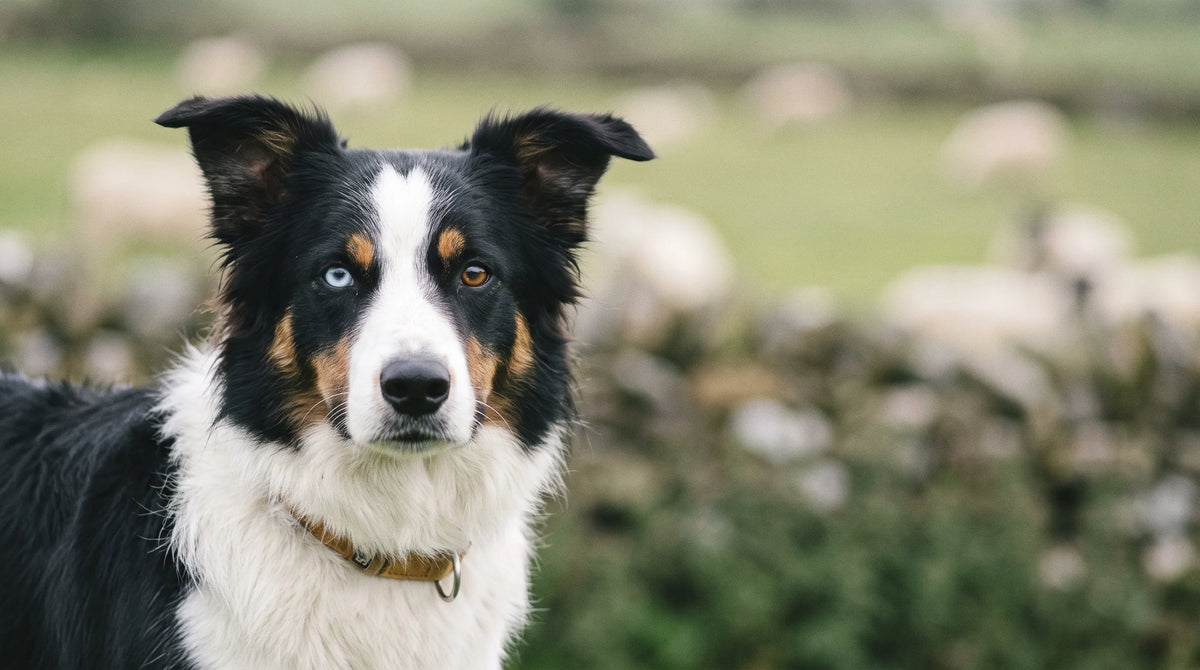
Border Aussie
- Medium
The Border Aussie crosses a Border Collie with an Australian Shepherd and weighs 30 to 65 pounds. It inherits two of the smartest working breeds there are, and it needs one to two hours of activity every day.
- Weight
- 30 to 65
- pounds, adult
- Life expectancy
- 12 to 15
- years, median 13.5
- Senior from
- 10.1
- years, about
Senior starts in the last quarter of a breed's expected lifespan, following the 2019 AAHA canine life stage guidelines. Individual dogs vary.
About the breed
- Temperament
- Intelligent, energetic, loyal, affectionate, alert, trainable
- Coat
- Double, medium
The Border Aussie is the offspring of two popular herding dogs, the Border Collie and the Australian Shepherd. It is a recent crossbreed with no set standard, so it varies in both appearance and temperament and the parents are the guide.
Both parents are energetic and highly intelligent, and the cross is a medium-sized dog of 30 to 65 pounds with maximum amounts of smarts, biddability and energy. Strong working instincts come with all of that, and they need somewhere to go.
Understanding the herding genetics is the core of caring for one. These are the offspring of two breeds fairly described as workaholics, and a Border Aussie needs a job that supplies intense physical and mental exercise. Being a family pet can count as the job, provided you supply one to two hours of daily activity to go with it.
Given proper socialisation and training, Border Aussies are good-natured dogs that get on with people of every age and with other pets. Without direction and outlets, the instincts find their own use: herding other animals or children, reserve around strangers, and excessive barking. Lifespan is 12 to 15 years.
Care
The routines that matter most for this breed. Open one at a time.
Nutrition
There is no one-size-fits-all plan for a Border Aussie. Work with your vet on a diet that is nutritionally complete and balanced for your dog's age, weight, lifestyle and health.
Lifestyle matters more here than for most dogs. Border Collie and Australian Shepherd mixes are athletic and highly energetic, and a performance-formulated food may suit one that is getting its full one to two hours a day.
Match the food to the life stage without exception: puppy food for puppies, adult food for adults, and a senior formula once your vet says the time has come.
Most adults eat twice a day, roughly twelve hours apart. Border Aussie puppies run a faster metabolism and generally do better with a midday meal added, making three.
Grooming
Like most working breeds, a Border Aussie is unfussy about grooming. The thick, weather-resistant double coat needs brushing only once or twice a week.
Shedding season is the exception. Twice a year the coat turns over and the sensible response is to step the brushing up rather than to keep to the schedule and lose the argument with the furniture.
Use the grooming time to check the ears and eyes. This cross carries progressive retinal atrophy from both parents and congenital deafness associated with merle and white coats, so a dog that seems clumsy in dim light, or that stops responding from one side, is telling you something worth investigating.
One thing that is not a grooming matter but belongs with the rest of the health admin: MDR1 drug sensitivity runs in herding breeds and makes affected dogs dangerously sensitive to certain medications. A DNA test settles it, and knowing the result before your dog needs treatment is worth far more than knowing it afterwards.
Exercise
One to two hours of daily activity is the stated requirement, and it is a floor rather than a target for a dog descended from two workaholic breeds.
Quality matters as much as duration. What a Border Aussie needs is intense physical AND mental exercise, so herding trials, agility, obedience work, scent games and complex training all count for more than an equivalent number of minutes on a leash.
Being a family pet can be the job, provided the one to two hours of daily activity come with it. The title does not matter to your dog; the work does.
When the exercise falls short, it shows. An under-worked Border Aussie starts herding the other animals or the children, becomes reserved with visitors, and barks, and all three come from the same unmet need.
Training
Maximum biddability is one of the three things this cross reliably inherits, alongside smarts and energy, which makes a Border Aussie one of the most trainable dogs you will meet. Getting the behaviour is easy; the hard part is filling the day.
Socialise thoroughly and early. The good nature this cross is known for depends on that work, and the reserve around strangers is far easier to prevent than to unpick.
Give the herding instinct a legitimate outlet before it finds an illegitimate one. Training games that ask for control, direction and stopping on cue play straight to what the dog already wants to do.
Treat barking as information. In a working cross it usually means the brain has been left idle, and the answer is a harder problem to solve rather than a quieter dog.
Health conditions
5 conditions are documented for the Border Aussie.
A predisposition is not a diagnosis. Ask your vet which screenings make sense for your dog's age.
- DeafnessEar & Hearing
- Hip DysplasiaBone & Joint
- Idiopathic epilepsy, including epilepsy of unknown originNervous System & Behavioral
- MDR1 Drug SensitivityMetabolic
- Progressive Retinal AtrophyEye
May inherit from parent breeds
These conditions are documented in the parent breeds, not in this cross itself. Carrier possible means the condition is recessive: a dog can carry it without showing signs. Ask the breeder which tests the parent dogs had.
- Canine Multifocal Retinopathy, cmr1Australian Shepherd
- CataractsAustralian Shepherd
- Cobalamin MalabsorptionBorder Collie
- Collie Eye AnomalyCarrier possible · Australian Shepherd, Border Collie
- Degenerative MyelopathyCarrier possible · Australian Shepherd
Show all 27 conditions Show fewer
- Goniodysgenesis and GlaucomaBorder Collie
- Heat-related illness (including heatstroke)Border Collie
- HemangiosarcomaAustralian Shepherd
- Hereditary Cerebellar AtaxiaAustralian Shepherd
- Hip and Elbow DysplasiaAustralian Shepherd
- Iris ColobomaAustralian Shepherd
- Junctional Epidermolysis BullosaAustralian Shepherd
- LymphomaAustralian Shepherd
- Myotonia CongenitaBorder Collie
- Neuronal Ceroid LipofuscinosisCarrier possible · Border Collie
- Neuronal Ceroid Lipofuscinosis 5Carrier possible · Border Collie
- Neuronal Ceroid Lipofuscinosis 8Carrier possible · Australian Shepherd
- OsteoarthritisBorder Collie
- Primary Lens LuxationCarrier possible · Border Collie
- Primary uterine inertiaBorder Collie
- Progressive Retinal Atrophy, prcdAustralian Shepherd
- Raine SyndromeBorder Collie
- Sensory NeuropathyBorder Collie
- Steroid-responsive meningitis-arteritisBorder Collie
- Trapped Neutrophil SyndromeCarrier possible · Border Collie
- Urate Kidney & Bladder StonesCarrier possible · Australian Shepherd
- Vesicular cutaneous lupus erythematosusBorder Collie

Longevity & Vitality soft chew
Longevity & Vitality is a daily chew built on five active ingredients. Each chew carries Turkey Tail at 600mg, Curcuvet® curcumin at 75mg, Quercefit® quercetin at 40mg, Fibalance® at 275mg and EpiCor® at 50mg. The daily serving follows your dog's weight, from half a chew to three.
