
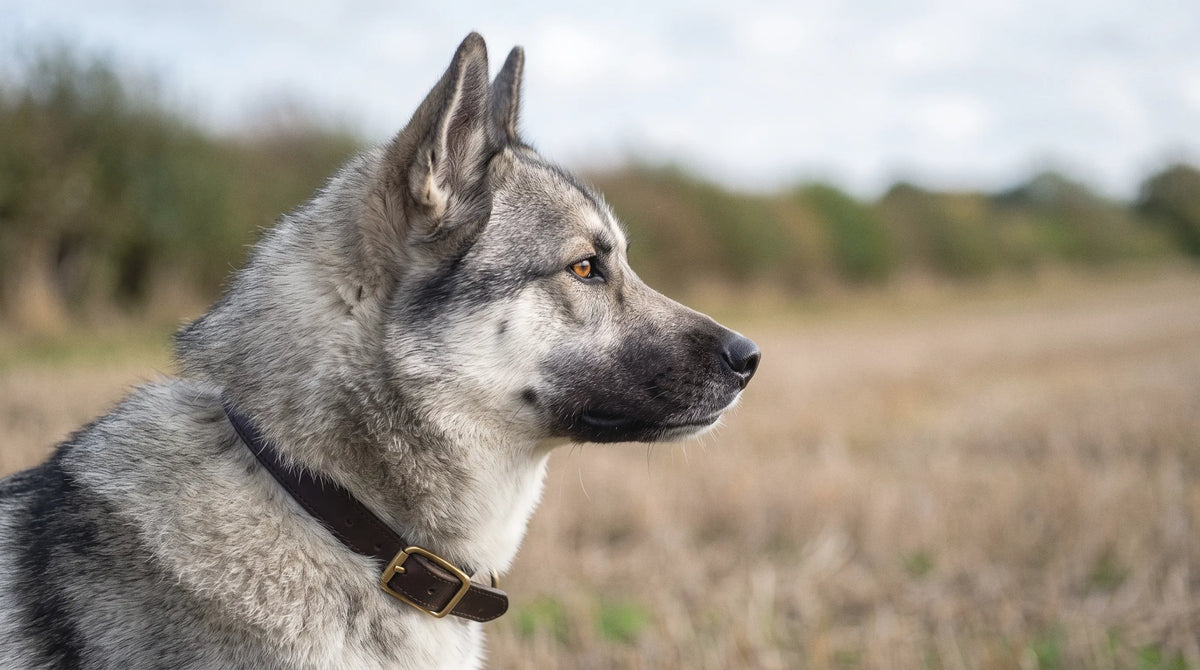
Canadian Eskimo Dog
- Large
- Foundation Stock Service
The Canadian Eskimo Dog is an ancient Arctic sled breed shaped by centuries of work alongside the Inuit. Loyal, intelligent, and affectionate, this large dog has deep stamina and a strong instinct to pull.
- Height
- 19.5 to 27.5
- inches at the shoulder
- Males 23 to 27.5, females 19.5 to 23.5 in
- Weight
- 40 to 88
- pounds, adult
- Males 66 to 88, females 40 to 66 lb
- Life expectancy
- 10 to 15
- years, median 12.5
- Senior from
- 9.4
- years, about
Senior starts in the last quarter of a breed's expected lifespan, following the 2019 AAHA canine life stage guidelines. Individual dogs vary.
About the breed
- Temperament
- Loyal, intelligent, affectionate
- Coat
- Double, long
- Origin
- Canada
The Canadian Eskimo Dog, also known as the Inuit Dog or Qimmiq, is an aboriginal Arctic breed with a history stretching back well over a thousand years. That history is closely tied to the Thule culture of the Inuit, who occupied the coastal and archipelago regions of what is now Arctic Canada. Today's dogs trace mainly to a multi-year recovery effort in the Northwest Territories, which gathered stock from the remnant population kept by the Inuit of the Boothia Peninsula, Melville Peninsula, and parts of Baffin Island.
This is a large, powerfully built working dog. Males stand about 23 to 27.5 inches and weigh roughly 66 to 88 pounds, while females are smaller at about 19.5 to 23.5 inches and 40 to 66 pounds. A dense double coat suits the breed to cold climates. Typical lifespan runs 10 to 15 years.
For centuries the breed served as a draught animal, hauling heavy loads over long distances, and as a hunting dog that located seal breathing holes and held musk ox and polar bear at bay. Loyal, intelligent, and affectionate, the Canadian Eskimo Dog carries that working heritage into the home.
Temperament and needs
Scored 1 to 5 for the breed overall. Individual dogs vary.
- Affectionate with family3 out of 5
- Good with young children3 out of 5
- Good with other dogs3 out of 5
- Openness to strangers5 out of 5
- Playfulness5 out of 5
- Watchdog and protective nature1 out of 5
- Adaptability3 out of 5
- Trainability3 out of 5
- Energy level5 out of 5
- Mental stimulation needs5 out of 5
- Shedding5 out of 5
- Grooming frequency5 out of 5
- Drooling1 out of 5
Care
The routines that matter most for this breed. Open one at a time.
Nutrition
The Canadian Eskimo Dog is high-energy and needs a quality, age-appropriate food. This can be commercially made or homemade under a veterinarian's supervision and approval. A typical diet includes raw meat with ground bones and vegetables, plus a kibble made for Arctic dogs with a high fat content. Historically the breed ate walrus, seal, caribou, and fish.
Portion size depends on your dog's age and whether you feed one or two meals a day. Bred to work hard on very little food, these dogs usually do not overeat, but it still helps to monitor how much goes in the bowl.
Reduce portions or restrict calories if your dog gains excess weight. Too many treats on top of regular meals can add up, so keep them modest.
Grooming
Weekly brushing keeps the Canadian Eskimo Dog's thick double coat looking its best. The breed needs extra grooming in late summer to help shed the dense undercoat, and a coat rake works well for this and for any matted fur, which can otherwise lead to skin problems.
Canadian Eskimo Dogs need regular nail trims and ear cleanings. Provide dental care with at-home teeth brushing and annual professional cleanings.
Exercise
The Canadian Eskimo Dog was bred to haul large loads across long distances, often up to 40 miles a day, and it comes with an innate instinct to pull. A walk around the block is not enough. This breed needs plenty of outdoor exercise with room to romp.
Dog sledding, bikejoring, skijoring, backpacking, and canicross are ideal outlets, as are weight-pulling competitions and play with other dogs in a fenced yard. These activities give the breed the physical work and mental engagement it craves.
Even with enough exercise, Canadian Eskimo Dogs may look for chances to escape and run free. A tall, partially buried fence helps prevent climbing and digging.
Training
Training should begin in puppyhood. Positive, reward-based methods establish a pack order with you as the leader, which also helps you manage the breed's guarding tendencies. The Inuit traditionally train their dogs to pull from a young age, starting with very light objects, and dogs should not handle heavy loads until they are at least twelve months old.
Canadian Eskimo Dogs can be gentle and enjoy affection, even from strangers, but early socialization is key to encouraging those behaviors. Even with rigorous training, they should be supervised around children.
For safety, these dogs should not be let off the leash in unsecured areas.
Health conditions
5 conditions are documented for the Canadian Eskimo Dog.
A predisposition is not a diagnosis. Ask your vet which screenings make sense for your dog's age.
- Addison's DiseaseHormonal
- CataractsEye
- CryptorchidismUrinary & Reproductive
- Hip DysplasiaBone & Joint
- Retinal DetachmentEye


Sources
Thank you. Your report is in, and we will check this page.
Longevity & Vitality soft chew
Longevity & Vitality is a daily chew built on five active ingredients. Each chew carries Turkey Tail at 600mg, Curcuvet® curcumin at 75mg, Quercefit® quercetin at 40mg, Fibalance® at 275mg and EpiCor® at 50mg. The daily serving follows your dog's weight, from half a chew to three.
