
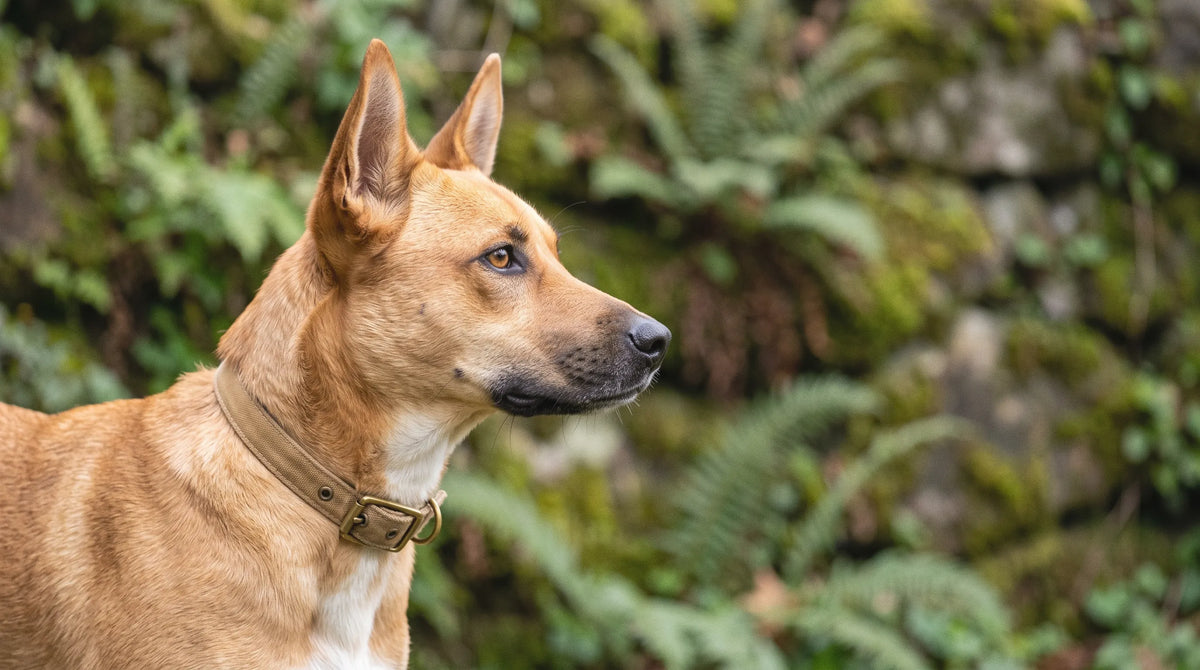
Carolina Dog
- Medium
- Foundation Stock Service
The Carolina Dog is a free-ranging American breed still found wild in the Southeast. Independent, loyal, and reserved with strangers, this hardy, clever medium-sized dog is happiest with room to roam and an experienced owner.
- Height
- 17.75 to 19.5
- inches at the shoulder
- Weight
- 30 to 55
- pounds, adult
- Life expectancy
- 12 to 15
- years, median 13.5
- Senior from
- 10.1
- years, about
Senior starts in the last quarter of a breed's expected lifespan, following the 2019 AAHA canine life stage guidelines. Individual dogs vary.
About the breed
- Temperament
- Independent, loyal, reserved with strangers
- Coat
- Smooth, short
- Origin
- United States
The Carolina Dog is a medium-sized American breed that still lives wild near the Georgia and South Carolina border, with free-ranging dogs turning up as far north as Ohio and Pennsylvania and as far west as Arizona. Rural country is the common thread. The breed descends from canines that traveled with Paleo-Indians across the Bering land bridge from Asia to North America, and a dog does not last that long in the wild without being hardy and clever.
A typical Carolina Dog has a thin, athletic frame, a triangular head, pointed upright ears, a fox-like snout, and a tail that curves like a fishhook when raised. With their ginger coat they are often mistaken for a dingo or jackal, and they resemble the Australian Dingo, though taxonomically they fall under canis familiaris. Males and females stand about 17.75 to 19.5 inches tall and weigh 30 to 55 pounds.
A researcher first noticed these dogs in the 1970s near Aiken, South Carolina, proposed their ancient origins, named them, and wrote the breed standard. You may also hear them called yellow dogs, yaller dogs, American dingos, Carolina dingos, or Dixie dingos. The breed later gained acceptance into the Foundation Stock Service of the major US kennel registry.
Carolina Dogs can look stoic, but their ears and tails are highly expressive, and they form loyal, loving bonds with their families. Hesitant with strangers, they sound the alarm at an unknown visitor, then turn ecstatic once they see their own people. Life in the wild also built a strong pack mentality into the breed.
Temperament and needs
Scored 1 to 5 for the breed overall. Individual dogs vary.
- Affectionate with family3 out of 5
- Good with young children3 out of 5
- Good with other dogs3 out of 5
- Openness to strangers3 out of 5
- Playfulness3 out of 5
- Watchdog and protective nature3 out of 5
- Adaptability3 out of 5
- Trainability3 out of 5
- Energy level3 out of 5
- Mental stimulation needs3 out of 5
- Barking level3 out of 5
- Shedding3 out of 5
- Grooming frequency1 out of 5
- Drooling2 out of 5
Care
The routines that matter most for this breed. Open one at a time.
Nutrition
The Carolina Dog does well on a high-quality dog food, whether commercially made or home-prepared with your veterinarian's supervision and approval. Match the diet to the dog's life stage, whether puppy, adult, or senior. A complete and balanced food usually covers everything a Carolina Dog needs.
Some dogs are prone to gaining weight, so watch calorie intake and body condition. To keep their lean build, measure portions to avoid overfeeding and count the calories from treats. Treats help with training but should make up no more than 10% of daily calories, since too many lead to obesity. Learn which human foods are safe for dogs and which are not, and keep clean, fresh water available at all times.
Most adult dogs do well on two meals a day, morning and evening. Puppies have a higher metabolism, so a midday feeding for three meals total works well. The label on the food bag gives a feeding guide based on weight as a starting point.
Your vet can tailor the amount and schedule to your dog's age, weight, body condition, lifestyle, and health. Nutritional supplements and prescription diets are sometimes part of a vet's plan, so talk to your veterinary team before adding anything new.
Grooming
Carolina Dogs need little grooming. They tend to keep themselves clean much like a cat, though an occasional bath may be necessary. Beyond brushing and nail trimming, they require no special techniques.
The coat runs short and smooth over the head, ears, and front legs, with coarse, longer guard hairs along the neck, withers, and back that stand erect when the dog is aroused. Density shifts seasonally, heavier in cooler months and lighter in warmer ones, with a pronounced undercoat in cold weather. Some dogs in northern regions grow longer hair. Occasional brushing keeps the coat free of loose fur, and in winter, when the coat is thickest, brush more often.
Keep regular nail trims in the routine, since long nails cause pain and trouble walking or running. Check the skin for ticks after outdoor play, though the breed has no special skincare needs. Ask your veterinary team how and how often to clean the ears, and book an appointment if you notice shaking, redness, pain, or a foul odor.
Dental care matters for every dog. Dental disease is one of the most common conditions in adult dogs and can lead to other problems if left untreated. Alongside professional cleanings, brush your dog's teeth at home and offer the occasional vet-recommended dental chew.
Exercise
Carolina Dogs are not high-energy, but they need daily activity for body and mind. Good options include play in a fenced backyard or several walks a day. Indoor games such as hide-and-seek, chasing a ball rolled along the floor, or learning new tricks also work well.
Outdoor pursuits like swimming, hiking, and retrieving balls or flying discs give their energy a solid outlet, and they tend to thrive on active company such as jogging and hiking with their people. Dog sports like agility, obedience, rally, and fly ball offer both exercise and structure. Without enough attention and chances to use their brain and body, they get bored, which leads to barking and chewing.
A strong prey drive means they need a leash or a fenced area, since they will follow a scent. One behavior unique to the breed, and a hazard for your ankles, is the snout pit, a funnel-shaped hole they dig by burrowing their nose into the ground. No one knows exactly why; some think they are pulling nutrients from the soil or hunting insects underground. You may also see a Carolina Dog cover their feces with dirt using their nose rather than their back legs.
Training
Carolina Dogs are intelligent and eager to please, and they may or may not respond to treat training. They excel in competitive activities and at hunting small game. They do need to see their humans as leaders of the pack, or they may ignore commands and do their own thing, so get every household member involved in training. Consistent, positive training with rewards rather than punishment teaches your dog while building the bond between you, and it doubles as mental and physical exercise.
Early socialization is essential for this shy, sometimes suspicious breed. All dogs go through a critical development period from birth to around 16 weeks, when they learn how to interact with people and other animals. Introducing them to different people and surroundings while young helps them grow into a well-mannered adult. Some shyness is normal; extreme shyness and fear are not. Ask your breeder how they approach socialization, since the breed's mistrust of strangers carries into adulthood.
These dogs may be standoffish around unfamiliar people and pets but stay loyal to those they know and love. Given their pack mentality, they can do well with other dogs of similar size, though smaller dogs may be mistaken for something to chase. Their high prey drive can make them a poor companion for smaller pets like cats, since they are known to eat wild prey they catch.
Carolina Dogs are not ideal for first-time owners. They are happiest with space to explore outside, such as a farm or a home with a yard, and do poorly when kept indoors most of the day. Many people who own them do not have young children at home.
Health conditions
1 condition is documented for the Carolina Dog.
A predisposition is not a diagnosis. Ask your vet which screenings make sense for your dog's age.
- MDR1 Drug SensitivityMetabolic
Sources
Thank you. Your report is in, and we will check this page.
Longevity & Vitality soft chew
Longevity & Vitality is a daily chew built on five active ingredients. Each chew carries Turkey Tail at 600mg, Curcuvet® curcumin at 75mg, Quercefit® quercetin at 40mg, Fibalance® at 275mg and EpiCor® at 50mg. The daily serving follows your dog's weight, from half a chew to three.
