
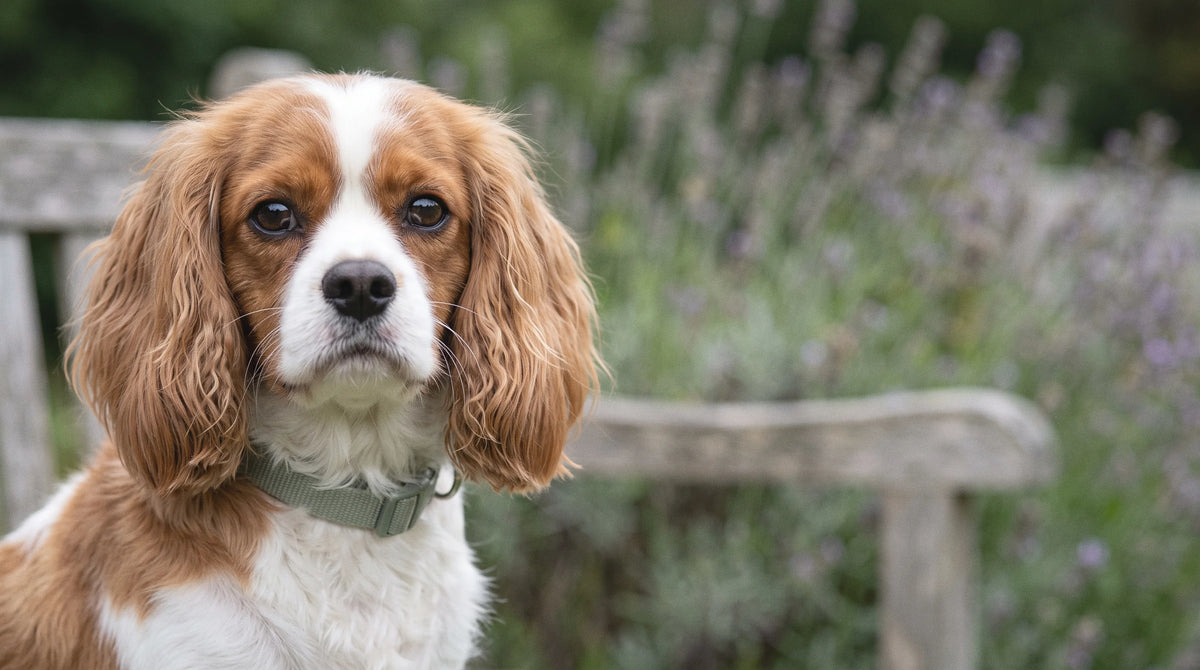
Cavapoo
- Small
The Cavapoo crosses a Cavalier King Charles Spaniel with a Miniature or Toy Poodle. It is a small, sociable dog of 8 to 25 pounds that wants to be near you, and it suits a home where someone is usually around.
- Height
- 9 to 14
- inches at the shoulder
- Weight
- 8 to 25
- pounds, adult
- Life expectancy
- 12 to 15
- years, median 13.5
- Senior from
- 10.1
- years, about
Senior starts in the last quarter of a breed's expected lifespan, following the 2019 AAHA canine life stage guidelines. Individual dogs vary.
About the breed
- Temperament
- Friendly, confident, gentle, playful, eager to please
- Coat
- Curly, Wavy, medium
The Cavapoo is a cross between the Cavalier King Charles Spaniel and a Miniature or Toy Poodle. Adults usually weigh 8 to 25 pounds and stand 9 to 14 inches tall, and which Poodle is on the other side of the cross is a large part of where in that range your dog lands. Typical lifespan is 12 to 15 years.
Temperament is the reason most people choose one. Cavapoos are described as gentle and even-keeled, friendly, confident and eager to please, and they get along with most people and most animals. They are comfortable in homes from small apartments to houses with yards, and they are often a workable first dog. The flip side of that sociability is attachment: because they bond so hard to their people, separation anxiety is the single biggest thing to plan for, and it is much easier to prevent early than to fix later.
The coat is usually low-shedding, and that is where the grooming commitment comes from. No dog is truly free of allergens, and the Cavapoo is no exception, but a low-shedding coat can suit a household with allergies better than a heavy shedder does.
One caveat worth holding on to. A crossbred dog can inherit from either side, so temperament, looks and health all vary more than they would in a breed with a written standard behind it. The Cavapoo is one of only three designer crosses studied by name in the peer-reviewed literature, and that work found the crosses no healthier and no sicker than their purebred parents across the great majority of conditions compared. Read up on both parent breeds, not just the cross.
Care
The routines that matter most for this breed. Open one at a time.
Nutrition
Feed a commercially available food that meets the Association of American Feed Control Officials (AAFCO) guidelines, matched to your dog's life stage as a puppy, adult or senior. If you notice changes in your Cavapoo's skin, coat, waste or behaviour, that can be a sign the food no longer suits them. Some Cavapoos are sensitive to particular ingredients, so watch for reactions and talk to your veterinarian before changing anything.
Puppies need three to four small meals a day on a consistent schedule. Small puppies run low on blood sugar quickly, and regular meals are what keeps hypoglycemia at bay. Adults do well on two meals a day.
Use the label on the food as a starting point for how much, then adjust with your vet based on age, activity level and body condition. This is a small dog, so a couple of treats a day is a real share of the calories. Keep treats under 10 percent of the daily diet.
Because hip dysplasia and patellar luxation both turn up in this cross, your vet may suggest a food or treat carrying a joint supplement. Most Cavapoos get everything they need from a complete food, and no supplement should go in the bowl without your vet saying so first.
Grooming
The Cavapoo's low-shedding coat is the trade-off for the shedding you avoid: it needs regular work to stop it matting and tangling. Plan on brushing about three times a week and a grooming appointment every six weeks, or learn to use the tools yourself. Match the brush to the coat your dog actually inherited. A small slicker brush suits curlier, Poodle-like hair, and a pin brush works better on straighter hair.
Check the skin while you brush. Recurring skin infections, itchiness, redness or dryness are worth a vet call rather than a wait.
Clean the eyes as part of grooming. It keeps infections down and it is the moment you are most likely to notice a change worth reporting, so call your vet if you see poor vision, discharge, redness or squinting. Tear stains wipe away with a dog-safe eye cleaner.
Clean the ears when you groom, and keep an eye on them in between. A smell, debris in the canal, head shaking or scratching all point to an infection. Nails usually need trimming every four to six weeks, using a clipper made for small dogs or an adjustable grinder.
Exercise
Cavapoos do not need vigorous exercise. Light to moderate activity suits them: neighborhood walks, fetch, and the kind of play that happens in a living room. If you want a dog to take on long runs, this is not the one.
What they do need is mental work. Food puzzles, a KONG or a lick mat engage a bright dog and cost you nothing in distance, and they matter most when your dog is alone. A mentally stimulating activity left with them when you go out, along with more exercise and crate training as a puppy, is the standard first line against mild separation anxiety.
The low exercise requirement is why this cross fits so many homes, from a small apartment to a house with a yard. It also means the calories have to be watched, because a light-exercise dog on treat-heavy days gains weight quickly.
Training
Cavapoos are bright and want to please you, so reward-based training goes a long way and harsh methods are unnecessary. Once the basic cues are in place, most of them enjoy trick work, and the tricks that land best are the ones that keep them close to you, like weaving between your legs or jumping through a hoop. Obedience work and therapy dog work both suit the temperament.
Separation anxiety is the training problem to take seriously. The behaviours it produces, chewing and barking among them, are symptoms rather than disobedience. Start early: give your dog something to do when they are left, build up alone time gradually, and crate train the puppy. Mild cases often respond to that alone. Severe ones usually need a full behaviour modification plan, and that is worth getting professional help with rather than improvising.
Cavapoos generally do well with children who have been taught to play gently with a dog, and that teaching is a two-way job. The dog learns what is expected, and so does the child.
Health conditions
11 conditions are documented for the Cavapoo.
A predisposition is not a diagnosis. Ask your vet which screenings make sense for your dog's age.
- CataractsEye
- Corneal DystrophyEye
- Dental DiseaseOral & Dental
- Dry EyeEye
- EntropionEye
Show all 11 conditions Show fewer
- GlaucomaEye
- Hip DysplasiaBone & Joint
- Mitral Valve DiseaseHeart
- Patellar LuxationBone & Joint
- Progressive Retinal AtrophyEye
- SyringomyeliaNervous System & Behavioral
May inherit from parent breeds
These conditions are documented in the parent breeds, not in this cross itself. Carrier possible means the condition is recessive: a dog can carry it without showing signs. Ask the breeder which tests the parent dogs had.
- Addison's DiseaseMiniature Poodle, Toy Poodle
- BronchiectasisMiniature Poodle, Toy Poodle
- Chronic BronchitisMiniature Poodle, Toy Poodle
- Chronic kidney diseaseCavalier King Charles Spaniel
- CryptorchidismMiniature Poodle, Toy Poodle
Show all 32 conditions Show fewer
- Degenerative MyelopathyCarrier possible · Cavalier King Charles Spaniel
- Dry Eye Curly Coat SyndromeCavalier King Charles Spaniel
- DyschondroplasiaMiniature Poodle
- DystociaMiniature Poodle, Toy Poodle
- Dystrophin-Deficient Muscular DystrophyCavalier King Charles Spaniel
- Ear InfectionsToy Poodle
- Ectopic UreterMiniature Poodle, Toy Poodle
- Episodic Falling SyndromeCavalier King Charles Spaniel
- Eye ProblemsCavalier King Charles Spaniel, Miniature Poodle
- Geriatric-onset laryngeal paralysis polyneuropathy, GOLPPMiniature Poodle, Toy Poodle
- Heat-related illness (including heatstroke)Cavalier King Charles Spaniel
- HypothyroidismMiniature Poodle, Toy Poodle
- Idiopathic epilepsy, including epilepsy of unknown originMiniature Poodle, Toy Poodle
- Immune-mediated thrombocytopeniaMiniature Poodle, Toy Poodle
- Intervertebral Disc DiseaseCavalier King Charles Spaniel, Miniature Poodle, Toy Poodle
- Legg-Calve-Perthes DiseaseMiniature Poodle, Toy Poodle
- Medium-Chain Acyl-CoA Dehydrogenase DeficiencyCavalier King Charles Spaniel
- Muscular DystrophyCavalier King Charles Spaniel
- Noise aversion (noise sensitivity; noise phobia when clinically diagnosed)Miniature Poodle, Toy Poodle
- Puerperal hypocalcemia (eclampsia)Miniature Poodle, Toy Poodle
- PyometraCavalier King Charles Spaniel
- Skin fold dermatitis (intertrigo)Cavalier King Charles Spaniel
- Systemic lupus erythematosusMiniature Poodle, Toy Poodle
- Systemic lupus erythematosus-associated polyarthritisMiniature Poodle, Toy Poodle
- Tracheal CollapseMiniature Poodle, Toy Poodle
- Tracheobronchial Collapse and BronchomalaciaMiniature Poodle, Toy Poodle
- Von Willebrand DiseaseToy Poodle



Longevity & Vitality soft chew
Longevity & Vitality is a daily chew built on five active ingredients. Each chew carries Turkey Tail at 600mg, Curcuvet® curcumin at 75mg, Quercefit® quercetin at 40mg, Fibalance® at 275mg and EpiCor® at 50mg. The daily serving follows your dog's weight, from half a chew to three.
