
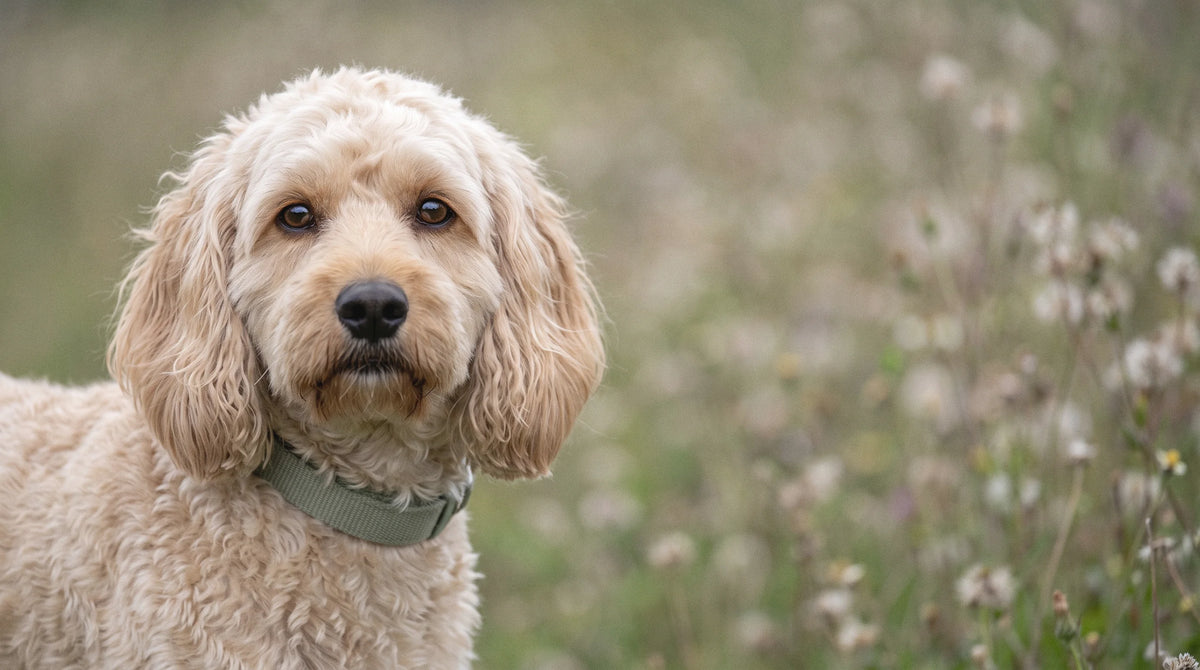
Mini Cockapoo
- Small
The Mini is the middle of the American Cockapoo Club's three sizes, 11 to 14 inches at the shoulder and 13 to 20 pounds. It is the size most people picture when they say Cockapoo, and the most common of the three.
- Height
- 11 to 14
- inches at the shoulder
- Weight
- 13 to 20
- pounds, adult
- Life expectancy
- 12 to 15
- years, median 13.5
- Senior from
- 10.1
- years, about
Senior starts in the last quarter of a breed's expected lifespan, following the 2019 AAHA canine life stage guidelines. Individual dogs vary.
About the breed
- Temperament
- Outgoing, happy, playful, intelligent, eager to please, calm
- Coat
- Curly, Wavy, medium
- Origin
- United States
The Mini Cockapoo measures 11 to 14 inches at the shoulder, with a weight the American Cockapoo Club gives as a general guide at 13 to 20 pounds. It sits between the Toy and the Standard and is the most common of the three.
Height is the definition and weight is only an indication. The club is explicit that Cockapoo size is judged by height, not weight, because two dogs of the same size can vary considerably depending on build. Measure to the top of the shoulder with the dog standing.
What you get is a calm, exuberant, friendly dog that is happy around people and other pets, with a keen intelligence and a playful streak that reaches across ages. The club's standard adds the important caveat that this is a people dog which should not be left alone for extended periods.
Coats come in three acceptable textures, tight curly, medium curl and flat, with the medium curl the one breeders aim for. All shed very little and all need work. Cockapoos live 12 to 15 years, and that combination of size, temperament and low shedding is why they are among the most popular doodle crosses.
Care
The routines that matter most for this breed. Open one at a time.
Nutrition
A food carrying an Association of American Feed Control Officials (AAFCO) nutritional adequacy statement for the right life stage is the whole requirement, with a puppy formula until around the first birthday and an adult one after.
Twice a day, morning and evening, suits an adult Mini Cockapoo. Puppies want three or four meals on a fixed schedule.
A Cockapoo's own weakness is the waistline. They tend to become overweight, so table scraps are out and treats stay a small share of the day's calories. Training rewards are fine and useful, but count them. If the weight starts climbing, work with your vet on the diet rather than waiting, because obesity in dogs shortens life and pulls in high blood pressure, heart and kidney disease and diabetes behind it.
Use the label as the starting amount and ask your vet what your particular dog needs. Joint supplements help some Cockapoos, but ask before you buy.
Grooming
Every four to six weeks with a professional groomer, and brushing at home in between, is the routine a Mini Cockapoo needs to stay tidy and mat-free. The club describes the target cut as a teddy bear clip at about two to three inches all over, head the same length as body, beard and facial hair under four inches, and it should never be shaven.
Coat colour has nothing to do with the work. Cream, white, red, chocolate and black are all common, and wavy and curly coats both mat.
Bathe every few months unless the skin needs more. Some dogs do need far more, weekly or beyond, where ichthyosis, allergies or chronic skin infections are in play, and seborrhoeic dermatitis turns up in this breed too.
Check the long floppy ears weekly and after every swim or bath, since they trap water and debris; you should see no redness or swelling and smell nothing. Examine the eyes regularly for discharge, bulging, redness or cloudiness, given the eye conditions the breed carries. Brush the teeth daily and trim the nails about every six weeks.
Exercise
A Mini Cockapoo carries a moderate amount of energy: real walks, but nothing like a working dog's demand. A couple of walks a day, a game of fetch or a swim is generally enough to leave one content.
Give it variety rather than volume. Agility suits this size well, and swimming plays straight to both parent breeds. Hide and seek and activity puzzles cover the indoor days.
Social enrichment counts as exercise for this cross. Toys, daily walks and a mix of physical and mental stimulation is how the breed is meant to be kept, and a Mini Cockapoo that gets the walk but no company is only half exercised.
Apartment or farm, the breed adapts. It is the routine rather than the square footage that decides whether the dog settles.
Training
Smart and eager to please is a good combination, and it makes the Mini Cockapoo one of the easier dogs to teach. Positive reinforcement with small treats, play and praise is all it takes; the club's standard calls the breed extremely easy to train in just about any situation.
Start socialising in the first months. Wide exposure to people, places, animals and situations, plus an obedience class as early as your vet allows, is what turns a friendly puppy into a settled adult.
Then keep the brain busy. Cockapoos enjoy learning, so trick training and advanced obedience are worth continuing into adulthood rather than stopping once the basics land.
The one thing to build deliberately is tolerance of being alone. The breed can be a bit anxious and does develop separation anxiety, and the club warns against leaving these dogs for extended periods. They are quiet otherwise and rarely bark without a reason.
Health conditions
6 conditions are documented for the Mini Cockapoo.
A predisposition is not a diagnosis. Ask your vet which screenings make sense for your dog's age.
- CataractsEye
- GlaucomaEye
- Hip DysplasiaBone & Joint
- Immune-mediated polyarthritisBone & Joint
- ObesityMetabolic
Show all 6 conditions Show fewer
- Skin fold dermatitis (intertrigo)Skin & Connective Tissue
May inherit from parent breeds
These conditions are documented in the parent breeds, not in this cross itself. Carrier possible means the condition is recessive: a dog can carry it without showing signs. Ask the breeder which tests the parent dogs had.
- Acral Mutilation SyndromeCarrier possible · Cocker Spaniel, English Cocker Spaniel
- Addison's DiseaseEnglish Cocker Spaniel, Miniature Poodle
- Adult-Onset NeuropathyCarrier possible · English Cocker Spaniel
- BronchiectasisCocker Spaniel, Miniature Poodle
- Chronic BronchitisMiniature Poodle
Show all 34 conditions Show fewer
- CryptorchidismMiniature Poodle
- DyschondroplasiaMiniature Poodle
- DystociaMiniature Poodle
- Ear InfectionsCocker Spaniel, English Cocker Spaniel
- Ectopic UreterMiniature Poodle
- Exercise-Induced CollapseCarrier possible · Cocker Spaniel
- Eye ProblemsMiniature Poodle
- Familial NephropathyCarrier possible · English Cocker Spaniel
- Geriatric-onset laryngeal paralysis polyneuropathy, GOLPPMiniature Poodle
- Hereditary NephritisCarrier possible · English Cocker Spaniel
- HypothyroidismCocker Spaniel, English Cocker Spaniel, Miniature Poodle
- Idiopathic epilepsy, including epilepsy of unknown originMiniature Poodle
- Immune-mediated thrombocytopeniaMiniature Poodle
- Intervertebral Disc DiseaseCocker Spaniel, English Cocker Spaniel, Miniature Poodle
- Legg-Calve-Perthes DiseaseMiniature Poodle
- Mitral Valve DiseaseMiniature Poodle
- Noise aversion (noise sensitivity; noise phobia when clinically diagnosed)Miniature Poodle
- Patellar LuxationMiniature Poodle
- Progressive Retinal AtrophyCarrier possible · English Cocker Spaniel
- Progressive Retinal Atrophy, prcdCocker Spaniel, English Cocker Spaniel
- Puerperal hypocalcemia (eclampsia)Miniature Poodle
- PyometraEnglish Cocker Spaniel
- Separation anxiety (separation distress disorder)English Cocker Spaniel
- SRY-negative XX testicular or ovotesticular disorder of sex developmentCocker Spaniel, English Cocker Spaniel
- Systemic lupus erythematosusMiniature Poodle
- Systemic lupus erythematosus-associated polyarthritisMiniature Poodle
- Tracheal CollapseMiniature Poodle
- Tracheobronchial Collapse and BronchomalaciaMiniature Poodle
- Von Willebrand DiseaseCocker Spaniel
Health tests to ask the breeder for
The breed club asks breeders to run these tests on parent dogs. A required test is not a sign the breed is prone to the condition.
- Familial NephropathyClub requirement
- Glycogen Storage Disease Type VIIClub requirement
- Progressive Retinal Atrophy, prcdClub requirement



Longevity & Vitality soft chew
Longevity & Vitality is a daily chew built on five active ingredients. Each chew carries Turkey Tail at 600mg, Curcuvet® curcumin at 75mg, Quercefit® quercetin at 40mg, Fibalance® at 275mg and EpiCor® at 50mg. The daily serving follows your dog's weight, from half a chew to three.
