
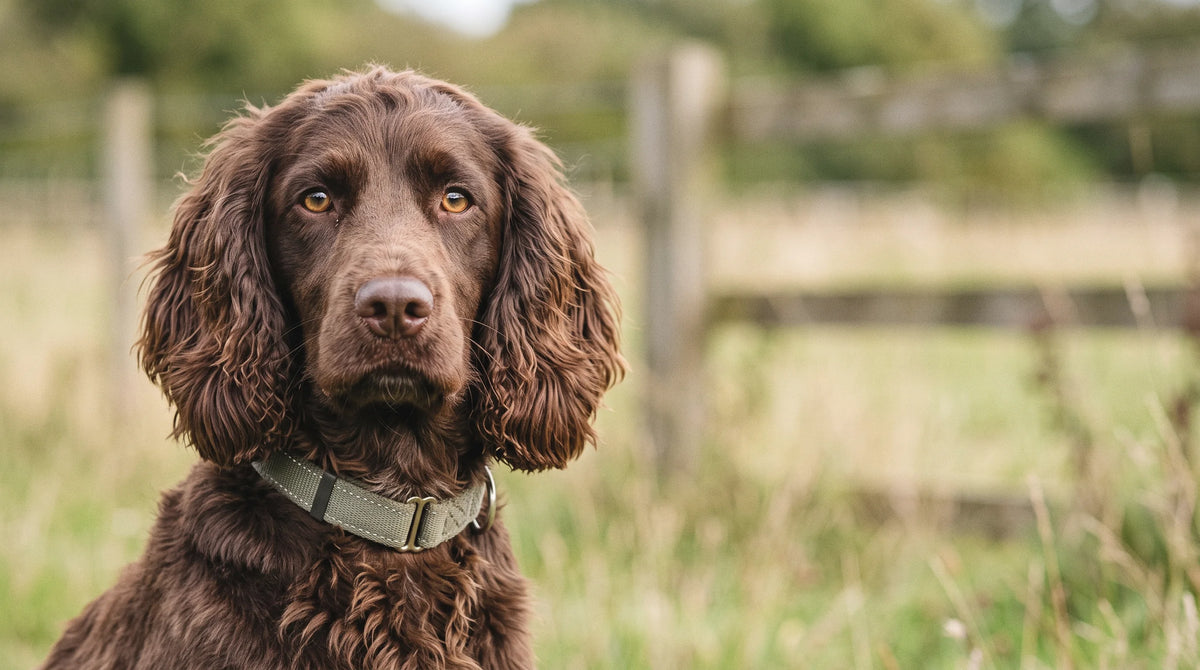
Standard Cockapoo
- Small
The Standard is the largest of the American Cockapoo Club's three sizes, 15 inches or more at the shoulder and 21 pounds and up. A Standard Poodle sits on one side of the cross, and the club publishes no ceiling for the tier.
- Height
- ≥15
- inches at the shoulder
- Weight
- ≥21
- pounds, adult
- Life expectancy
- 12 to 15
- years, median 13.5
- Senior from
- 10.1
- years, about
Senior starts in the last quarter of a breed's expected lifespan, following the 2019 AAHA canine life stage guidelines. Individual dogs vary.
About the breed
- Temperament
- Outgoing, happy, playful, intelligent, eager to please, calm
- Coat
- Curly, Wavy, medium
- Origin
- United States
The Standard Cockapoo stands 15 inches or more at the shoulder, with the American Cockapoo Club giving 21 pounds and up as a general indication of weight. It comes from a Standard Poodle parent, which is what puts it above the Mini and the Toy.
There is no published ceiling on this tier from either the club or PetMD, which is worth knowing when you are trying to picture an adult. The club's own framing helps: size is judged by height, not weight, because two dogs of the same height can differ considerably in weight depending on build.
Cockapoo character does not change with size. Expect a people-oriented, outgoing, happy dog with a keen intelligence and a playful streak, calm rather than frantic, and easy to train in almost any setting. It should not be left alone for long periods, which the club states in the standard itself.
Coat is tight curly, medium curl or flat, all acceptable, all low-shedding, all high-maintenance. On a Standard there is simply more of it. Cockapoos live 12 to 15 years, and the first one was born in the United States in the 1960s from an accidental Poodle and Cocker Spaniel mating.
Care
The routines that matter most for this breed. Open one at a time.
Nutrition
Check the label for an Association of American Feed Control Officials (AAFCO) nutritional adequacy statement covering your Standard Cockapoo's life stage, switching from puppy to adult formula around the first birthday.
Two meals a day for an adult, morning and evening. Puppies need three or four on a consistent schedule.
Even at the top of the breed's size range, weight gain is the risk. Cockapoos tend to become overweight, and the largest size hides it best under a thick coat, so feel for the ribs instead of trusting the outline. Avoid table scraps, keep treats to a small share of the calories, and talk to your vet as soon as the weight starts climbing.
Amounts start with the label and get adjusted with your vet. Joint supplements suit some dogs, particularly given the hip dysplasia this cross can inherit, but ask your vet before adding one.
Grooming
The Standard carries the most coat of the three sizes and takes the longest at the groomer, who you will be seeing every four to six weeks. Brush at home between visits. The club asks for a teddy bear clip of about two to three inches over the whole dog, head the same length as body, beard and face under four inches, and never a shave-down.
Skin care is usually light: a bath every few months is enough for most. Dogs with ichthyosis, allergies or recurring skin infections may need weekly bathing, and any external parasites are a vet visit rather than a shampoo.
Ears come from the Cocker side and behave like it. Long and floppy, they hold moisture and debris, so examine them weekly and after any exposure to water. A smell, redness, swelling, head shaking or scratching all warrant a call.
Check the eyes regularly for discharge, redness, bulging or cloudiness, since this cross carries several eye conditions. Brush the teeth daily and clip the nails about every six weeks, or when you can hear them on the floor.
Exercise
Moderate energy is the honest description, even at this size. A Standard Cockapoo does not need constant activity: a couple of walks a day, a game of fetch or a swim will usually do it, and the breed is relatively laid-back at home.
The larger frame does open up more. This is the size that can manage a longer hike or a proper swim session, and agility works well on a dog with the reach for it.
Do not read laid-back as low-need. The breed still requires social enrichment through toys, daily walks and a mix of physical and mental work, and a Standard with none of that will find its own project.
House or apartment both work. The breed is happy with singles and with families, and this size in particular is easy company on a walk without being a handful on the leash.
Training
Cockapoos are great for first-time owners, and a Standard is still an easy dog to teach: smart, eager to please, and responsive to positive reinforcement with treats, play and praise. The club's standard describes a breed extremely easy to train in just about any situation.
Do the socialisation early. Expose the puppy to a wide range of people, places, animals and situations and get into an obedience class as soon as you can. At this size, leash manners and polite greetings are worth locking in before the dog is full-grown.
Keep training past the basics. Trick work and advanced obedience suit a breed that enjoys learning, and they are a better use of a clever dog's day than another lap of the block.
Build up alone time gradually. The club warns that these are people dogs and should not be left for extended periods, and separation anxiety is the specific risk. A Standard Cockapoo is normally a quiet dog; barking when you are out is usually the anxiety talking.
Health conditions
6 conditions are documented for the Standard Cockapoo.
A predisposition is not a diagnosis. Ask your vet which screenings make sense for your dog's age.
- CataractsEye
- GlaucomaEye
- Hip DysplasiaBone & Joint
- Immune-mediated polyarthritisBone & Joint
- ObesityMetabolic
Show all 6 conditions Show fewer
- Skin fold dermatitis (intertrigo)Skin & Connective Tissue
May inherit from parent breeds
These conditions are documented in the parent breeds, not in this cross itself. Carrier possible means the condition is recessive: a dog can carry it without showing signs. Ask the breeder which tests the parent dogs had.
- Acral Mutilation SyndromeCarrier possible · Cocker Spaniel, English Cocker Spaniel
- Addison's DiseaseEnglish Cocker Spaniel, Standard Poodle
- Adult-Onset NeuropathyCarrier possible · English Cocker Spaniel
- Bloat (Gastric Dilatation-Volvulus)Standard Poodle
- BronchiectasisCocker Spaniel, Standard Poodle
Show all 31 conditions Show fewer
- Chronic BronchitisStandard Poodle
- CryptorchidismStandard Poodle
- DystociaStandard Poodle
- Ear InfectionsCocker Spaniel, English Cocker Spaniel
- Ectopic UreterStandard Poodle
- Exercise-Induced CollapseCarrier possible · Cocker Spaniel
- Familial NephropathyCarrier possible · English Cocker Spaniel
- Geriatric-onset laryngeal paralysis polyneuropathy, GOLPPStandard Poodle
- Hereditary NephritisCarrier possible · English Cocker Spaniel
- HypothyroidismCocker Spaniel, English Cocker Spaniel, Standard Poodle
- Idiopathic epilepsy, including epilepsy of unknown originStandard Poodle
- Immune-mediated thrombocytopeniaStandard Poodle
- Intervertebral Disc DiseaseCocker Spaniel, English Cocker Spaniel, Standard Poodle
- Noise aversion (noise sensitivity; noise phobia when clinically diagnosed)Standard Poodle
- Progressive Retinal AtrophyCarrier possible · English Cocker Spaniel
- Progressive Retinal Atrophy, prcdCocker Spaniel, English Cocker Spaniel
- Puerperal hypocalcemia (eclampsia)Standard Poodle
- PyometraEnglish Cocker Spaniel
- Separation anxiety (separation distress disorder)English Cocker Spaniel
- Skin IssuesStandard Poodle
- SRY-negative XX testicular or ovotesticular disorder of sex developmentCocker Spaniel, English Cocker Spaniel
- Systemic lupus erythematosusStandard Poodle
- Systemic lupus erythematosus-associated polyarthritisStandard Poodle
- Tracheal CollapseStandard Poodle
- Tracheobronchial Collapse and BronchomalaciaStandard Poodle
- Von Willebrand DiseaseCocker Spaniel, Standard Poodle
Health tests to ask the breeder for
The breed club asks breeders to run these tests on parent dogs. A required test is not a sign the breed is prone to the condition.
- Familial NephropathyClub requirement
- Glycogen Storage Disease Type VIIClub requirement
- Progressive Retinal Atrophy, prcdClub requirement



Longevity & Vitality soft chew
Longevity & Vitality is a daily chew built on five active ingredients. Each chew carries Turkey Tail at 600mg, Curcuvet® curcumin at 75mg, Quercefit® quercetin at 40mg, Fibalance® at 275mg and EpiCor® at 50mg. The daily serving follows your dog's weight, from half a chew to three.
