
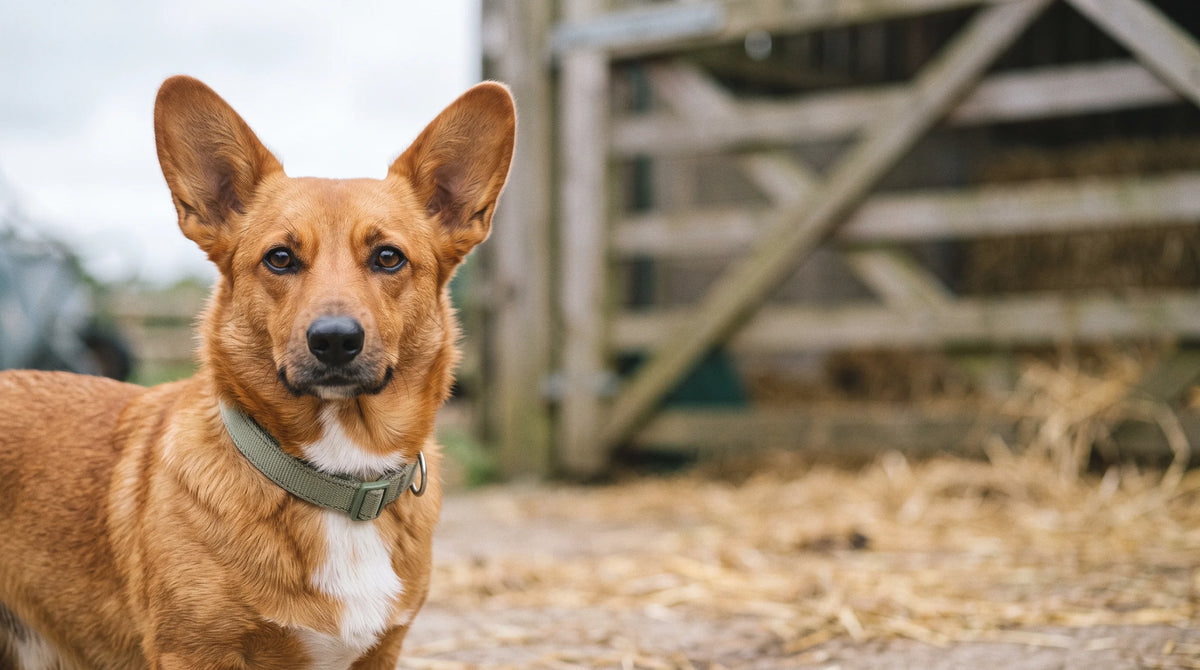
Dorgi
- Small
The Dorgi crosses a Dachshund with a Pembroke Welsh Corgi, capping out at 12 inches and 30 pounds. It packs two working breeds into one long, low body, and its bark is considerably bigger than the dog.
- Height
- ≤12
- inches at the shoulder
- Weight
- ≤30
- pounds, adult
- Life expectancy
- 12 to 16
- years, median 14
- Senior from
- 10.5
- years, about
Senior starts in the last quarter of a breed's expected lifespan, following the 2019 AAHA canine life stage guidelines. Individual dogs vary.
About the breed
- Temperament
- Spirited, friendly, bold, intelligent, independent, alert
- Coat
- Double, Smooth, medium
The Dorgi is a Dachshund and Pembroke Welsh Corgi mix with a surprising royal connection: Queen Elizabeth II is often credited with creating the cross, by accident, when Princess Margaret's Dachshund met one of the Queen's Corgis. It has no American Kennel Club recognition and no breed standard.
Both parents are low to the ground with long bodies and short legs, and both were bred to work. Dachshund is German for badger dog, and the shape was built for hunting them underground. Pembrokes herded cattle and sheep. The traits that made both good at their jobs are barking loudly and often, thinking cleverly and independently, and a boldness well out of proportion to the frame.
Dorgis inherit all of that, which does not stop them being good family dogs, but does shape where they fit. That big-dog bark and watchdog habit is a problem in an apartment with shared walls, and Dorgis are firmly indoor dogs whose social needs keep them close to their people.
They can be too rough for very young children, and one that takes after the Pembroke may try to herd them. Older children usually get a loyal, affectionate playmate. Other pets are generally fine, especially ones the dog grows up with, though the Dachshund's prey drive puts small animals at risk. Lifespan is 12 to 16 years.
Care
The routines that matter most for this breed. Open one at a time.
Nutrition
Feed a complete and balanced diet matched to your Dorgi's life stage and keep the portions measured. Nothing about the feeding routine is exotic; what makes it matter is the skeleton.
A long back and short legs is a build that punishes extra weight. Intervertebral disc disease is the condition this cross most needs protecting from, and weight management is one of the standard interventions for the joint problems that sit alongside it.
Ask your vet for a target weight and a body condition score rather than working from the bag alone. A dog whose adult weight might be anywhere under 30 pounds needs a number, not a range.
Joint supplements come up in the treatment of this cross's orthopaedic problems, alongside pain medication, weight management and sometimes surgery. Take that as a conversation with your vet rather than a shopping decision.
Grooming
Upkeep for a Dorgi is fairly simple, which is what you would expect from the offspring of two working breeds. What varies is the coat you get.
A Dachshund parent can pass on a smooth, wirehaired or longhaired coat; a Pembroke passes on a short, thick double coat. The frequency of brushing follows whichever your dog inherited, and none of the options is a heavy job.
Expect regular year-round shedding no matter which way it lands. This is not a low-shedding cross and nobody should choose it as one.
Brush the teeth every day. Small breeds like Dachshunds and Corgis are especially prone to periodontal disease, and the signs run from red gums, drooling and bad breath through low appetite and facial swelling to loose or missing teeth. Once it is established the answer is a professional cleaning and possibly extractions.
Exercise
Daily exercise and play matter for a Dorgi's brain as much as its body, and there is an ample energy supply to spend. This is not a dog that entertains itself quietly.
Keep it all on a harness and leash or inside a fence. Trailing a scent or a visible animal will take a Dorgi into trouble, and the Dachshund's prey drive plus the Corgi's boldness is a combination that does not respond well to being called back mid-chase.
A harness rather than a collar is worth using for a second reason too, given how much of this dog's health rides on its spine and neck.
Be careful with stairs, jumping off furniture and rough play on a dog with the Dachshund's long back. Intervertebral disc disease can cause pain, nerve damage and paralysis, and limping, dragging back legs, a hunched back or loss of bladder control are the signs that need a vet the same day.
Training
With appropriate socialisation and training a Dorgi becomes a fun, playful, affectionate companion. Without it you have two working breeds' worth of independent thinking and no outlet for any of it.
Barking is the first thing to work on. Both parents were bred to bark loudly and often as part of the job, and that instinct is intact in the offspring. It is manageable, but it has to be managed deliberately and early, particularly if you share walls.
Expect independence rather than defiance. Clever and independent thinking is a working trait here, so training goes better with interesting rewards and short sessions than with repetition.
Watch for herding behaviour around children. A Dorgi that takes after its Pembroke parent may try to herd its human siblings, which is charming until it involves teeth, and redirecting it early is far easier than unlearning it later.
Health conditions
8 conditions are documented for the Dorgi.
A predisposition is not a diagnosis. Ask your vet which screenings make sense for your dog's age.
- Degenerative MyelopathyNervous System & Behavioral
- Dental DiseaseOral & Dental
- Elbow DysplasiaBone & Joint
- Hip DysplasiaBone & Joint
- Intervertebral Disc DiseaseNervous System & Behavioral
Show all 8 conditions Show fewer
- Patellar LuxationBone & Joint
- Patent Ductus ArteriosusHeart
- Von Willebrand DiseaseBlood
May inherit from parent breeds
These conditions are documented in the parent breeds, not in this cross itself. Carrier possible means the condition is recessive: a dog can carry it without showing signs. Ask the breeder which tests the parent dogs had.
- Bacterial pyodermaDachshund
- BronchiectasisDachshund
- CataractsPembroke Welsh Corgi
- Chronic BronchitisDachshund
- CryptorchidismDachshund
Show all 33 conditions Show fewer
- DeafnessDachshund
- DystociaDachshund
- Dystrophin-Deficient Muscular DystrophyPembroke Welsh Corgi
- Exercise-Induced CollapseCarrier possible · Pembroke Welsh Corgi
- Eye ProblemsDachshund
- Hip and Elbow DysplasiaPembroke Welsh Corgi
- HypothyroidismDachshund
- Idiopathic epilepsy, including epilepsy of unknown originDachshund
- Idiopathic lymphoplasmacytic rhinitisDachshund
- Immune-Mediated Hemolytic AnemiaDachshund
- Immune-mediated polyarthritisDachshund
- Lafora disease (NHLRC1-related progressive myoclonic epilepsy)Dachshund
- Mucopolysaccharidosis Type IIIADachshund
- Muscular DystrophyDachshund
- NarcolepsyCarrier possible · Dachshund
- Nasal neoplasia, histological type unspecifiedPembroke Welsh Corgi
- Neuronal Ceroid Lipofuscinosis 2Dachshund
- Noise aversion (noise sensitivity; noise phobia when clinically diagnosed)Pembroke Welsh Corgi
- Noninfectious rhinitisDachshund
- Nonregenerative immune-mediated anemiaDachshund
- ObesityDachshund
- Oronasal and oroantral fistulas secondary to periodontal diseaseDachshund
- Osteogenesis ImperfectaDachshund
- Pemphigus foliaceusDachshund
- Progressive Retinal Atrophy 5Dachshund
- Progressive Retinal Atrophy, crd4/cord1Dachshund
- Rhinitis secondary to dental diseaseDachshund
- Separation anxiety (separation distress disorder)Dachshund

Longevity & Vitality soft chew
Longevity & Vitality is a daily chew built on five active ingredients. Each chew carries Turkey Tail at 600mg, Curcuvet® curcumin at 75mg, Quercefit® quercetin at 40mg, Fibalance® at 275mg and EpiCor® at 50mg. The daily serving follows your dog's weight, from half a chew to three.
