

Drentsche Patrijshond
- Medium
- Foundation Stock Service
The Drentsche Patrijshond, or Drent, is a versatile Dutch gundog that hunts the field, guards the farmyard, and plays with the children. Loyal, intelligent, and friendly, this medium breed thrives on work and family life alike.
- Height
- 21.5 to 25
- inches at the shoulder
- Males 23 to 25, females 21.5 to 23.5 in
- Weight
- 55 to 73
- pounds, adult
- Males 70 to 73, females 55 to 60 lb
- Life expectancy
- 11 to 14
- years, median 12.5
- Senior from
- 9.4
- years, about
Senior starts in the last quarter of a breed's expected lifespan, following the 2019 AAHA canine life stage guidelines. Individual dogs vary.
About the breed
- Temperament
- Loyal, intelligent, friendly
- Coat
- Smooth, medium
- Origin
- Netherlands
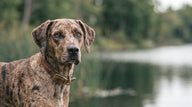
The Drentsche Patrijshond, often called the Drent or Dutch Partridge Dog, is a medium-sized gundog from the Netherlands. Males stand about 23 to 25 inches and females 21.5 to 23.5 inches, with weights ranging from roughly 55 to 73 pounds. The coat is half-long and single, similar to a field-line setter or a Brittany, with feathering on the neck, the backs of the legs, and a brushy tail.
The breed traces back to pointing dogs that came from Spain, the Spioenen, reaching the Netherlands by way of France in the 16th century. In the Province of Drenthe these dogs were bred among themselves rather than crossed with foreign breeds, which kept the type distinct. Throughout its history the Drent stood on three equal pillars: versatile hunting dog, farmyard dog, and playmate to the children.
The Drent is loyal, intelligent, and friendly. The Drentsche Patrijshond announces visitors without aggression or fear and is often reserved toward strangers until the owner welcomes them, so it may be shy at first but never fearful. With proper upbringing it is both a fine family companion and a capable hunting partner.
Temperament and needs
Scored 1 to 5 for the breed overall. Individual dogs vary.
- Affectionate with family3 out of 5
- Good with young children5 out of 5
- Good with other dogs5 out of 5
- Openness to strangers3 out of 5
- Playfulness3 out of 5
- Watchdog and protective nature1 out of 5
- Adaptability3 out of 5
- Trainability5 out of 5
- Energy level3 out of 5
- Mental stimulation needs5 out of 5
- Barking level1 out of 5
- Shedding3 out of 5
- Grooming frequency3 out of 5
- Drooling1 out of 5
Care
The routines that matter most for this breed. Open one at a time.
Nutrition
Feed a high-quality dry food that meets recognized nutritional standards. Grain-inclusive recipes are fine, and the Drent does not require a specialized diet.
Adjust the quantity only as needed, and match feed to activity: a rise in activity should correspond with a rise in food. Some Drents will self-regulate, while others will keep eating for as long as food is available, so watch portions and body condition for these dogs.
Keep clean, fresh water available at all times.
Grooming
The Drent carries a single, half-long coat. The body hair ranges from short of a full curl to nearly flat, the texture is fine and not oily, and the breed sheds twice per year. A coat rake followed by a comb, then a pin brush, and finished with a boar bristle brush handles the seasonal shed and polishes the coat.
A weekly grooming session usually covers everything and keeps the Drent from needing a bath, unless it gets into something odorous. Because the coat is fine and dry rather than oily, regular brushing keeps the dog free of dirt and dander.
The ears are the hardest part of Drent maintenance. Be prepared to strip overgrowth so the natural shape of the ear leather stays easy to see, and check the ears and nails weekly.
Exercise
The Drent is an intelligent hunting dog that needs both physical exercise and mental stimulation, whatever the weather. Regular walks or runs are a must, and a Drent will take as much exercise as you are willing to give. When you can, take it to a safe place to run and explore.
The Drentsche Patrijshond makes a fine hiking partner and suits canicross or any of the joring sports, and it does well at agility or other action sports that engage mind and body. This breed is not suited to a sedentary lifestyle.
Training
The Drent's hunting traits are largely innate, including exceptional work after the shot and a strong retrieve, so it needs little field training. Because of its soft nature, forceful training methods are inappropriate; it responds best to patient, positive handling.
Early socialization helps the naturally reserved Drent settle with new people, since it tends to wait for the owner's cue before warming to strangers. The Drentsche Patrijshond is expected to bark to announce visitors but is not aggressive.
The gentle Drent does well with young children and other dogs.
Health conditions
3 conditions are documented for the Drentsche Patrijshond.
A predisposition is not a diagnosis. Ask your vet which screenings make sense for your dog's age.
- Idiopathic epilepsy, including epilepsy of unknown originNervous System & Behavioral
- Urate Kidney & Bladder StonesUrinary & Reproductive
- Von Willebrand Disease Type IBlood
Sources
Thank you. Your report is in, and we will check this page.
Longevity & Vitality soft chew
Longevity & Vitality is a daily chew built on five active ingredients. Each chew carries Turkey Tail at 600mg, Curcuvet® curcumin at 75mg, Quercefit® quercetin at 40mg, Fibalance® at 275mg and EpiCor® at 50mg. The daily serving follows your dog's weight, from half a chew to three.
