
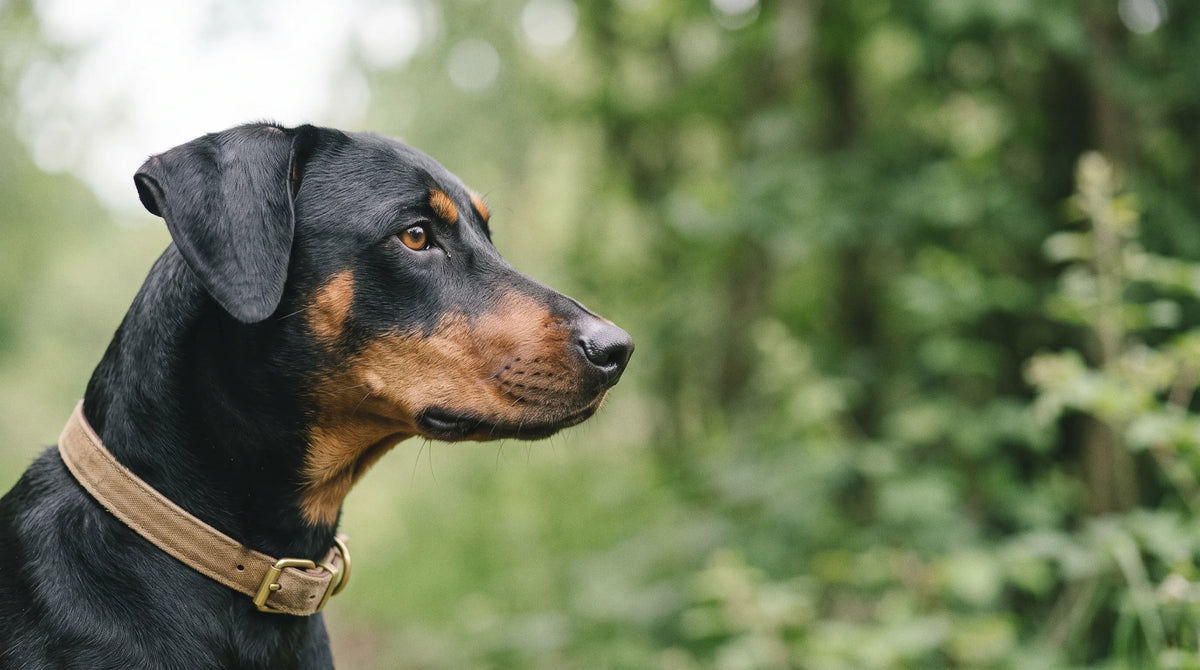
German Pinscher
- Medium
- Working Group
- Popularity rank 139
Sleek and athletic, the German Pinscher is an intelligent, courageous companion in a compact, muscular frame. This high-energy working breed is loyal and lively, happiest with an active owner who keeps body and mind busy.
- Height
- 17 to 20
- inches at the shoulder
- Weight
- 25 to 45
- pounds, adult
- Life expectancy
- 12 to 14
- years, median 13
- Senior from
- 9.8
- years, about
Senior starts in the last quarter of a breed's expected lifespan, following the 2019 AAHA canine life stage guidelines. Individual dogs vary.
About the breed
- Temperament
- Intelligent, courageous, vivacious
- Coat
- Smooth, short
- Origin
- Germany
- Recognized
- 2003
2015: rank 138, 2016: rank 146, 2017: rank 136, 2018: rank 134, 2019: rank 125, 2020: rank 139, 2021: rank 146, 2022: rank 145, 2023: rank 151, 2024: rank 133, 2025: rank 139
The German Pinscher is a sleek, streamlined dog that is eye-catching and elegant, yet honestly doggy in every way, with nothing fussy or exaggerated. A medium-sized breed, it stands about knee-high to the average adult, roughly 17 to 20 inches tall and 25 to 45 pounds, with muscles that ripple beneath a shimmering coat.
There is nobility in the elongated, wedge-shaped head, and the dark eyes are alert and eager. The German Pinscher moves with a strong, free-and-easy gait that marks a confident companion, up for anything the day might bring.
Intelligent, courageous, and vivacious, this is a working breed that thrives on activity and connection. It typically lives 12 to 14 years and was recognized by the registry in 2003.
Temperament and needs
Scored 1 to 5 for the breed overall. Individual dogs vary.
- Affectionate with family5 out of 5
- Good with young children3 out of 5
- Good with other dogs3 out of 5
- Openness to strangers3 out of 5
- Playfulness4 out of 5
- Watchdog and protective nature4 out of 5
- Adaptability3 out of 5
- Trainability5 out of 5
- Energy level5 out of 5
- Mental stimulation needs4 out of 5
- Barking level3 out of 5
- Shedding3 out of 5
- Grooming frequency1 out of 5
- Drooling1 out of 5
Care
The routines that matter most for this breed. Open one at a time.
Nutrition
Feed the German Pinscher a high-quality dog food matched to age (puppy, adult, or senior) and activity level. Food can be commercially manufactured or homemade with a veterinarian's supervision and approval, and clean, fresh water should always be available. With their energetic builds, German Pinschers need a well-balanced diet, and a few inputs help you set the right portion.
- Life stage: puppies under 1 year can eat up to four small meals a day to support rapid growth; adults typically do well with two meals daily; seniors may benefit from smaller, more frequent meals for easier digestion.
- Activity level: highly active dogs burn more calories and need larger portions, so adjust to the daily exercise routine.
- Body size and weight: a larger dog needs more food than a smaller one, so monitor weight regularly and adjust to maintain a healthy body condition.
Feed at roughly the same times each day, in the mornings and evenings, to regulate digestion. Avoid free-feeding, and remember that treats help with training but too many can lead to weight gain. A slow feeder bowl helps a dog that eats too quickly. Reduce portions or restrict calories if your dog gains weight, and check with your vet about any questions on weight or diet.
If your veterinarian recommends them, certain supplements offer added support. Glucosamine and chondroitin support cartilage and joint lubrication, which matters for an active breed. Omega-3 fatty acids support joint health and mobility, probiotics and prebiotic fibers support a healthy gut and digestion, and biotin supports skin and coat health.
Grooming
The German Pinscher's short, dense, smooth coat needs little maintenance. Weekly brushing removes dead hair and keeps the coat bright and shiny, and tangles are not an issue. This breed is a moderate shedder, so during heavier seasonal shedding in spring and fall, brush two or three times a week to manage loose hair.
When a bath is due, about every six to eight weeks, use a gentle shampoo to avoid drying the skin. Trim nails monthly if they do not wear down naturally, since overly long nails are painful and make walking and running difficult.
Check the ears weekly and clean as needed with a gentle ear cleaning solution to remove dirt, debris, and wax, drying thoroughly afterward. Watch for redness, swelling, discharge, bad odor, head shaking, or scratching around the ears, which can signal an ear infection and need veterinary attention.
Clean the eyes gently with a soft, damp cloth and lukewarm water, and avoid harsh chemicals or soaps near them. Some German Pinschers are prone to minor tear staining under the eyes; consult your veterinarian if the staining seems excessive or your dog shows discomfort.
Exercise
The German Pinscher is athletic, nimble, and very energetic, and the breed needs plenty of daily exercise for both physical and mental health. They thrive in active homes with space to run, play, and explore. Daily walks, engaging playtime, and mental stimulation keep them content, while a sedentary lifestyle or confined space is not a good fit.
With a strong prey drive and a sharp, intelligent mind, German Pinschers are exceptional performance dogs as well as companions. They take on almost any challenge that tests their abilities, including obedience, agility, rally, tracking, and barn hunts.
They tend to bark to alert when they sense something unusual, and excessive barking can be managed with training and positive reinforcement. Their playful nature can lead to digging, especially when bored or under-exercised, so designated digging areas and regular exercise help curb this.
German Pinschers suit active owners who can provide daily physical and mental exercise. Their strong prey drive also calls for caution around smaller pets and neighborhood critters.
Training
German Pinschers are highly intelligent, so much so that they can be manipulative. This willful, mischievous breed wants a firm, knowledgeable owner, ideally one with experience handling working dogs, and needs lots of early socialization and obedience training. They are not ideal as a first breed for inexperienced owners.
The main challenge is keeping them interested and engaged. The breed has a stubborn streak and can grow bored with monotonous drills and tune out commands, but reward-based training overcomes this, so keep treats and toys ready and mix up your approach to add variety. Keep sessions short and engaging, and stay consistent and patient.
German Pinschers do not need a job in the traditional sense, but they enjoy having a purpose. Agility training, obedience competitions, or playful tasks like fetching the newspaper all provide it, and some even excel at working jobs such as herding sheep.
Socialize puppies from a young age, exposing them to different people, pets, and environments. A well-trained, well-socialized German Pinscher can be good with children and other pets, though, as with any dog, interactions with kids should always be supervised. If you hit challenges, seek help from a board-certified veterinary behaviorist or a licensed certified trainer.
Health conditions
4 conditions are documented for the German Pinscher.
A predisposition is not a diagnosis. Ask your vet which screenings make sense for your dog's age.
- Eye ProblemsEye
- Glycogen Storage Disease Type IALiver
- Hip DysplasiaBone & Joint
- Von Willebrand DiseaseBlood


Sources
Thank you. Your report is in, and we will check this page.
Longevity & Vitality soft chew
Longevity & Vitality is a daily chew built on five active ingredients. Each chew carries Turkey Tail at 600mg, Curcuvet® curcumin at 75mg, Quercefit® quercetin at 40mg, Fibalance® at 275mg and EpiCor® at 50mg. The daily serving follows your dog's weight, from half a chew to three.
