
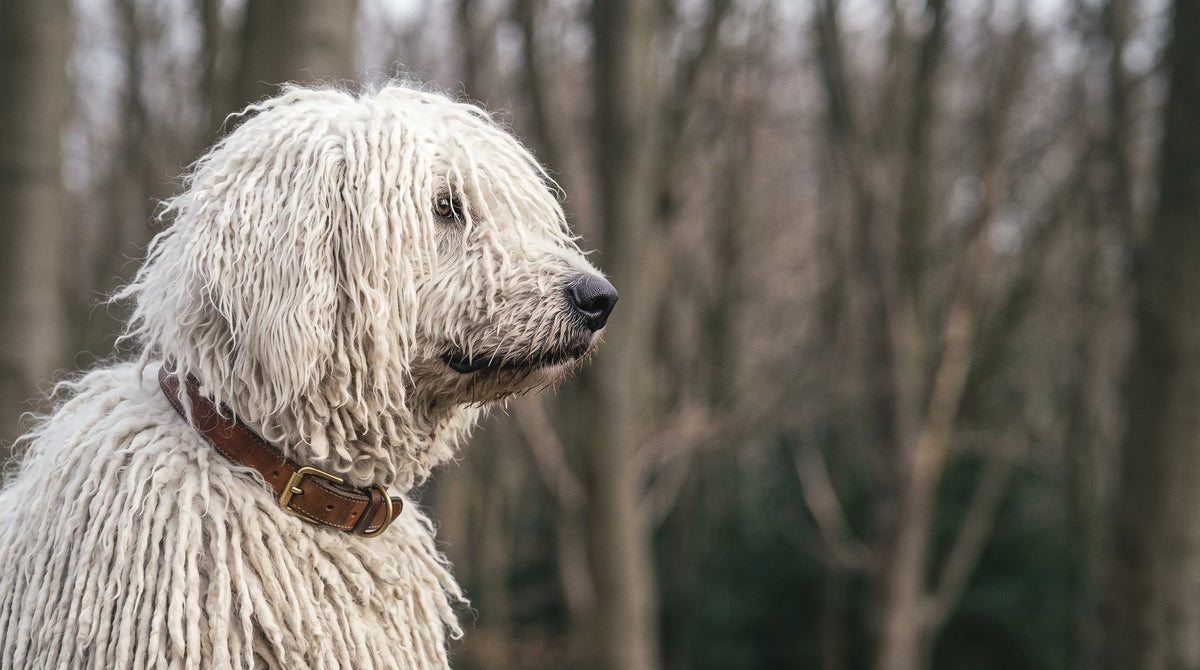
Komondor
- Large
- Working Group
- Popularity rank 185
The Komondor is a large Hungarian guardian wrapped in a heavy white corded coat that looks like nothing else in dogs. Dignified, loyal, and brave, this ancient flock protector is calm at home and devoted to the family it watches over.
- Height
- 25.5 to 27.5
- inches at the shoulder
- Weight
- 80 to 100
- pounds, adult
- Life expectancy
- 10 to 12
- years, median 11
- Senior from
- 8.2
- years, about
Senior starts in the last quarter of a breed's expected lifespan, following the 2019 AAHA canine life stage guidelines. Individual dogs vary.
About the breed
- Temperament
- Dignified, loyal, brave
- Coat
- Corded, long
- Origin
- Hungary
- Recognized
- 1937
2015: rank 163, 2016: rank 177, 2017: rank 163, 2018: rank 173, 2019: rank 183, 2020: rank 178, 2021: rank 186, 2022: rank 175, 2023: rank 180, 2024: rank 186, 2025: rank 185
The Komondor is a large, strong guardian covered in heavy white cords that are sometimes called dreadlocks. The Komondor has a visually distinctive heavy corded coat. (A Hungarian note: the plural is Komondorok.)
The breed is ancient, kept in Hungary for many centuries to guard flocks of sheep and other livestock from predators. The cords helped them blend in with the sheep. The American Kennel Club recognized the breed in 1937, and it belongs to the Working Group.
This is a big dog, with heavy bone, a deep chest, and plenty of muscle. Males and females stand about 25.5 to 27.5 inches tall and weigh roughly 80 to 100 pounds. Despite their brawn, Komondorok are agile and light-footed and move with long strides. Their average lifespan is 10 to 12 years.
Thanks to their guardian history, Komondorok are typically calm and steady. They are also intelligent, affectionate, and dignified.
Temperament and needs
Scored 1 to 5 for the breed overall. Individual dogs vary.
- Affectionate with family5 out of 5
- Good with young children3 out of 5
- Good with other dogs2 out of 5
- Openness to strangers3 out of 5
- Playfulness3 out of 5
- Watchdog and protective nature5 out of 5
- Adaptability3 out of 5
- Trainability4 out of 5
- Energy level3 out of 5
- Mental stimulation needs3 out of 5
- Barking level3 out of 5
- Shedding1 out of 5
- Grooming frequency4 out of 5
- Drooling2 out of 5
Care
The routines that matter most for this breed. Open one at a time.
Nutrition
Komondorok do not eat much for their size. They do well on a high-quality dog food matched to their life stage, whether puppy, adult, or senior. Some owners note that too much protein can lead to scratching, hotspots, or other skin reactions. The breed does not need much volume and will sometimes skip a meal when not hungry, a habit that traces back to a working past spent sharing what the shepherd ate.
Full-grown Komondorok do well with twice-daily feedings, one in the morning and one in the evening. Puppies need to eat more often, three or four feedings a day on a consistent schedule.
The amount each dog needs varies. The feeding guide on the package recommends a total amount over a 24-hour period, which works as a general starting point, but your veterinarian can give the most reliable advice. A complete, balanced food that meets recognized nutritional standards supplies all the nutrients a Komondor needs.
Your vet may recommend supplements if your dog needs them, but never add supplements without talking to your vet first. Give table scraps sparingly, if at all, and avoid cooked bones and high-fat foods. Learn which human foods are safe for dogs and which are not.
Grooming
A corded coat is the result of deliberate care, not chance. The cords grow naturally, but a healthy, clean coat takes work, and Komondorok are not brushed. Before they reach a year old, the coat starts to clump, or plate up. As that happens, you split each clump into sections that grow from an area of skin about the size of a quarter, and those sections grow out into the cords.
Mature cords cannot be brushed, but occasional baths keep them clean. Bathing with diluted shampoo does the job, and there is no reason for a corded coat to smell bad or look dirty. Rinse out every trace of shampoo, then dry completely by squeezing, towelling, and finishing in front of a strong fan overnight. A coat left damp or holding leftover shampoo can start to smell.
As the cords develop, separate them regularly to prevent matting and dirt buildup. To keep the coat white, deal with messes quickly; a trip into a mud puddle may need only a quick rinse. As with any long-haired dog, make a skin check part of grooming, looking for ticks, fleas, and any changes such as redness or flakiness.
Komondorok also need regular ear cleanings, nail trims, and a dental routine that includes at-home teeth brushing and professional cleanings. Clean the ears with a veterinary-approved cleaner every two weeks to help keep them healthy. The eyes need no special grooming, but contact your veterinarian if you notice squinting or discharge.
Exercise
Komondorok are athletic for their size, with moderate exercise needs. Free-running time in a large, securely fenced yard, daily walks, fetch, and play with housemate dogs help them stay in shape.
Dog parks are usually a bad idea for this breed. Developed as a livestock guardian, a Komondor's guarding instincts can lead to a sharp reaction to loose stranger dogs or to the sense that a group of dogs is a threatening pack.
Do not expect a Komondor to head outside and play on its own. These are very social dogs, devoted to their owners, and their protective instincts keep them wanting their family close. They do not want to be left alone for long stretches, and they will bark when something demands their full attention.
Komondorok are intelligent working dogs with strong guarding instincts and a need for purposeful activity. They appear in the show ring and can live as family companions.
Training
Early socialization and puppy training classes matter for the Komondor, along with obedience training and a clear, consistent sense that the person is in charge. These are independent thinkers, bred to work solo and make decisions for the flock without direction. That leaves a stubborn, independent streak, and a Komondor can become overly protective without training.
Aim to have the dog following commands consistently by about one year of age, and working toward a basic obedience title is a good way to get there. They respond well to positive reinforcement and rewards, while heavy-handed training can cause them to shut down. Because they were bred to be independent thinkers, they can challenge the average trainer, and they bore with repetition while loving to learn something new. Keep sessions short and varied.
Socialization is just as important. Komondorok have strong protective instincts and can be wary of strangers, so they need many positive interactions with new people to learn to lower their guard. Exposing your puppy to a range of new people and situations helps them grow comfortable with new experiences.
With proper socialization, most Komondorok are usually gentle with the children in their family and live happily with other dogs and animals.
Health conditions
5 conditions are documented for the Komondor.
A predisposition is not a diagnosis. Ask your vet which screenings make sense for your dog's age.
- Cobalamin MalabsorptionDigestive
- Degenerative MyelopathyNervous System & Behavioral
- Ear InfectionsEar & Hearing
- EntropionEye
- Hip and Elbow DysplasiaBone & Joint


Sources
Thank you. Your report is in, and we will check this page.
Longevity & Vitality soft chew
Longevity & Vitality is a daily chew built on five active ingredients. Each chew carries Turkey Tail at 600mg, Curcuvet® curcumin at 75mg, Quercefit® quercetin at 40mg, Fibalance® at 275mg and EpiCor® at 50mg. The daily serving follows your dog's weight, from half a chew to three.
