
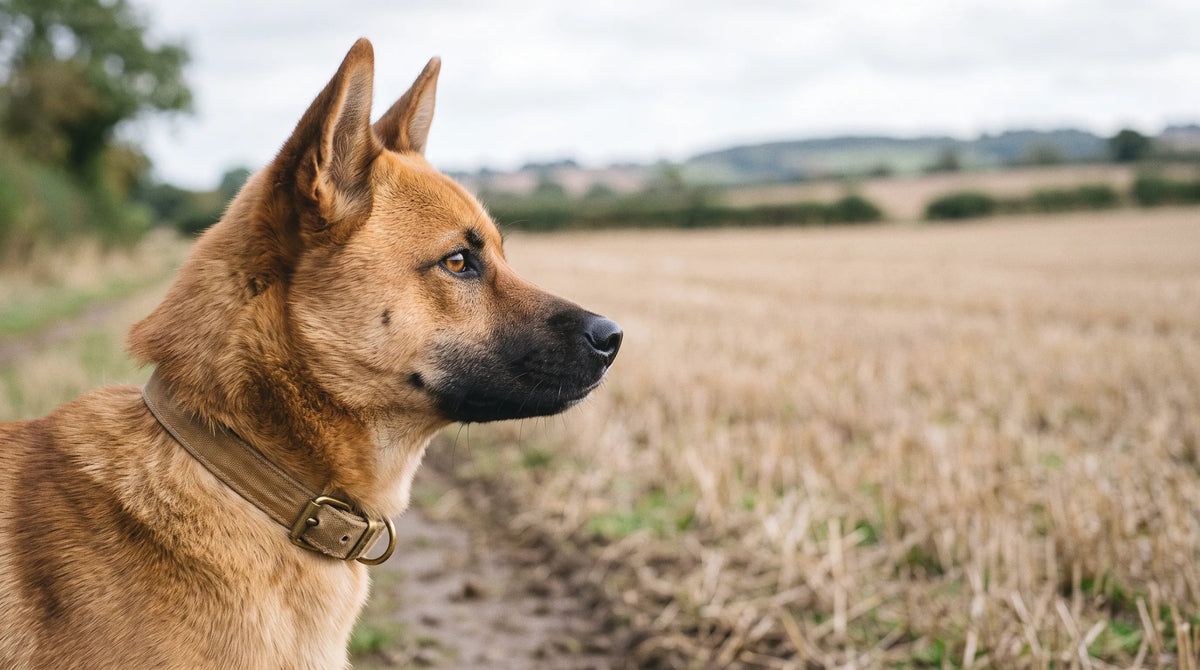
Korean Jindo
- Medium
- Foundation Stock Service
Loyal to the point of legend, the Korean Jindo is a medium-sized hunting dog from South Korea, alert and intelligent. Often a one-person dog, it thrives with an experienced owner who can meet its drive.
- Height
- 17 to 22
- inches at the shoulder
- Males 19 to 22, females 17 to 20 in
- Weight
- 30 to 50
- pounds, adult
- Males 40 to 50, females 30 to 40 lb
- Life expectancy
- 14 to 15
- years, median 14.5
- Senior from
- 10.9
- years, about
Senior starts in the last quarter of a breed's expected lifespan, following the 2019 AAHA canine life stage guidelines. Individual dogs vary.
About the breed
- Temperament
- Alert, loyal, intelligent
- Coat
- Double, medium
- Origin
- South Korea
The Korean Jindo is a well-proportioned, medium-sized dog long used for hunting and guarding. With erect ears, a foxlike face, and a rolled or sickle-shaped tail that curls over its back, it carries a look of agility, strength, and quiet dignity. Adults stand about 17 to 22 inches and weigh 30 to 50 pounds, built muscular and athletic.
The coat is a coarse, medium-length double coat that comes in shades of red, white, gray, black, or tan. The Jindo is a designated national treasure in its country of origin.
Little is known about the breed's beginnings, as there is no written record of its origin. The Jindo is widely thought to have roamed Jindo, an island off South Korea's southwest coast, for thousands of years.
By nature the Jindo is intelligent, bold, careful, and reserved, never easily tempted or impetuous. Above all it is faithful, often described as a one-person dog that stays devoted to its people. It readily accepts a new owner yet never forgets an attachment to the person who raised it from puppyhood.
Temperament and needs
Scored 1 to 5 for the breed overall. Individual dogs vary.
- Affectionate with family3 out of 5
- Good with young children3 out of 5
- Good with other dogs1 out of 5
- Openness to strangers1 out of 5
- Playfulness3 out of 5
- Watchdog and protective nature3 out of 5
- Adaptability1 out of 5
- Trainability3 out of 5
- Energy level3 out of 5
- Mental stimulation needs3 out of 5
- Barking level3 out of 5
- Shedding3 out of 5
- Grooming frequency3 out of 5
- Drooling1 out of 5
Care
The routines that matter most for this breed. Open one at a time.
Nutrition
A Jindo does well on a high-quality dog food, whether commercially made or home-prepared under your veterinarian's supervision. Match the diet to the dog's life stage: puppy, adult, or senior. Jindos are light eaters, and their lean build often makes owners worry, but it is easy to turn one into a picky eater by leaving food down all day or adding treats to coax eating.
Most adult Jindos do well on two meals a day, one in the morning and one in the evening. Puppies have a higher metabolism, so a midday feeding for three meals total usually works better. Your vet can help you set the right schedule for your dog's age.
The feeding guide on the food bag gives a general idea of how much to feed based on weight. For a more precise answer, ask your veterinarian, who will also factor in body condition, lifestyle, and health needs.
A Jindo eating a complete and balanced food that meets recognized nutritional standards usually needs nothing extra. Talk to your veterinary team before adding any supplement, and keep clean, fresh water available at all times.
Grooming
The Jindo is a fastidious, naturally clean breed. Its thick double coat repels dirt and water, so these dogs normally carry little doggy odor. For most of the year the coat needs little more than brushing once or twice a week with a slicker or pin brush to keep shedding down, plus an occasional bath.
Twice a year, like all double-coated breeds, the Jindo blows its coat. Over a month or more the entire undercoat sheds out, which calls for more frequent brushing and regular vacuuming at home. Extra grooming during these seasonal periods keeps the coat looking its best.
Jindos also need nail trims, and many feel more relaxed when their own owner handles the job. Routine dental care should include regular teeth brushing and professional cleanings.
Ask your veterinary team how and how often to clean your Jindo's ears, and make an appointment if you notice signs of infection such as head-shaking, redness, pain, or a foul odor. The breed needs no special skin care, but check for ticks after outdoor play, and call your vet if you notice anything unusual around the eyes, such as redness or discharge.
Exercise
The Jindo is a high-energy hunting and guard dog developed to travel many miles and take down small and large game. It needs substantial physical and mental work and suits an active household. It can guard acreage or learn tricks.
The breed enjoys high-intensity outlets such as lure coursing and agility, has run on sled dog teams, and welcomes the chance to work, especially in cold weather. Even a long walk channels that athleticism. Indoors they are polite and attentive, often following their owner from room to room, happy to curl up nearby and watch over their person.
Hunting and sporting breeds like the Jindo carry strong prey drives that go beyond play, so a reliable recall lowers the risk of chasing smaller animals. Without enough exercise, a Jindo finds its own ways to move, which may mean escaping. On walks, use a strong leash and harness, be ready to restrain your dog around other dogs, and steer clear of the dog park.
Because they are so intelligent, Jindos are prone to anxiety, especially separation anxiety, and should not be left alone for long stretches. A bored, anxious Jindo may use its smarts to escape or develop unwanted habits like barking and chewing. Work with your veterinarian to learn how to help a dog with social anxiety.
Training
The Jindo is intelligent and independent, with strong problem-solving skills and a calm, confident, thoughtful nature, never fearful or aggressive without reason. It is keenly protective of owner and property and prized as a watchdog that does not react unless necessary. It is a breed trait to be very uncomfortable when forcibly restrained by a stranger.
Early socialization and puppy training classes are extremely important to expose the Jindo to its environment and build the basics of a good canine citizen. The same smarts that let a Jindo learn to open gates and crates make it an apt student, and the breed learns well with positive reinforcement. Heavy-handed training can cause a Jindo to shut down, while an untrained one can show unchecked dominance.
The Jindo has high prey drive and little tolerance for rude behavior from other dogs, and it is generally uninterested in strange dogs outside the home. Within the home, same-sex dog aggression is common, so opposite-sex pairs are recommended. When properly socialized, Jindos can do well with other pets and children, though some prefer to be the only pet.
Jindos are extremely clean and tend to be naturally housebroken at a very young age. Because they bond so deeply, breed-association guidance recommends that owners do the training themselves rather than hand it off, though help from a professional trainer is fine. Consistent, reward-based work builds the bond and gives the Jindo the mental exercise it needs.
Health conditions
2 conditions are documented for the Korean Jindo.
A predisposition is not a diagnosis. Ask your vet which screenings make sense for your dog's age.
- Discoid Lupus ErythematosusSkin & Connective Tissue
- HypothyroidismHormonal

Sources
Thank you. Your report is in, and we will check this page.
Longevity & Vitality soft chew
Longevity & Vitality is a daily chew built on five active ingredients. Each chew carries Turkey Tail at 600mg, Curcuvet® curcumin at 75mg, Quercefit® quercetin at 40mg, Fibalance® at 275mg and EpiCor® at 50mg. The daily serving follows your dog's weight, from half a chew to three.
