
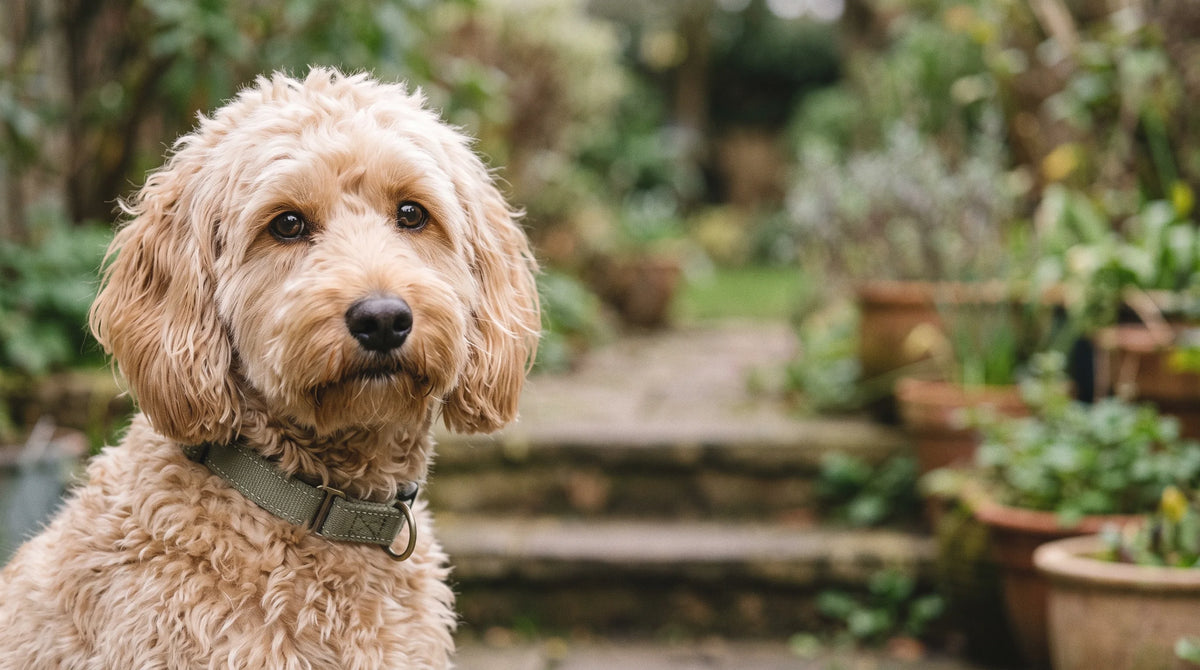
Miniature Labradoodle
- Small
The Miniature Labradoodle crosses a Labrador Retriever with a Miniature Poodle rather than a Standard, giving a dog of 16 to 20 inches and about 30 pounds. It has the same character as the big one, in an apartment size.
- Height
- 16 to 20
- inches at the shoulder
- Weight
- ≤30
- pounds, adult
- Life expectancy
- 12 to 15
- years, median 13.5
- Senior from
- 10.1
- years, about
Senior starts in the last quarter of a breed's expected lifespan, following the 2019 AAHA canine life stage guidelines. Individual dogs vary.
About the breed
- Temperament
- Friendly, loyal, playful, intelligent, affectionate, energetic
- Coat
- Curly, Wavy, long
The Miniature Labradoodle is a Labrador Retriever crossed with a Miniature Poodle. Full-grown it stands 16 to 20 inches tall and weighs around 30 pounds, against the 50 to 75 pounds of the standard size. Typical lifespan for the cross is 12 to 15 years.
The temperament comes from the same two breeds, so expect the same things in a smaller package: bright, playful, attention-seeking, very keen on company. Labradoodles of any size are easy to train and are often recommended to first-time owners for exactly that reason. They are usually good with young children and with other pets when introductions are handled slowly.
Do not read small as low-maintenance. The coat is the same low-shedding, high-effort coat the larger size wears, and it mats just as readily on a 30-pound dog. Nor is small the same as sedentary: this is still a working retriever crossed with a poodle, and it needs a real walk rather than a turn around the block.
What the smaller size does change is where the dog fits. A Miniature Labradoodle is easier to house in an apartment and easier to handle physically, which matters if lifting a wet dog into a bath is part of your week.
Care
The routines that matter most for this breed. Open one at a time.
Nutrition
Choose a food that meets the Association of American Feed Control Officials (AAFCO) standards and matches your dog's life stage. On a complete and balanced commercial diet a Miniature Labradoodle should not need supplements, and none should go in the bowl without your vet agreeing first.
Two meals a day suits an adult. Puppies under six months generally need to eat more often than that, and at this size the meals themselves are small, so getting the frequency right matters more than the portion does.
Portion control is where a smaller dog differs most. The same handful of treats that barely registers on a 70-pound Labradoodle is a meaningful share of a 30-pound one's daily calories, so keep treats to 10 percent of the total and count them. Table scraps are worth avoiding outright: they are usually fatty, often calorie-dense for the size of the dog, and occasionally toxic.
If your dog eats too fast, a slow feeder bowl or a food-dispensing toy will slow the meal down and add a few minutes of thinking to the day.
Grooming
The Miniature Labradoodle's coat comes in as many textures as the larger size, from tight curls to loose waves, and it needs the same routine. Low shedding is bought with brushing.
Brush twice a week at minimum, daily if your dog knots easily, and work down to the skin rather than over the top of the coat. Mats form first at the friction points, so check behind the ears, between the legs and around the rear every time. Do not pass over the same patch more than twice in one session. A professional groom every two to three months keeps the coat from getting ahead of you, and a coat that does get ahead usually has to be shaved off.
Bathe as needed rather than on a schedule, using a dog shampoo. Trim the hair over the eyes so your dog can see out, and watch for the eye conditions this cross carries.
Ears deserve particular attention. A drop-eared dog with hair in the canal is a dog that gets ear infections, so clean them regularly and always after a bath or a swim, with a product your vet recommends.
Exercise
A Miniature Labradoodle needs less ground than the standard size but the same daily habit. Aim for a proper walk plus play rather than one short outing, and adjust upward if your dog is still restless in the evening.
Fetch, tug-of-war, swimming and a trip to the dog park all work. So does hiking, within reason for the leg length. Agility is a particularly good fit at this size, because the obstacles are easier on a smaller frame and the mental load is high.
Count the thinking as exercise. Food puzzles and training games take the edge off a bright dog on a bad-weather day, and a Miniature Labradoodle with nothing to do gets into things. The breed's reputation for mischief is really a reputation for boredom.
This size lives comfortably in an apartment as long as the walk happens.
Training
Both parent breeds are near the top of any list of trainable dogs, and the Miniature Labradoodle inherits that. Reward-based training works, harsh handling is unnecessary, and most of them will learn far more than the basics if you keep going.
Begin in puppyhood. Two things in particular are easier to teach young than to fix later: standing calmly for grooming, which this coat will demand for the dog's whole life, and being comfortable alone. Crate training and interactive toys left out when you go are the usual first steps against separation anxiety, and this is a cross that hates long days by itself.
Socialise carefully around larger dogs and small children. A 30-pound dog is easy to knock over and easy to frighten, and a bad early experience sticks. Introduce slowly, and get a trainer involved if you are not sure how a meeting will go.
Labradoodles are not usually noisy dogs, but a bored one will find a voice.
Health conditions
7 conditions are documented for the Miniature Labradoodle.
A predisposition is not a diagnosis. Ask your vet which screenings make sense for your dog's age.
- Addison's DiseaseHormonal
- CataractsEye
- GlaucomaEye
- Heart DiseaseHeart
- Hip DysplasiaBone & Joint
Show all 7 conditions Show fewer
- Patellar LuxationBone & Joint
- Progressive Retinal AtrophyEye
May inherit from parent breeds
These conditions are documented in the parent breeds, not in this cross itself. Carrier possible means the condition is recessive: a dog can carry it without showing signs. Ask the breeder which tests the parent dogs had.
- Bacterial pyodermaLabrador Retriever
- BronchiectasisMiniature Poodle
- Carprofen-associated idiosyncratic hepatotoxicityLabrador Retriever
- Centronuclear MyopathyCarrier possible · Labrador Retriever
- Chronic BronchitisMiniature Poodle
Show all 58 conditions Show fewer
- Congenital Dyserythropoietic Anemia and PolymyopathyLabrador Retriever
- Congenital Myasthenic SyndromeLabrador Retriever
- Copper Toxicosis (Accumulating)Labrador Retriever
- Copper Toxicosis (Attenuating)Labrador Retriever
- Corneal DystrophyCarrier possible · Labrador Retriever
- CryptorchidismMiniature Poodle
- Cutaneous and renal glomerular vasculopathy, Alabama rotLabrador Retriever
- Day BlindnessLabrador Retriever
- Degenerative MyelopathyCarrier possible · Labrador Retriever
- DyschondroplasiaMiniature Poodle
- DystociaMiniature Poodle
- Dystrophin-Deficient Muscular DystrophyLabrador Retriever
- Ear InfectionsLabrador Retriever
- Ectopic UreterLabrador Retriever, Miniature Poodle
- Elbow DysplasiaLabrador Retriever
- Exercise-Induced CollapseCarrier possible · Labrador Retriever
- Eye ProblemsMiniature Poodle
- Geriatric-onset laryngeal paralysis polyneuropathy, GOLPPLabrador Retriever, Miniature Poodle
- Golden Retriever Progressive Retinal Atrophy 2Labrador Retriever
- Heat-related illness (including heatstroke)Labrador Retriever
- HemangiosarcomaLabrador Retriever
- Hereditary Nasal ParakeratosisCarrier possible · Labrador Retriever
- HypothyroidismLabrador Retriever, Miniature Poodle
- Idiopathic epilepsy, including epilepsy of unknown originLabrador Retriever, Miniature Poodle
- Idiopathic Functional Urinary Outflow ObstructionLabrador Retriever
- Immune-mediated polyarthritisLabrador Retriever
- Immune-mediated thrombocytopeniaMiniature Poodle
- Intervertebral Disc DiseaseMiniature Poodle
- Laryngeal ParalysisCarrier possible · Labrador Retriever
- Laryngeal Paralysis and PolyneuropathyLabrador Retriever
- Legg-Calve-Perthes DiseaseMiniature Poodle
- Lyme-associated glomerulonephritis, presumptive Lyme nephritisLabrador Retriever
- Mitral Valve DiseaseMiniature Poodle
- Muscular DystrophyLabrador Retriever
- NarcolepsyCarrier possible · Labrador Retriever
- Noise aversion (noise sensitivity; noise phobia when clinically diagnosed)Miniature Poodle
- OsteoarthritisLabrador Retriever
- Primary uterine inertiaLabrador Retriever
- Progressive Retinal Atrophy, crd4/cord1Labrador Retriever
- Progressive Retinal Atrophy, prcdLabrador Retriever
- Puerperal hypocalcemia (eclampsia)Miniature Poodle
- Pyotraumatic folliculitis and furunculosisLabrador Retriever
- Sinonasal aspergillosisLabrador Retriever
- Skeletal Dysplasia 2Labrador Retriever
- Soft Palate HyperplasiaLabrador Retriever
- Stargardt DiseaseLabrador Retriever
- Succinic Semialdehyde Dehydrogenase DeficiencyCarrier possible · Labrador Retriever
- Systemic lupus erythematosusMiniature Poodle
- Systemic lupus erythematosus-associated polyarthritisMiniature Poodle
- Tracheal CollapseMiniature Poodle
- Tracheobronchial Collapse and BronchomalaciaMiniature Poodle
- Tricuspid Valve DysplasiaCarrier possible · Labrador Retriever
- Urate Kidney & Bladder StonesCarrier possible · Labrador Retriever



Longevity & Vitality soft chew
Longevity & Vitality is a daily chew built on five active ingredients. Each chew carries Turkey Tail at 600mg, Curcuvet® curcumin at 75mg, Quercefit® quercetin at 40mg, Fibalance® at 275mg and EpiCor® at 50mg. The daily serving follows your dog's weight, from half a chew to three.
