

Mudi
- Medium
- Herding Group
- Popularity rank 125
The Mudi is a rare Hungarian herding dog: loyal, intelligent, and intensely active. Bred for all-purpose farm work, this medium-sized athlete bonds tightly with its person and needs a real job to stay happy.
- Height
- 15 to 18.5
- inches at the shoulder
- Weight
- 18 to 29
- pounds, adult
- Life expectancy
- 12 to 14
- years, median 13
- Senior from
- 9.8
- years, about
Senior starts in the last quarter of a breed's expected lifespan, following the 2019 AAHA canine life stage guidelines. Individual dogs vary.
About the breed
- Temperament
- Loyal, intelligent, active
- Coat
- Curly, medium
- Origin
- Hungary
- Recognized
- 2022
2022: rank 150, 2023: rank 130, 2024: rank 122, 2025: rank 125
The Mudi is a rare Hungarian herding breed developed by the 19th century, with a small global population concentrated in Hungary and Finland.
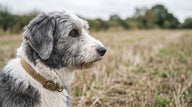
A Mudi stands 15 to 18.5 inches tall and weighs 18 to 29 pounds, with a wedge-shaped head and almond-shaped eyes. The medium-length coat is curly. Puppies can be born with a long tail or a natural bobtail.
This is a true working breed: loyal, intelligent, and active, with a body built for drive. The plural is Mudik, and they show a wide range of personalities, in part because breeders have focused on all-purpose farm work rather than companionship or competition. Expect a Mudi to be alert and keenly interested in its surroundings, with a colorful personality that suits an active home rather than a passive one.
Recognition by the major U.S. kennel registry in 2022 has grown interest in the breed. Bred to work, many Mudik still settle down well at home, which helps balance their active nature.
Temperament and needs
Scored 1 to 5 for the breed overall. Individual dogs vary.
- Affectionate with family5 out of 5
- Good with young children3 out of 5
- Good with other dogs3 out of 5
- Openness to strangers3 out of 5
- Playfulness5 out of 5
- Watchdog and protective nature4 out of 5
- Adaptability4 out of 5
- Trainability5 out of 5
- Energy level5 out of 5
- Mental stimulation needs4 out of 5
- Barking level4 out of 5
- Shedding2 out of 5
- Grooming frequency1 out of 5
- Drooling2 out of 5
Care
The routines that matter most for this breed. Open one at a time.
Nutrition
The Mudi does well on a high-quality dog food, whether commercially manufactured or home-prepared under your veterinarian's supervision and approval. Match the diet to your dog's life stage (puppy, adult, or senior), and consider a formula made for active breeds, since the Mudi needs enough calories to support its energetic nature. Keep clean, fresh water available at all times, and learn which human foods are safe for dogs and which are not.
Most Mudik do well on two meals a day, though puppies may need smaller, more frequent meals. The breed can be prone to obesity, so measure each meal with a cup and do not free-feed. Your dog's age, weight, and activity level determine actual calorie needs, so use the feeding guidelines on the food you choose and ask your vet for advice.
Do not overlook the calories in training treats or dental chews. Treats should make up no more than 10% of your dog's daily calories.
In many cases, dogs fed a complete, balanced diet receive all the nutrients they need and require no supplements. Because the Mudi can be prone to joint problems, a joint supplement may support overall health. Consult your veterinarian for suggestions.
Grooming
The Mudi has a low-maintenance coat. Occasional baths, brushing to remove dead hair, and regular nail care are usually enough. The dirt-repellent coat rarely needs frequent bathing.
Brush the medium-length coat a few times a week to remove debris and tangles, especially where it feathers, such as behind the legs or ears. The coat does not typically need clipping or trimming, so regular groomer visits are not required. The Mudi has no special skin care requirements.
The breed does need regular ear cleanings and a dental routine that includes at-home teeth brushing and professional cleanings. Watch for excess wax buildup or signs of infection or irritation in the ears, and ask your veterinarian how often to clean them and which products to use.
A Mudi does not usually need special eye care. When you brush your dog, check the eyes for cloudiness, irritation, or discharge, and contact your veterinarian if you notice a change.
Exercise
Mudik are very energetic. They are calm and relaxed in the house, but once outside they appreciate a good run. Plan on one to two hours a day of exercise, mental stimulation, and training games. A well-exercised Mudi tends not to find trouble.
Mudik can participate in flyball, obedience, herding, disc sports, running, hiking, swimming, and search-and-rescue work.
Mudik are vocal, using a range of noises to communicate for attention or during play, plus a high-pitched alert bark when they meet unfamiliar people or animals. Mudik are athletic jumpers and can also dig.
Never leave a Mudi outside unsupervised. Keep it engaged so it does not dig for entertainment or look for an easy escape. The right pet parent is someone active, adaptable, and good-humored, so research the breed before bringing home a puppy or an adult.
Training
Mudik are alert, attentive, energetic, responsive to training, and capable as watchdogs. Regular training channels their activity.
Focus on positive, reward-based training with treats and toys. The Mudi is smart and an independent thinker, so keep sessions stimulating and varied; too much repetition makes these dogs lose interest. This is a breed that cares about fairness and a healthy relationship, and training and competing can become true partnerships.
Like all breeds, Mudik need socialization from an early age to be comfortable around children, other pets, and new people. Even well-socialized Mudik may prefer a select few. They tend to be one-person or one-family dogs and can struggle to accept strangers, so consistent effort helps in social situations. Some stay reserved with strangers or unfamiliar dogs, while others readily greet newcomers.
Remember that every dog is an individual, and breed accounts for only about 9% of a dog's behavior. The Mudi may challenge fixed ideas about raising and training a dog. If you want a companion with the athleticism and drive to partner you in dog sports, the Mudi might be your match.
Health conditions
4 conditions are documented for the Mudi.
A predisposition is not a diagnosis. Ask your vet which screenings make sense for your dog's age.
- CataractsEye
- Hip and Elbow DysplasiaBone & Joint
- Idiopathic epilepsy, including epilepsy of unknown originNervous System & Behavioral
- Patellar LuxationBone & Joint


Sources
Thank you. Your report is in, and we will check this page.
Longevity & Vitality soft chew
Longevity & Vitality is a daily chew built on five active ingredients. Each chew carries Turkey Tail at 600mg, Curcuvet® curcumin at 75mg, Quercefit® quercetin at 40mg, Fibalance® at 275mg and EpiCor® at 50mg. The daily serving follows your dog's weight, from half a chew to three.
