
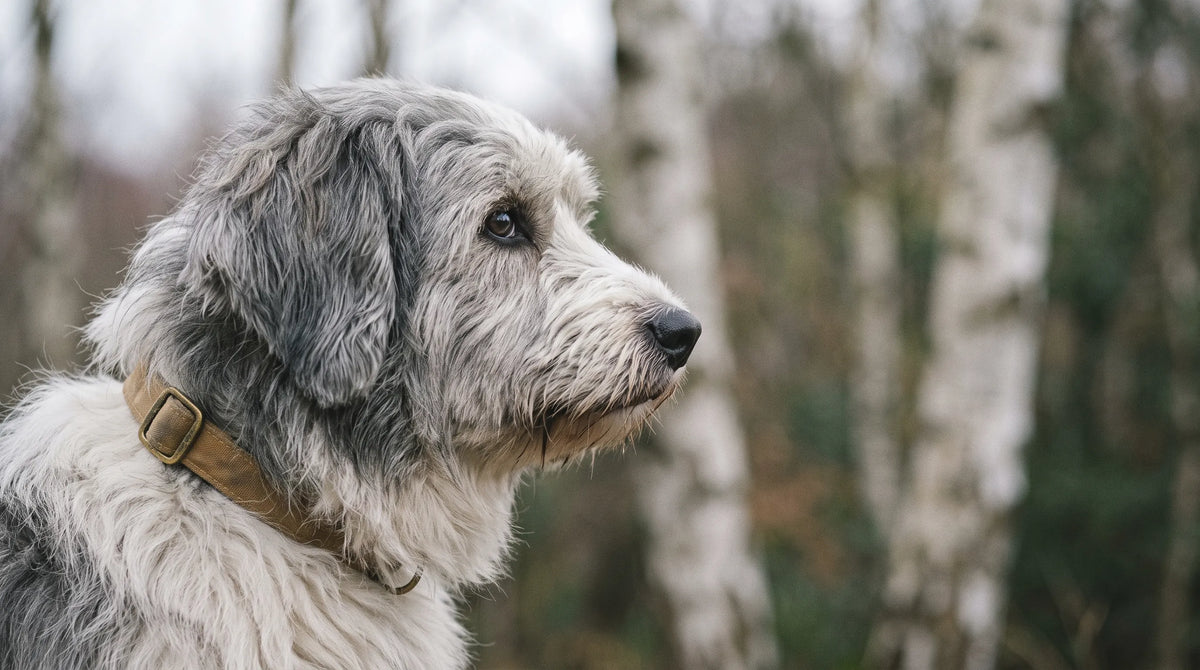
Polish Lowland Sheepdog
- Medium
- Herding Group
- Popularity rank 192
The Polish Lowland Sheepdog, or PON, is a shaggy medium-sized herder from Poland. Confident, lively, and clever, this muscular dog wears a mop of long double coat over a watchful, devoted, hardworking nature.
- Height
- 17 to 20
- inches at the shoulder
- Weight
- 30 to 50
- pounds, adult
- Life expectancy
- 12 to 14
- years, median 13
- Senior from
- 9.8
- years, about
Senior starts in the last quarter of a breed's expected lifespan, following the 2019 AAHA canine life stage guidelines. Individual dogs vary.
About the breed
- Temperament
- Confident, lively, clever
- Coat
- Double, long
- Origin
- Poland
- Recognized
- 2001
2015: rank 164, 2016: rank 169, 2017: rank 176, 2018: rank 170, 2019: rank 175, 2020: rank 175, 2021: rank 180, 2022: rank 181, 2023: rank 193, 2024: rank 181, 2025: rank 192
The Polish Lowland Sheepdog, known as the PON (short for the Polish name Polski Owczarek Nizinny), is a medium-sized herding breed from Poland, where it was bred to herd and guard sheep. The breed descends from the Hungarian Puli and was recognized in 2001.
These are not large dogs, standing no more than 20 inches at the shoulder and weighing 30 to 50 pounds, but they are muscular and stocky with a rectangular build. A long, shaggy double coat covers them head to toe, crisp on top and soft below, in several colors. The thick coat falls over the eyes, which carry the keen, penetrating gaze of a watchdog and herder. That moplike coat does a job: it protects the dog from harsh weather and rugged ground out in the lowlands.
Confident, lively, and clever, the PON is intelligent, loyal, and devoted. With the right balance of structure, affection, and activity, it becomes a steady companion in an attentive household.
Temperament and needs
Scored 1 to 5 for the breed overall. Individual dogs vary.
- Affectionate with family5 out of 5
- Good with young children3 out of 5
- Good with other dogs3 out of 5
- Openness to strangers3 out of 5
- Playfulness4 out of 5
- Watchdog and protective nature5 out of 5
- Adaptability5 out of 5
- Trainability4 out of 5
- Energy level3 out of 5
- Mental stimulation needs4 out of 5
- Barking level4 out of 5
- Shedding2 out of 5
- Grooming frequency4 out of 5
- Drooling2 out of 5
Care
The routines that matter most for this breed. Open one at a time.
Nutrition
The PON does well on a high-quality dog food, whether commercially made or home-prepared under your veterinarian's supervision. Match the diet to the dog's life stage, whether puppy, adult, or senior, and keep clean, fresh water available at all times. A healthy dog will typically get all the nutrients it needs from a complete, balanced food.
Some PONs put on weight easily, so watch calorie intake and body condition. Measure each meal rather than free-feeding, since free-feeding can lead to obesity, and keep treats to no more than 10% of daily calories. How much to feed depends on age, weight, activity level, and overall health; start with the guidelines on the food packaging, then adjust to your dog's condition, and check with your vet about any weight or diet concerns.
A consistent feeding routine works well:
- Adults: two measured meals a day, morning and evening
- Puppies: about three smaller meals a day until 6 months old, then move to twice daily
If you are considering supplements, always consult your veterinarian first. Omega-3 fatty acids from fish oil support healthy skin and a shiny coat, while glucosamine and chondroitin help maintain joint function and mobility.
Grooming
The PON's shaggy, thick double coat takes steady upkeep. The outer coat is crisp with a water-resistant texture, and the undercoat is soft and dense. A dog kept in full coat needs a thorough brushing at least once a week to remove dead hair and prevent mats and tangles, with attention behind the ears, under the legs, and around the collar. Some pet parents opt for a puppy or summer clip, but even a shorter coat still needs routine brushing to stay free of mats and debris like grass and weeds.
Bathe every four to six weeks with a gentle, dog-specific shampoo so you do not dry out the skin. Regular grooming helps prevent matting, hot spots, and skin irritation. A groomer can handle the bath and a puppy cut if you prefer to take your dog in.
Check the ears weekly and clean them when needed with a dog-friendly cleaner, and contact your vet if you notice redness, odor, or debris buildup. Keep the eye area clean and clear of buildup, gently wiping it with a damp, soft cloth when needed. Trim the nails and brush the teeth regularly.
Exercise
The PON is an athletic herding breed with moderate to high energy that needs ample daily exercise. Give it a large, fenced yard to run in, plus the long walks and hikes these dogs love. They bond closely with their people and enjoy trips to the park and games like fetch in large, fenced areas.
PONs can participate in agility, obedience, herding, and dock diving, and they work with human partners. Because they are smart, they also need activities that work the mind, like hide-and-seek or puzzle toys. Without enough activity, a PON can grow bored.
These are vocal dogs that often bark to alert, and that barking can turn excessive when they are bored. Engaging toys, mentally enriching games, and enough exercise to tire your dog out all help cut nuisance barking. PONs can live in rural or urban settings when their exercise and mental-stimulation needs are met.
Training
PONs are intelligent, and training can be rewarding but demanding. They learn quickly and like having a job, responding best to structured, mentally stimulating sessions built on positive reinforcement, consistency, praise, and rewards. The breed has an independent, strong-willed streak and can be stubborn or territorial, so patience and fairness matter.
Early socialization is essential. Introduce your puppy to new people, pets, and places, and consider puppy training classes, so it grows into a well-mannered, well-adjusted adult. With early exposure and slow introductions, PONs typically do well with children and other pets, playing gently and energetically with kids while staying alert as watchdogs.
Set expectations early: do not let your puppy practice behaviors you will not want in an adult. Mouthing hands looks cute in a puppy, but you do not want a 30- to 50-pound grownup playing that way. With consistency and plenty of positive interaction, PONs become eager, responsive learners and devoted companions.
Health conditions
3 conditions are documented for the Polish Lowland Sheepdog.
A predisposition is not a diagnosis. Ask your vet which screenings make sense for your dog's age.
- Hip DysplasiaBone & Joint
- HypothyroidismHormonal
- Progressive Retinal AtrophyEye


Sources
- American Kennel Club: Polish Lowland Sheepdog
- PetMD: Polish Lowland Sheepdog
- Wisdom Panel: Polish Lowland Sheepdog
Thank you. Your report is in, and we will check this page.
Longevity & Vitality soft chew
Longevity & Vitality is a daily chew built on five active ingredients. Each chew carries Turkey Tail at 600mg, Curcuvet® curcumin at 75mg, Quercefit® quercetin at 40mg, Fibalance® at 275mg and EpiCor® at 50mg. The daily serving follows your dog's weight, from half a chew to three.
