
Puli
- Medium
- Herding Group
- Popularity rank 177
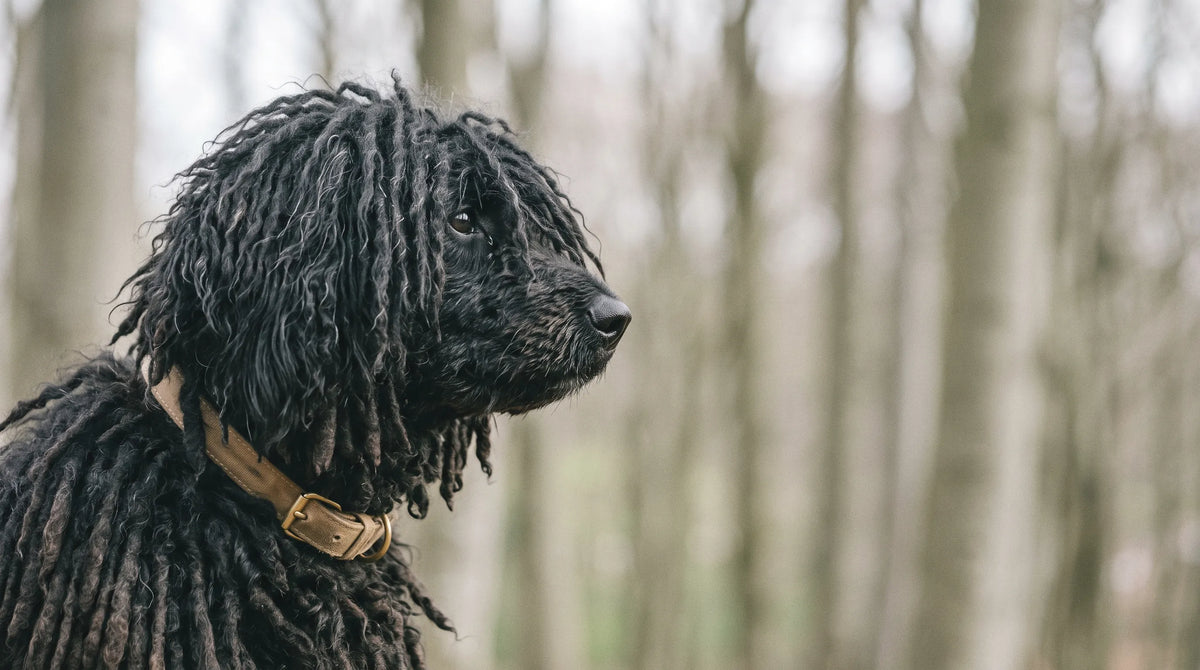
The Puli is the corded "mop dog" of Hungarian sheep farms: a compact, agile herder under a coat of natural dreadlocks. Loyal, smart, and home-loving, this medium dog is light on its feet and devoted to its family.
- Height
- 16 to 17
- inches at the shoulder
- Weight
- 25 to 35
- pounds, adult
- Life expectancy
- 10 to 15
- years, median 12.5
- Senior from
- 9.4
- years, about
Senior starts in the last quarter of a breed's expected lifespan, following the 2019 AAHA canine life stage guidelines. Individual dogs vary.
About the breed
- Temperament
- Loyal, smart, home-loving
- Coat
- Double, Corded, long
- Origin
- Hungary
- Recognized
- 1936
2015: rank 154, 2016: rank 159, 2017: rank 142, 2018: rank 160, 2019: rank 162, 2020: rank 143, 2021: rank 164, 2022: rank 161, 2023: rank 164, 2024: rank 172, 2025: rank 177
First, the dreadlocks. They are the instantly recognizable feature of the Puli (pronounced "Poo-lee"; "Pulik" is the plural). The coat's naturally occurring cords are wooly, dense, and weatherproof.
Under the dreads is a compact, sturdy dog standing 16 to 17 inches at the shoulder and weighing 25 to 35 pounds. Pulik are agile and light on their feet, footwork that earned the breed its reputation as the acrobat of the dog world.
A herding breed from Hungary, the Puli was recognized in 1936. It is loyal, smart, and home-loving, with a typical lifespan of 10 to 15 years.
Temperament and needs
Scored 1 to 5 for the breed overall. Individual dogs vary.
- Affectionate with family5 out of 5
- Good with young children3 out of 5
- Good with other dogs3 out of 5
- Openness to strangers3 out of 5
- Playfulness3 out of 5
- Watchdog and protective nature5 out of 5
- Adaptability4 out of 5
- Trainability5 out of 5
- Energy level3 out of 5
- Mental stimulation needs5 out of 5
- Barking level3 out of 5
- Shedding1 out of 5
- Grooming frequency5 out of 5
- Drooling2 out of 5
Care
The routines that matter most for this breed. Open one at a time.
Nutrition
A Puli does well on a high-quality dog food, whether commercially manufactured or home-prepared under your veterinarian's supervision and approval. Match the diet to the dog's life stage: puppy, adult, or senior. Pulik need a balance of carbohydrates, proteins, and fats to stay in good body condition. Keep clean, fresh water available at all times.
Some Pulik are prone to gaining weight, so watch calorie intake and body condition. Treats help with training, but too many lead to obesity. Learn which human foods are safe for dogs and which are not, and check with your vet about any weight or diet concerns.
Feeding amounts vary by dog and depend on size, metabolism, health, neuter status, and activity level:
- Adult Pulik do well with two measured feedings per day.
- Feed puppies about three meals a day on a regular schedule, which keeps blood sugar stable.
- The feeding guide on your dog food packaging gives portion sizes by weight; your veterinarian can fine-tune the amount from your dog's lifestyle and health.
At your vet's recommendation, a Puli may benefit from added omega-3 fatty acids, found in skin and joint supplements, fish oil, and some specially formulated dog foods. These support the skin, coat, kidneys, joints, and heart.
Grooming
A Puli can be kept corded, brushed, or clipped, and the breed sheds very little. Until a puppy is 8 to 10 months old, there is little grooming to do beyond regular baths, ear care, and grinding the toenails.
When the undercoat begins to come in, the coat feels thick and matted, and you will feel natural separations where the hair clumps close to the skin. That is the beginning of a cord. At this stage, pull the soft clumps apart with your fingers into quarter-sized sections, repeating many times across about six to nine months. Some Pulik cord easily on their own. A good time to work the cords is while you are watching TV and want something to do with your hands.
Once the coat carries distinct cords, bathe the dog as needed and separate the cords; mature cords should not be brushed. After a swim or a bath, dry the coat completely with a fan or blow dryer and squeeze excess water from the cords rather than rubbing with a towel, since moisture trapped between cords can cause mildew and skin infections.
Clean the ears regularly with a veterinary-approved cleaner, and ask your vet how often. Take care around the ears, where the skin is thin and sensitive, and talk to your vet if you notice signs of infection such as odor or debris buildup. Pulik also need regular nail trims and a dental routine of at-home brushing plus professional cleanings.
The breed needs no special eye care, but because Pulik can be susceptible to progressive retinal atrophy, contact your veterinarian if you notice changes in the eyes such as discharge, cloudiness, or squinting.
Exercise
The Puli is an energetic, high-drive dog that needs plenty of physical activity, and mental work matters just as much. Alongside brisk walks, Pulik do well in dog sports such as agility, obedience, and herding.
Keep the mind busy too. Games like hide and seek or puzzle toys help keep these active, intelligent dogs engaged. Reputable breeders caution against overdoing physical exercise while a dog is young and the growth plates have not yet fused.
Because of the thick, double corded coat, watch that your dog does not overheat during activity. Steady mental and physical activity is also important because a bored Puli can bark a lot.
Training
Pulik are intelligent, agile, and loyal, so they learn quickly and aim to please. Many Pulik are headstrong and independently minded. They follow commands but tend to do things their own way and do not care for repetition, so a Puli will happily test you.
Focus on positive reinforcement and rewards-based training, and avoid repetitive drills, which make these dogs lose interest. These playful dogs learn well through training games. Begin while your puppy is young and keep working on cues throughout life.
Early socialization matters, especially for a breed historically kept as a farm guardian; without it, Pulik may be wary of strangers. Socialize early so your dog grows comfortable and confident around new people.
When properly introduced, most Pulik are patient with young children who know how to interact with dogs. Because of their herding instincts, they may try to round up children or small animals, so they need to learn that kids are not to be herded.
Health conditions
4 conditions are documented for the Puli.
A predisposition is not a diagnosis. Ask your vet which screenings make sense for your dog's age.
- Degenerative MyelopathyNervous System & Behavioral
- Hip DysplasiaBone & Joint
- Patellar LuxationBone & Joint
- Progressive Retinal AtrophyEye


Sources
Thank you. Your report is in, and we will check this page.
Longevity & Vitality soft chew
Longevity & Vitality is a daily chew built on five active ingredients. Each chew carries Turkey Tail at 600mg, Curcuvet® curcumin at 75mg, Quercefit® quercetin at 40mg, Fibalance® at 275mg and EpiCor® at 50mg. The daily serving follows your dog's weight, from half a chew to three.
