
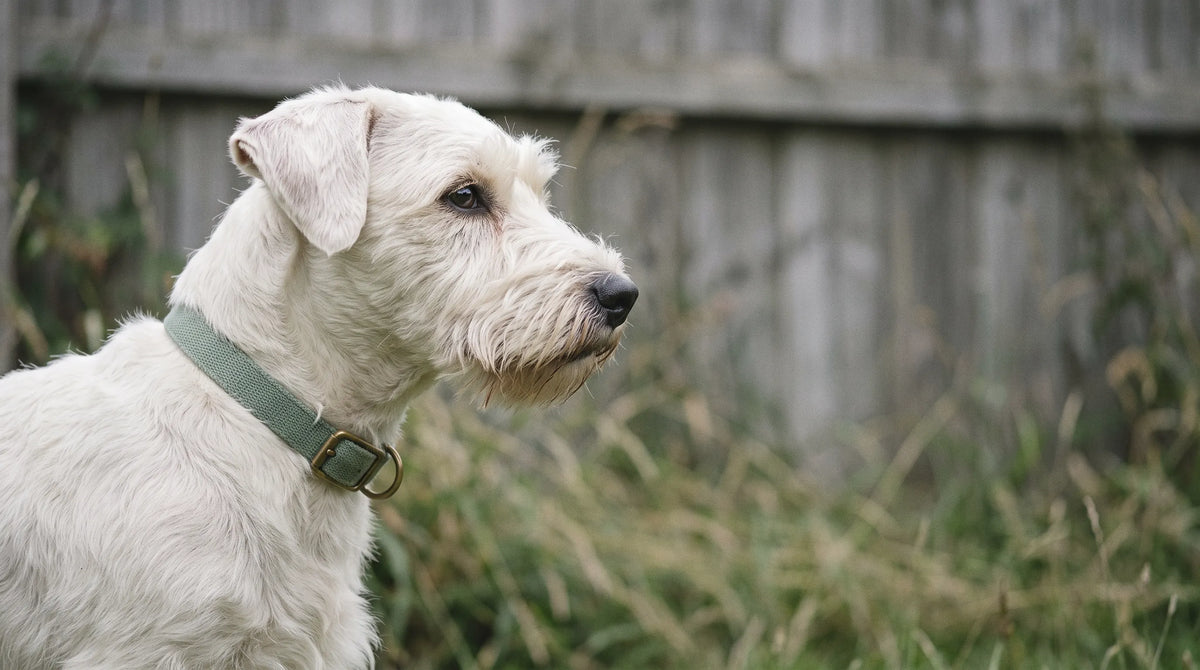
Sealyham Terrier
- Small
- Terrier Group
- Popularity rank 163
The Sealyham Terrier is a small, sturdy Welsh terrier bred to hunt badger and fox, now a rare and devoted companion. Alert, outgoing, and famous for its sense of humor, the white-coated Sealy is a spirited family dog.
- Height
- 10.5 to 12
- inches at the shoulder
- Weight
- 23 to 24
- pounds, adult
- Life expectancy
- 12 to 14
- years, median 13
- Senior from
- 9.8
- years, about
Senior starts in the last quarter of a breed's expected lifespan, following the 2019 AAHA canine life stage guidelines. Individual dogs vary.
About the breed
- Temperament
- Alert, outgoing, sense of humor
- Coat
- Double, Wiry, medium
- Origin
- United Kingdom
- Recognized
- 1911
2015: rank 158, 2016: rank 155, 2017: rank 150, 2018: rank 164, 2019: rank 156, 2020: rank 148, 2021: rank 139, 2022: rank 164, 2023: rank 169, 2024: rank 168, 2025: rank 163
The Sealyham Terrier, or Sealy, is a small terrier from the fields of Wales. The name traces to the Welsh estate of a retired army captain who first bred the dogs to hunt badgers, foxes, and otters. The breed made its first recorded show appearance in 1903 at a local Welsh competition and reached the United States in 1911.
Sealys stand 10.5 to 12 inches tall and weigh 23 to 24 pounds, making for a short, stout, and sturdy little dog. Their distinctive white coat was bred intentionally to set them apart from their prey, and it carries a long, water-resistant undercoat.
Like other terriers, Sealys are brave, spunky, and curious, but they are also known to be more biddable. The parent club describes them as affectionate, inquisitive, confident clowns with a real sense of humor. Alert and outgoing, they are devoted to their people and can make fine family dogs.
Temperament and needs
Scored 1 to 5 for the breed overall. Individual dogs vary.
- Affectionate with family5 out of 5
- Good with young children3 out of 5
- Good with other dogs3 out of 5
- Openness to strangers4 out of 5
- Playfulness3 out of 5
- Watchdog and protective nature5 out of 5
- Adaptability4 out of 5
- Trainability4 out of 5
- Energy level3 out of 5
- Mental stimulation needs4 out of 5
- Barking level4 out of 5
- Shedding3 out of 5
- Grooming frequency3 out of 5
- Drooling1 out of 5
Care
The routines that matter most for this breed. Open one at a time.
Nutrition
The Sealyham Terrier does well on a high-quality dog food, whether commercially made or home-prepared with your veterinarian's supervision and approval. Match the diet to your dog's life stage, whether puppy, adult, or senior, and keep clean, fresh water available at all times.
Feeding frequency changes with age:
- Puppies have high metabolisms and need frequent meals, about three or four a day, to help prevent low blood sugar.
- Full-grown Sealys can eat less often, typically two or three times a day.
Ask your vet about the right schedule for your dog, since exact calorie needs depend on age, health, lifestyle, and other factors.
Some Sealys are prone to gaining weight, and as a small breed, keeping a healthy weight matters to ease the load on joints with age. Watch calorie intake, follow the portion guidance on the food's packaging, and work with your vet to adjust it. Treats help with training, but too many can lead to obesity, so learn which human foods are safe for dogs and which are not. For a Sealy that competes in shows, avoid food with extra dye, which can stain the beard and color the urine.
A complete and balanced diet should give your dog all the nutrients they need. Your vet may still recommend certain supplements depending on your Sealy's health, so talk with them about any nutrition concerns and never give a supplement without veterinary oversight.
Grooming
A Sealyham needs regular coat care. The weather-resistant double coat has two parts, a coarse, wiry outercoat and a finer, softer undercoat, plus profuse leg and body furnishings that mat easily. Comb and brush several times a week, every two or three days, to prevent matting.
The coat does not shed, so it must be hand-stripped or clipped on a regular basis. Hand-stripping removes hair at the root rather than cutting it, shaping the coat and stimulating healthy skin and new growth. A professional groomer may need to handle this. Pet Sealys can be kept trimmed short with minimal furnishings, which makes care easier, while show coats need frequent washing of at least the furnishings.
Bathe roughly every three to four weeks. Sealys do not need special skin care beyond the occasional bath, so ask your vet how often to bathe your dog.
Round out the routine with regular nail trims and tooth brushing. Keep a consistent ear-cleaning schedule, and check the eyes and ears during grooming. Sealys are recognizable for the hair that grows forward on the forehead; left untrimmed, it can block their eyesight. If you notice redness, swelling, cloudiness, pain, or bad odor in the eyes or ears, schedule a vet appointment.
Exercise
Sealyham Terriers may be less energetic than other terriers, but they still need moderate daily exercise. A walk down the block, a game of fetch, and tug-of-war all get a Sealy off the couch. They love to run in a safely enclosed area, though they can overheat in hot, humid weather, so early morning and evening sessions work best.
The breed also seems to enjoy dog sports such as agility, earthdog trials, tracking, flyball, and obedience. As confident, spunky natural leaders, Sealys love to investigate, so give them plenty of mental stimulation alongside the physical activity to work off pent-up energy.
Because they tend to chase other animals, always keep your Sealy on a leash in any unfenced area, or you will end up playing chase whether you like it or not. Encourage exercise until your dog is moderately tired rather than exhausted, and you will have a calmer companion in the house.
Sealys have become a rare breed, and they are not a fit for every family. They need pet parents dedicated to consistent grooming, training, and daily activity, and you can expect a lively, loud dog.
Training
Like most terriers, Sealys respond best to a firm but not harsh approach. Socialize your puppy early, gently exposing it to a wide range of dogs, people, and places, which helps discourage dog aggression later on. Start obedience and socialization classes early too, since they create safe chances for your pup to mingle and learn good manners.
A history as hunters makes Sealys active, outgoing dogs with a strong prey drive, so they love to chase, dig, and bark. They can be independent thinkers, so training takes patience and consistency. Keep sessions short and fun, as if you are playing a game, and always use positive reinforcement, beginning as soon as you bring your puppy home.
Sealys can guard food, and this should be corrected right away rather than allowed to continue. Working through stubborn or strong-willed moments with motivational tools like treats and favorite toys keeps reward-based training on track.
When socialized young, Sealys tend to do well with cats and other dogs. They are loyal to their people and generally good with children, as long as younger kids know how to interact with pets.
Health conditions
2 conditions are documented for the Sealyham Terrier.
A predisposition is not a diagnosis. Ask your vet which screenings make sense for your dog's age.
- DeafnessEar & Hearing
- Primary Lens LuxationEye


Sources
Thank you. Your report is in, and we will check this page.
Longevity & Vitality soft chew
Longevity & Vitality is a daily chew built on five active ingredients. Each chew carries Turkey Tail at 600mg, Curcuvet® curcumin at 75mg, Quercefit® quercetin at 40mg, Fibalance® at 275mg and EpiCor® at 50mg. The daily serving follows your dog's weight, from half a chew to three.
