
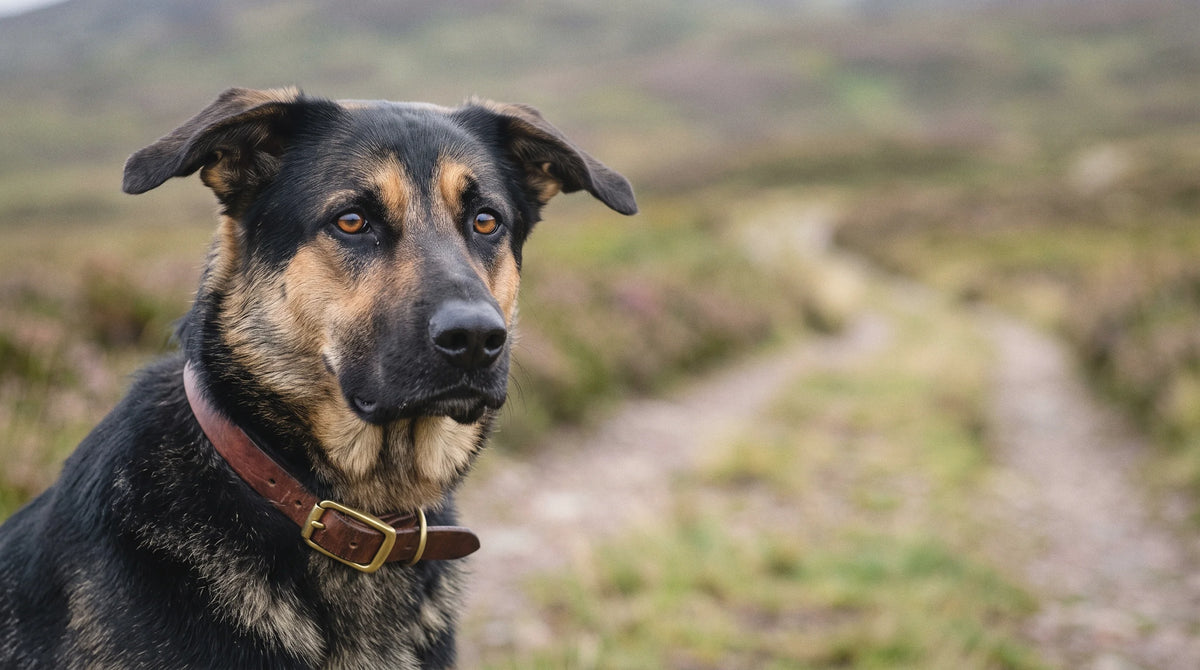
Sheprador
- Large
The Sheprador crosses a German Shepherd with a Labrador Retriever and weighs 50 to 90 pounds. It brings chart-topping energy, intelligence and shedding in roughly equal measure, and it suits an experienced home.
- Height
- 21 to 26
- inches at the shoulder
- Weight
- 50 to 90
- pounds, adult
- Life expectancy
- 10 to 14
- years, median 12
- Senior from
- 9
- years, about
Senior starts in the last quarter of a breed's expected lifespan, following the 2019 AAHA canine life stage guidelines. Individual dogs vary.
About the breed
- Temperament
- Energetic, intelligent, loyal, affectionate, boisterous, alert
- Coat
- Double, medium
The Sheprador is a cross between two of America's most popular breeds, the German Shepherd and the Labrador Retriever. The American Kennel Club does not recognise it, so there is no breed standard, but both parents have been AKC-established for over a century and make unusually reliable blueprints.
What you can expect is a medium to large dog of 50 to 90 pounds with, in PetMD's own phrasing, chart-topping energy, intelligence and shedding abilities. Take all three at face value.
This is not a beginner's dog, and PetMD says as much. Shepradors are recommended for experienced owners who know how to socialise a dog and train with positive reinforcement, and prospective families are told to be ready for a genuinely active lifestyle.
The reason is the combination rather than any single trait. Boundless energy and real intelligence in a large body means a Sheprador must be taught early how to interact with people and other animals, because a boisterous, brainy dog of this size can cause harm without ever intending any. Lifespan is roughly 10 to 14 years; no source publishes a figure for the cross itself, and the two parents' published ranges do not overlap.
Care
The routines that matter most for this breed. Open one at a time.
Nutrition
Feed for a large, working-bred dog and plan the growth phase with your vet. A Sheprador's adult weight can land anywhere between 50 and 90 pounds, so the target is a moving one and worth checking against body condition rather than a single number.
Split the day's food across two meals for an adult and more for a puppy, and keep the portions measured.
Bloat is the reason mealtimes have rules. Gastric dilatation-volvulus is more common in large, deep-chested breeds, and both parents are exactly that. Keep exercise away from meals, avoid one large daily feed, and learn the signs, because retching without vomiting, a swollen abdomen, sudden pacing or an inability to settle, panting and drooling, or collapse all need a vet immediately.
Keep the dog lean throughout. Hip and elbow dysplasia both run in this cross and both are worsened by weight, and a lean large dog also has an easier time in the heat.
Grooming
The shedding is the headline. A Sheprador carries a dense double coat, short to medium in length, from two breeds that both drop hair, and PetMD puts shedding alongside energy and intelligence in describing what you can expect. Frequent brushing is the only real answer.
Brush through the undercoat rather than over the top of it, and expect the volume to rise twice a year when the coat turns over.
Check the eyes regularly, since this cross carries a condition from each parent. Pannus, also called chronic superficial keratitis, occurs most often in German Shepherds and shows as a pinkish film spreading from the outside edge of the eye inward; it is incurable but topical medication can slow it and sometimes achieve remission. Progressive retinal atrophy comes from the Labrador side and nothing reverses it once it starts.
Ask a breeder about genetic testing rather than general health assurances. Degenerative myelopathy can be screened for in breeding dogs, and that screening is the only thing that reduces its incidence.
Exercise
PetMD publishes no exercise figure for the Sheprador itself, only that daily mental and physical exercise are vital. The nearest real numbers are its parents': a German Shepherd needs one to two hours a day and a Labrador at least one, so treat one to two hours as the floor and read your own dog from there.
Both halves matter equally. A Sheprador needs ample opportunity to flex its brain as well as its body, and a dog that gets the distance without the thinking is still under-exercised.
There is one specific hazard to know about. Exercise-induced collapse is most common in Labrador Retrievers, and in an affected dog even five minutes of strenuous activity can trigger it: a wide stance, weakness in the back legs, dragging, loss of coordination or sudden collapse during or after exercise. Treat any of that as an emergency and get the cause identified. Light and moderate exercise typically does not trigger an episode.
Keep hard work away from mealtimes, and keep it off pavement in heat.
Training
Shepradors are recommended for experienced owners, and the reason is not temperament but scale. Both parent breeds bring boundless energy and real intellect, and in a 50 to 90 pound dog those have to be directed early.
Teach interaction from the start. These dogs must be taught from an early age how to behave appropriately around people and other animals, because a boisterous and brainy Sheprador can cause unintentional harm without training and adequate activity.
Use positive reinforcement, which suits a dog this quick to learn. Harsh handling on an animal with this much drive tends to produce a worse problem than the one it was aimed at.
Be honest about the lifestyle before you commit. A family that is already active will find a Sheprador easy company; one that is not will find the same dog exhausting, and the difference shows up within weeks rather than years.
Health conditions
8 conditions are documented for the Sheprador.
A predisposition is not a diagnosis. Ask your vet which screenings make sense for your dog's age.
- Bloat (Gastric Dilatation-Volvulus)Digestive
- Degenerative MyelopathyNervous System & Behavioral
- Elbow DysplasiaBone & Joint
- Exercise-Induced CollapseNervous System & Behavioral
- Hip DysplasiaBone & Joint
Show all 8 conditions Show fewer
May inherit from parent breeds
These conditions are documented in the parent breeds, not in this cross itself. Carrier possible means the condition is recessive: a dog can carry it without showing signs. Ask the breeder which tests the parent dogs had.
- AllergiesGerman Shepherd
- Azathioprine-associated hepatotoxicosisGerman Shepherd
- Bacterial pyodermaGerman Shepherd, Labrador Retriever
- CancerGerman Shepherd
- Canine Leukocyte Adhesion Deficiency Type IIIGerman Shepherd
Show all 66 conditions Show fewer
- Carprofen-associated idiosyncratic hepatotoxicityLabrador Retriever
- Centronuclear MyopathyCarrier possible · Labrador Retriever
- Congenital Dyserythropoietic Anemia and PolymyopathyLabrador Retriever
- Congenital Myasthenic SyndromeLabrador Retriever
- Copper Toxicosis (Accumulating)Labrador Retriever
- Copper Toxicosis (Attenuating)Labrador Retriever
- Corneal DystrophyCarrier possible · Labrador Retriever
- CryptorchidismGerman Shepherd
- Cutaneous and renal glomerular vasculopathy, Alabama rotLabrador Retriever
- Day BlindnessLabrador Retriever
- Degenerative lumbosacral stenosisGerman Shepherd
- Discoid Lupus ErythematosusGerman Shepherd
- DiscospondylitisGerman Shepherd
- Dystrophin-Deficient Muscular DystrophyLabrador Retriever
- Ear InfectionsLabrador Retriever
- Ectopic UreterLabrador Retriever
- Exocrine Pancreatic InsufficiencyGerman Shepherd
- Geriatric-onset laryngeal paralysis polyneuropathy, GOLPPLabrador Retriever
- Golden Retriever Progressive Retinal Atrophy 2Labrador Retriever
- Heart DiseaseGerman Shepherd
- Heat-related illness (including heatstroke)Labrador Retriever
- HemangiosarcomaLabrador Retriever
- Hemophilia ACarrier possible · German Shepherd
- Hereditary Nasal ParakeratosisCarrier possible · Labrador Retriever
- Hip and Elbow DysplasiaGerman Shepherd
- HypothyroidismGerman Shepherd, Labrador Retriever
- IchthyosisGerman Shepherd
- Idiopathic epilepsy, including epilepsy of unknown originGerman Shepherd, Labrador Retriever
- Idiopathic Functional Urinary Outflow ObstructionGerman Shepherd, Labrador Retriever
- Idiopathic lymphoplasmacytic rhinitisGerman Shepherd
- Immune-mediated polyarthritisGerman Shepherd, Labrador Retriever
- Immune-mediated thrombocytopeniaGerman Shepherd
- Laryngeal ParalysisCarrier possible · Labrador Retriever
- Laryngeal Paralysis and PolyneuropathyLabrador Retriever
- Lyme-associated glomerulonephritis, presumptive Lyme nephritisLabrador Retriever
- MDR1 Drug SensitivityGerman Shepherd
- Mucocutaneous lupus erythematosusGerman Shepherd
- Mucocutaneous pyodermaGerman Shepherd
- Mucopolysaccharidosis Type VIIGerman Shepherd
- Mucous membrane pemphigoidGerman Shepherd
- Muscular DystrophyLabrador Retriever
- NarcolepsyCarrier possible · Labrador Retriever
- OsteoarthritisGerman Shepherd, Labrador Retriever
- Platelet Factor X Receptor DeficiencyGerman Shepherd
- Primary uterine inertiaLabrador Retriever
- Progressive Retinal Atrophy, crd4/cord1Labrador Retriever
- Progressive Retinal Atrophy, prcdLabrador Retriever
- Pyotraumatic folliculitis and furunculosisLabrador Retriever
- Recurrent deep bacterial pyoderma, German Shepherd-associated presentationGerman Shepherd
- Renal Cystadenocarcinoma and Nodular DermatofibrosisGerman Shepherd
- Sinonasal aspergillosisLabrador Retriever
- Skeletal Dysplasia 2Labrador Retriever
- Soft Palate HyperplasiaLabrador Retriever
- Stargardt DiseaseLabrador Retriever
- Succinic Semialdehyde Dehydrogenase DeficiencyCarrier possible · Labrador Retriever
- Symmetrical Lupoid OnychodystrophyGerman Shepherd
- Systemic lupus erythematosusGerman Shepherd
- Systemic lupus erythematosus-associated polyarthritisGerman Shepherd
- Transitional VertebraGerman Shepherd
- Urate Kidney & Bladder StonesCarrier possible · German Shepherd, Labrador Retriever
- Urethral Sphincter Mechanism IncompetenceGerman Shepherd

Longevity & Vitality soft chew
Longevity & Vitality is a daily chew built on five active ingredients. Each chew carries Turkey Tail at 600mg, Curcuvet® curcumin at 75mg, Quercefit® quercetin at 40mg, Fibalance® at 275mg and EpiCor® at 50mg. The daily serving follows your dog's weight, from half a chew to three.
