
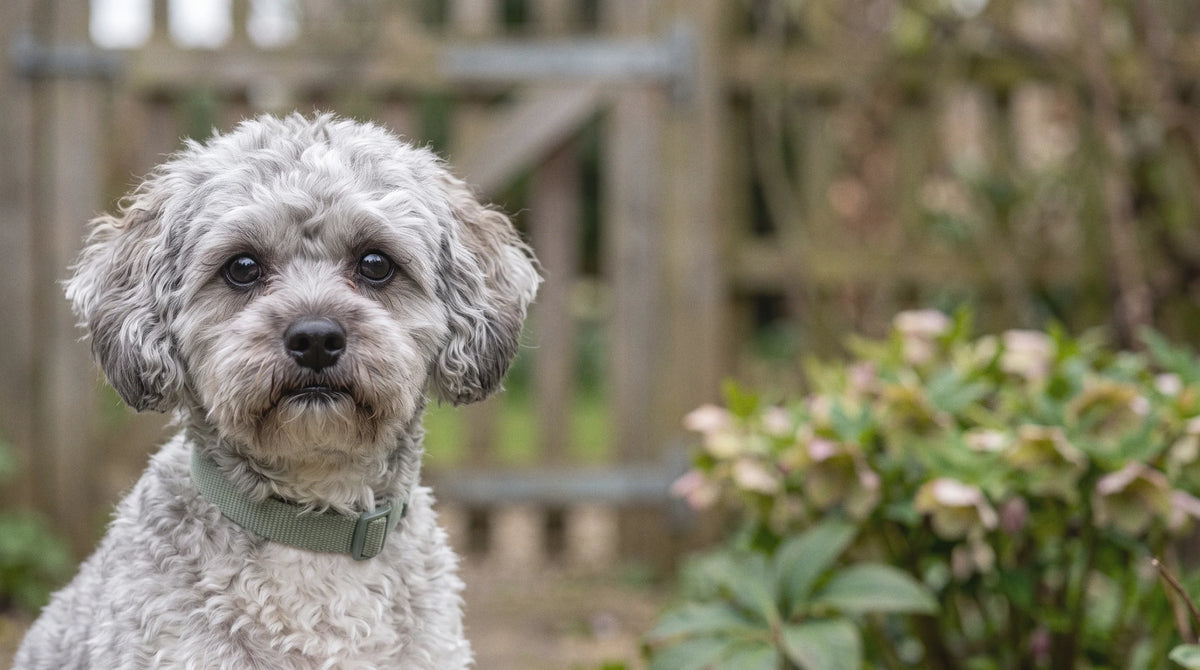
Shih-Poo
- Small
The Shih-Poo crosses a Shih Tzu with a Toy Poodle and stays tiny, at around 10 inches tall. It is smart, friendly and confident, its exercise needs are moderate, and its coat may be straight or curly.
- Height
- ≤10
- inches at the shoulder
- Weight
- 4 to 18
- pounds, adult
- Life expectancy
- 13 to 17
- years, median 15
- Senior from
- 11.3
- years, about
Senior starts in the last quarter of a breed's expected lifespan, following the 2019 AAHA canine life stage guidelines. Individual dogs vary.
About the breed
- Temperament
- Intelligent, friendly, confident, outgoing, affectionate, adaptable
- Coat
- Curly, Silky, medium
The Shih-Poo, also called a Shoodle, is a Shih Tzu crossed with a Toy Poodle. It is a recent mix without American Kennel Club recognition, so there is no breed standard and the parents do the predicting.
Those parents pull in complementary directions. The Shih Tzu standard names companionship as the breed's sole purpose and describes a properly socialised one as outgoing, happy, affectionate, friendly and trusting toward everyone. The Toy Poodle standard describes a very active, intelligent dog with an air of distinction all its own. Between them you get a Shih-Poo that is smart, friendly and confident.
Small, low-shedding, clever, and needing around 30 minutes of exercise a day, this is a practical first dog and a practical apartment dog. It gets on with family members of every age, children and older adults included, and often with other dogs and cats.
What it asks in return is company, regular grooming, reward-based training and an indoor home. Appearance is the least predictable part: coats vary in length, run straight or curly, and come in white, black, brown and combinations of them. Lifespan is 13 to 17 years.
Care
The routines that matter most for this breed. Open one at a time.
Nutrition
There is no one-size-fits-all plan for a Shih-Poo. Work with your vet on a feeding plan that is nutritionally complete and balanced for your dog's age, weight and health, and check the kibble size while you are at it, since small teeth need small kibble.
Three or four meals a day is right for a puppy, and the reason is blood sugar rather than appetite: small puppies go hypoglycaemic quickly. Grown dogs settle on two or three, whichever your vet prefers for yours.
The bag's feeding guide works from weight and nothing else. Ask your vet for the real number, which takes in body condition score, how active the dog is, and anything already being treated.
Count treats into the daily calories, which matters more on a dog this size than on almost any other. On a complete and balanced food that meets the Association of American Feed Control Officials (AAFCO) nutrient profiles, a Shih-Poo needs nothing added unless a specific condition calls for it.
Grooming
There are few certainties about a Shih-Poo's coat, which is exactly why the grooming routine has to follow the individual dog. It may be long or short, straight or curly, and any of those combinations still needs regular attention to stay healthy.
Low shedding is why people choose this cross, and it comes at the price of regular brushing plus professional grooming rather than less work.
Teeth are where the effort pays off most. Small and toy breeds are especially prone to periodontal disease, and the Shih Tzu parent brings the specific problem of teeth overcrowding a small mouth. Brush at home at least three times a week and have professional cleanings when your vet recommends them; mild cases mean a cleaning, severe ones mean extractions.
Watch the eyes closely. This cross carries cataracts, dry eye syndrome and progressive retinal atrophy between its two parents, so cloudiness, redness, swelling, increased blinking, a mucus-like discharge or new clumsiness all mean a vet appointment.
Exercise
Around 30 minutes a day covers a Shih-Poo. The energy level is genuinely moderate rather than suppressed, which is what makes this cross workable for a first-time owner or somebody in an apartment.
Split it however suits. A walk plus indoor play does the job, and the small size means a wet week does not derail the routine.
The intelligence needs an outlet alongside the legs. This is a high-intelligence cross on both sides, and training games and puzzles use up the part of the dog a short walk does not.
Companionship is part of the requirement rather than separate from it. Shih-Poos need plenty of it, and a dog that gets the walk but not the attention is not a settled dog.
Training
Reward-based training is one of the four things a Shih-Poo needs, alongside companionship, grooming and an indoor home. The intelligence comes from both parents and shows up early, so start as soon as the puppy arrives.
Socialise widely. The friendly, outgoing demeanour that lets a Shih-Poo do well with children, older adults, dogs and cats is the product of exposure rather than a guarantee written into the cross.
Handle the puppy constantly and deliberately. A dog facing a lifetime of coat care and at-least-thrice-weekly tooth brushing has to be comfortable being held, brushed and having its mouth opened, and that is taught in the first months.
Keep it indoors. This is a small dog that belongs in the house with its people, and the training that matters most is the kind that makes living closely together easy.
Health conditions
8 conditions are documented for the Shih-Poo.
A predisposition is not a diagnosis. Ask your vet which screenings make sense for your dog's age.
- CataractsEye
- Dental DiseaseOral & Dental
- Dry EyeEye
- Hip DysplasiaBone & Joint
- Legg-Calve-Perthes DiseaseBone & Joint
Show all 8 conditions Show fewer
- Patellar LuxationBone & Joint
- Progressive Retinal AtrophyEye
- Von Willebrand DiseaseBlood
May inherit from parent breeds
These conditions are documented in the parent breeds, not in this cross itself. Carrier possible means the condition is recessive: a dog can carry it without showing signs. Ask the breeder which tests the parent dogs had.
- Addison's DiseaseToy Poodle
- Brachycephalic Airway SyndromeShih Tzu
- BronchiectasisToy Poodle
- Chronic BronchitisToy Poodle
- Congenital HypothyroidismCarrier possible · Shih Tzu
Show all 26 conditions Show fewer
- CryptorchidismToy Poodle, Shih Tzu
- DystociaToy Poodle
- Ear InfectionsToy Poodle, Shih Tzu
- Ectopic UreterToy Poodle
- Eye ProblemsShih Tzu
- Geriatric-onset laryngeal paralysis polyneuropathy, GOLPPToy Poodle
- HypothyroidismToy Poodle
- Idiopathic epilepsy, including epilepsy of unknown originToy Poodle
- Immune-mediated polyarthritisShih Tzu
- Immune-mediated thrombocytopeniaToy Poodle
- Intervertebral Disc DiseaseToy Poodle, Shih Tzu
- Liver ShuntsShih Tzu
- Noise aversion (noise sensitivity; noise phobia when clinically diagnosed)Toy Poodle
- ObesityShih Tzu
- Prekallikrein DeficiencyCarrier possible · Shih Tzu
- Puerperal hypocalcemia (eclampsia)Toy Poodle
- Renal DysplasiaShih Tzu
- Systemic lupus erythematosusToy Poodle
- Systemic lupus erythematosus-associated polyarthritisToy Poodle
- Tracheal CollapseToy Poodle
- Tracheobronchial Collapse and BronchomalaciaToy Poodle

Longevity & Vitality soft chew
Longevity & Vitality is a daily chew built on five active ingredients. Each chew carries Turkey Tail at 600mg, Curcuvet® curcumin at 75mg, Quercefit® quercetin at 40mg, Fibalance® at 275mg and EpiCor® at 50mg. The daily serving follows your dog's weight, from half a chew to three.
