
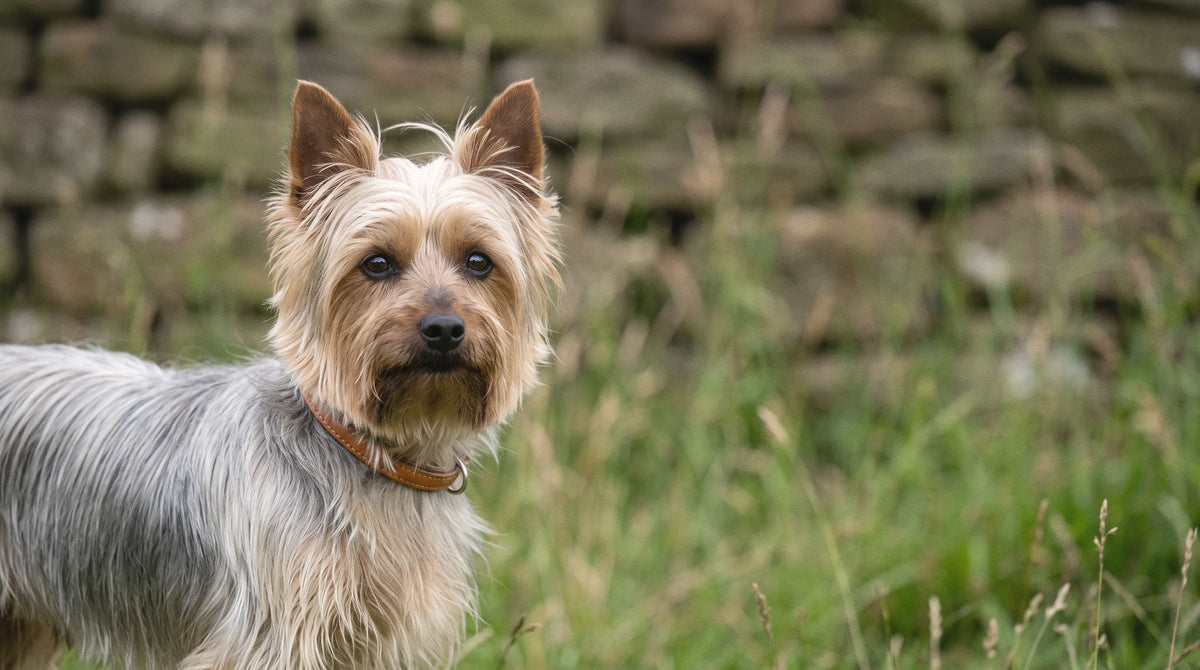
Silky Terrier
- Toy
- Toy Group
- Popularity rank 116
Bred in Australia and recognized in 1959, the Silky Terrier is a toy dog with a long, silky coat and a true terrier spirit. Friendly, quick, and keenly alert, this small companion is bolder and busier than most lap dogs.
- Height
- 9 to 10
- inches at the shoulder
- Weight
- 10 to 15
- pounds, adult
- Life expectancy
- 13 to 15
- years, median 14
- Senior from
- 10.5
- years, about
Senior starts in the last quarter of a breed's expected lifespan, following the 2019 AAHA canine life stage guidelines. Individual dogs vary.
About the breed
- Temperament
- Friendly, quick, keenly alert
- Coat
- Silky, long
- Origin
- Australia
- Recognized
- 1959
2015: rank 102, 2016: rank 100, 2017: rank 106, 2018: rank 112, 2019: rank 111, 2020: rank 108, 2021: rank 116, 2022: rank 122, 2023: rank 114, 2024: rank 111, 2025: rank 116
The Silky Terrier is a toy breed that developed in Australia and earned formal recognition in 1959. Small in frame at about 9 to 10 inches tall and 10 to 15 pounds, it carries itself with more drive than its size suggests, which is why it is sometimes called the Sydney Silky.
Its signature feature is a single-layer coat of long, silky hair. The breed is friendly, quick, and keenly alert, more terrier than lapdog, with the boldness, energy, and keen watchfulness those roots imply.
Silkies are active companions that form close family bonds and enjoy play and attention. They are confident and energetic and typically live 13 to 15 years.
Temperament and needs
Scored 1 to 5 for the breed overall. Individual dogs vary.
- Affectionate with family5 out of 5
- Good with young children3 out of 5
- Good with other dogs3 out of 5
- Openness to strangers4 out of 5
- Playfulness4 out of 5
- Watchdog and protective nature5 out of 5
- Adaptability4 out of 5
- Trainability4 out of 5
- Energy level3 out of 5
- Mental stimulation needs3 out of 5
- Barking level4 out of 5
- Shedding2 out of 5
- Grooming frequency3 out of 5
- Drooling1 out of 5
Care
The routines that matter most for this breed. Open one at a time.
Nutrition
Feed your Silky a high-quality dog food matched to its life stage, whether puppy, adult, or senior, ideally one formulated for small or toy breeds and meeting established nutritional standards. Give table scraps sparingly, if at all, and steer clear of cooked bones and very high-fat foods. Learn which human foods are safe for dogs and which are not, and check with your vet about any weight or diet concerns.
Because the Silky is so small, feed it three times a day, morning, midday, and evening, at every life stage to help guard against low blood sugar. Puppies under a year do well on a high-quality small-breed puppy formula, which carries more calories for proper growth. A Silky is full-grown at one year, so transition slowly to a small-breed adult food and ask your vet when to move to a senior diet.
Follow the feeding guidance on the food to gauge how much to give, then measure each meal so you feed the right amount. Your veterinarian can sharpen that further, tailoring a recommendation to your dog's weight, health, life stage, and lifestyle.
A healthy Silky on a balanced diet usually needs nothing extra, though in some cases your vet may still suggest supplements. Dogs with joint issues such as patellar luxation or Legg-Calve-Perthes disease may benefit from a joint supplement and an omega-3 supplement like fish oil, and dogs with skin issues such as Malassezia dermatitis may also benefit from omega-3s. Talk with your vet before adding any supplement.
Grooming
The Silky's single-layer coat of long, silky hair tangles fast without regular care. Brush at least twice a week with a pin brush or soft-bristle brush, and use a long-toothed metal comb to work gently through the spots where tangles start. Left alone, tangles and mats grow uncomfortable and can lead to skin problems, so a professional trim every four to six weeks helps keep the coat and skin in good shape.
Bathe every four to six weeks with a gentle dog shampoo, and trim the nails once a month. Use grooming time to check the whole dog for new lumps or skin trouble and to confirm the eyes and ears look healthy.
This breed is prone to yeast infections on the skin, so check periodically for greasiness, odor, dark coloration, or thickening. Itching or a lot of licking and chewing can also point to a skin issue, so book a veterinary appointment promptly if you spot signs of a skin condition.
Silkies can develop ear infections too. To lower the risk, clean the ears with a veterinary-approved ear cleaner every two to three weeks, and again after any water activity such as a bath.
Eyes need attention as well. Schedule a yearly wellness exam that includes the eyes, and see your vet promptly for any eye changes or suspected vision loss. Silkies can develop tear staining, which a pet-safe wipe will remove, and their long hair can block their vision, so keep the fur around the eyes trimmed short enough to stay out of the way.
Exercise
The Silky is an active toy breed that needs daily exercise. It is intelligent, bold, and energetic, and it wants a human partner who can channel that drive into daily activity. Both physical and mental stimulation matter to this dog's wellbeing, so plan on at least one hour of exercise a day.
Daily walks and games with the family work well, and Silkies tend to enjoy dog sports such as agility, tracking, earthdog trials, flyball, rally, and competitive obedience. They have done well in the conformation ring too.
This breed carries a typical terrier urge to chase small animals like squirrels and rabbits. Because of that inherited prey drive, your Silky always needs a leash or a securely fenced area when outdoors. Silkies also tend to bark, often to alert the family or to ask for attention.
Between the activity level and the barking, Silkies may not suit apartment living and tend to do better in a house. Silkies need regular play, walks, attention, and time with their family. They may suit people who work from home or can bring the dog with them.
Training
Silky Terriers adapt to almost any living situation, but they need owners with time to give them. They do not like being ignored and would rather play fetch or walk with their family. Their charm can tempt owners to let bad habits slide, so set clear rules and stick to them.
These are quick learners that respond to reward-based training with favorite treats and toys. Smart and eager to please, Silky puppies take well to positive reinforcement, with praise and treats earned for good behavior.
Socialized properly when young, Silkies are good around other pets and children. Enroll puppies in socialization classes before 16 weeks of age to help them grow comfortable with children, other dogs, and new people. Early socialization can also dial down the urge to bark when they meet someone new as they grow up.
Health conditions
8 conditions are documented for the Silky Terrier.
A predisposition is not a diagnosis. Ask your vet which screenings make sense for your dog's age.
- CataractsEye
- Dental DiseaseOral & Dental
- Legg-Calve-Perthes DiseaseBone & Joint
- Liver ShuntsLiver
- Malassezia DermatitisSkin & Connective Tissue
Show all 8 conditions Show fewer
- Patellar LuxationBone & Joint
- Progressive Retinal AtrophyEye
- Progressive Retinal Atrophy, prcdEye
Sources
Thank you. Your report is in, and we will check this page.
Longevity & Vitality soft chew
Longevity & Vitality is a daily chew built on five active ingredients. Each chew carries Turkey Tail at 600mg, Curcuvet® curcumin at 75mg, Quercefit® quercetin at 40mg, Fibalance® at 275mg and EpiCor® at 50mg. The daily serving follows your dog's weight, from half a chew to three.
