
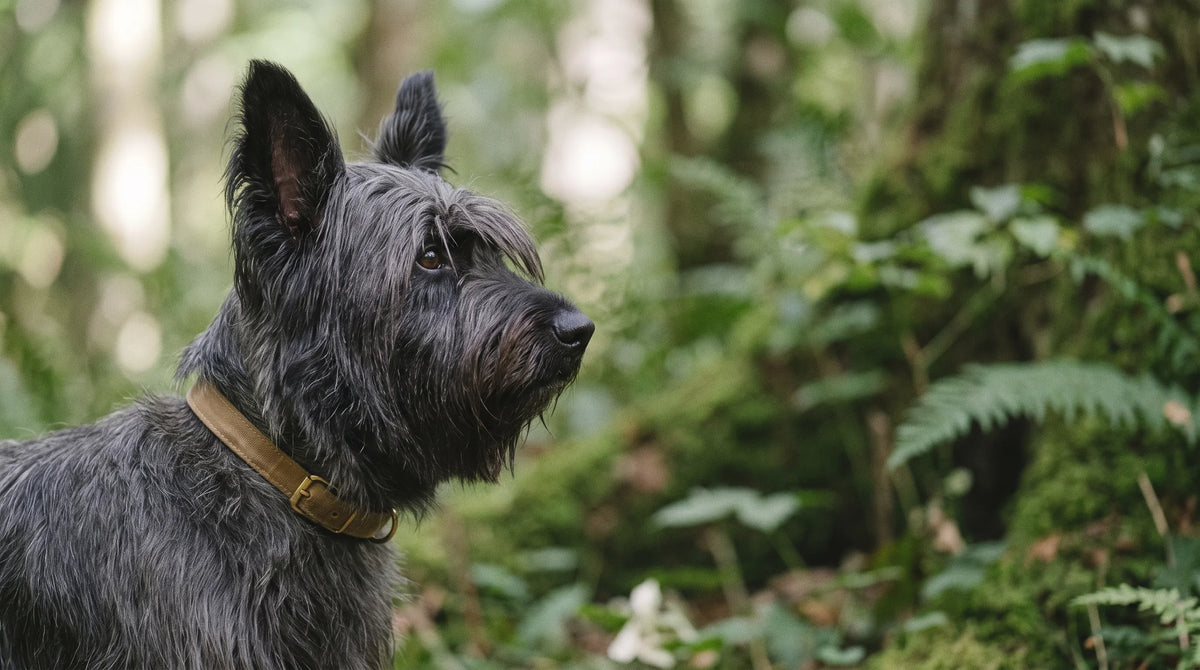
Skye Terrier
- Medium
- Terrier Group
- Popularity rank 181
Long, low, and built twice as long as it is tall, the Skye Terrier is a Scottish earthdog standing about 10 inches. Beneath its flowing coat is a courageous, good-tempered companion suited to city or country life.
- Height
- 9.5 to 10
- inches at the shoulder
- Weight
- 35 to 45
- pounds, adult
- Life expectancy
- 12 to 14
- years, median 13
- Senior from
- 9.8
- years, about
Senior starts in the last quarter of a breed's expected lifespan, following the 2019 AAHA canine life stage guidelines. Individual dogs vary.
About the breed
- Temperament
- Courageous, good-tempered, canny
- Coat
- Double, long
- Origin
- United Kingdom
- Recognized
- 1887
2015: rank 175, 2016: rank 178, 2017: rank 172, 2018: rank 178, 2019: rank 189, 2020: rank 183, 2021: rank 181, 2022: rank 189, 2023: rank 185, 2024: rank 179, 2025: rank 181
The Skye Terrier is a long, low, level earthdog, an elegant but substantial terrier that runs about twice as long as it is high. It stands 9.5 to 10 inches at the shoulder and weighs 35 to 45 pounds, with short, muscular legs and a deep chest under all that hair.
The signature feature is the long, flat-lying double coat that flows over the body, face, and ears, in colors that include black, blue, platinum, fawn, and cream. Many Skyes carry big, feathery ears that stand up like bat wings, while others have drop ears that lie flat against the large, long head.
Temperament is courageous, good-tempered, and canny. Skyes are confident and versatile, well suited to both city and country life, and as medium dogs on small legs they can settle into a home of any size.
The breed takes its name from Skye, the largest of Scotland's northern isles. It was recognized in 1887 and belongs to the Terrier Group.
Temperament and needs
Scored 1 to 5 for the breed overall. Individual dogs vary.
- Affectionate with family5 out of 5
- Good with young children3 out of 5
- Good with other dogs3 out of 5
- Openness to strangers3 out of 5
- Playfulness3 out of 5
- Watchdog and protective nature3 out of 5
- Adaptability3 out of 5
- Trainability3 out of 5
- Energy level3 out of 5
- Mental stimulation needs3 out of 5
- Barking level3 out of 5
- Shedding3 out of 5
- Grooming frequency3 out of 5
- Drooling1 out of 5
Care
The routines that matter most for this breed. Open one at a time.
Nutrition
Feed a high-quality dog food matched to your Skye's life stage, whether puppy, adult, or senior. Home-prepared diets can work too, with your veterinarian's supervision and approval, and clean fresh water should be available at all times.
Most adult Skye Terriers do well on two meals a day, one in the morning and one in the evening. Puppies may need more frequent feedings, up to four a day, so talk to your vet to settle on the right schedule.
How much to feed depends largely on weight and body condition. Check the label on your food to gauge serving size, and ask your veterinarian for help if your Skye is under or over a healthy weight, factoring in age, condition, lifestyle, and health.
Count the calories from treats and extras like dental chews, since they add up and should stay under 10 percent of daily intake. Some dogs gain weight easily, so keep an eye on portions and training treats.
A healthy Skye on a balanced diet that meets established nutritional standards is not likely to need supplements. Discuss any specific health concerns with your vet, and always talk with them before starting a supplement.
Grooming
The Skye's long double coat is easier to maintain than it looks. Brush and comb it down to the skin at least once a week with a pin brush and a long-toothed comb to keep it free of tangles, more often if you can, and be especially watchful behind the front legs. The coat is kept in a natural condition and needs no hand-stripping. For lighter upkeep, you can keep it clipped short at the groomer or learn to trim it yourself.
The double coat protects the skin and needs only an occasional bath, usually about once a month, though this varies with lifestyle, season, and any skin condition, so ask your vet. Rather than scrubbing, gently smooth shampoo over the coat, rinse completely, then repeat for conditioner. Comb the coat while it is still damp or brush it out once dry to minimize breakage.
The ears are covered with hair, so gently comb out the fringe and, during grooming, look inside for redness, odor, or discharge and call your vet if you notice any. Trim nails short, usually every couple of weeks to a month, and a little scissoring around the feet eases movement and keeps debris out of the fur.
Brush the teeth regularly. No special eye care is needed, but a Skye's hair grows down into heavy bangs over the eyes; the dog can still see, though some owners trim the corners to keep the hair from causing irritation.
Exercise
The Skye Terrier has modest exercise needs and is usually content with whatever activity suits its owner. Plan on about an hour a day, whether that is walks, a run, or exploring a fenced yard, and even a short daily outing benefits the breed both physically and mentally. After exercise, a Skye often relaxes at home.
Skyes adapt well to small spaces as long as they get out at regular intervals through the day, and they do best when they are not left alone for long stretches. These dogs are not hyperactive, but they are not couch potatoes either; they carry the drive and stamina for a range of activities.
For an outlet beyond daily walks, Skyes enjoy canine sports with their people. You will find the breed competing in earthdog trials, agility, obedience, and tracking, all of which give the mental work this clever terrier appreciates.
Training
The Skye Terrier is intelligent but strong-willed, and calmer than many terriers. It takes well to consistent, positive training and withdraws from harsh or loud methods, which can make it shut down. Like all terriers it can be stubborn, yet it enjoys time with its people and is eager to please, so reward following a request with a treat or a favorite toy.
Reserved by nature, the Skye should be well socialized from a very young age to grow into a happy, outgoing dog. Socialized early with children, Skyes make playful, tolerant companions, and while they can be somewhat reserved with strangers they form a deep, close bond with family.
These dogs carry a strong prey drive from their roots as small-game hunters and will chase squirrels and other small critters if allowed. Basic obedience can curb that urge, and Skyes can be taught to live alongside smaller pets like cats, though it is always wise to supervise around children or small animals in unfamiliar situations.
Use consistent, gentle training. Terriers are independent and not natural people-pleasers, but with patience and positive reinforcement the Skye Terrier is very trainable.
Health conditions
3 conditions are documented for the Skye Terrier.
A predisposition is not a diagnosis. Ask your vet which screenings make sense for your dog's age.
- CancerCancer
- Ectopic UreterUrinary & Reproductive
- Hip and Elbow DysplasiaBone & Joint


Sources
Thank you. Your report is in, and we will check this page.
Longevity & Vitality soft chew
Longevity & Vitality is a daily chew built on five active ingredients. Each chew carries Turkey Tail at 600mg, Curcuvet® curcumin at 75mg, Quercefit® quercetin at 40mg, Fibalance® at 275mg and EpiCor® at 50mg. The daily serving follows your dog's weight, from half a chew to three.
