
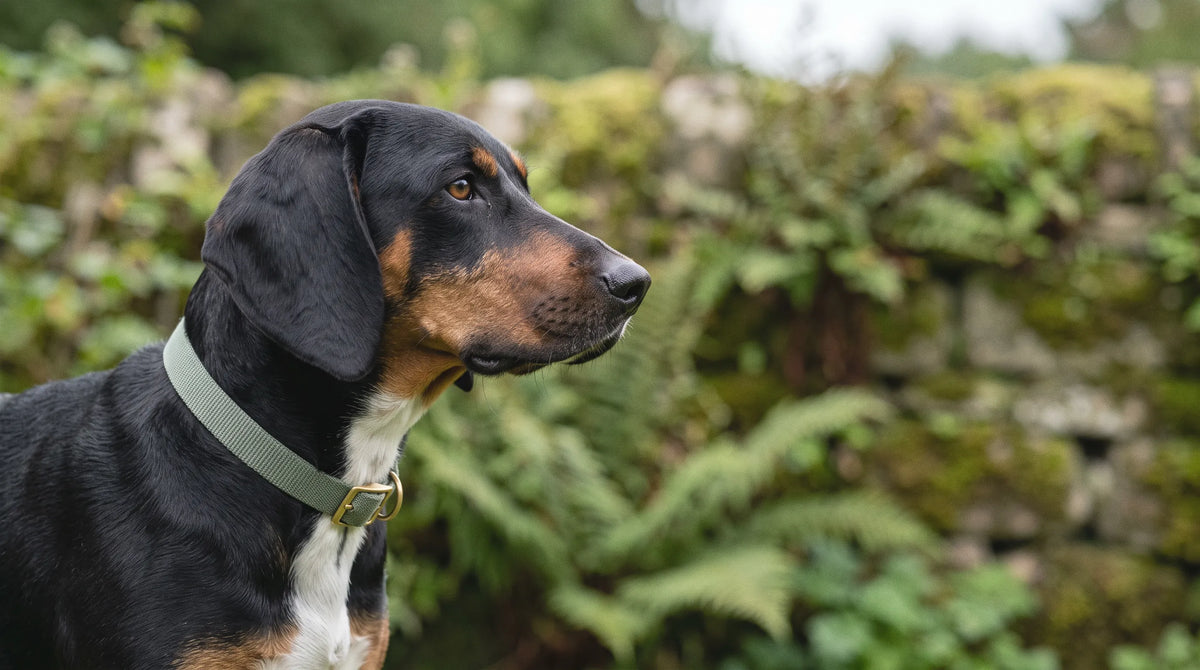
Small Swiss Hound
- Small
- FCI Group 6 (Scent hounds and related breeds)
The Small Swiss Hound is a lively scent hound with a keen nose and a big personality in a small frame. Affectionate at home and driven on the trail, it suits active families who can keep it busy and well exercised.
- Height
- 16 to 18
- inches at the shoulder
- Weight
- 18 to 33
- pounds, adult
- Life expectancy
- 10 to 12
- years, median 11
- Senior from
- 8.2
- years, about
Senior starts in the last quarter of a breed's expected lifespan, following the 2019 AAHA canine life stage guidelines. Individual dogs vary.
About the breed
- Origin
- Switzerland
- Recognized
- 1954
The Small Swiss Hound is a small, rectangular dog with a noble head and an alert expression. It stands about 16 to 18 inches tall and weighs roughly 18 to 33 pounds, with a typical lifespan of 10 to 12 years.
With an acute sense of smell and a passion for trailing prey, it is a capable hunting dog. At home, that drive softens into an affectionate, lively companion. Despite the small size, these dogs have big personalities and are usually friendly with people, which makes them a good fit for active families who can give them time and attention.
They can be vocal, and their melodious howl carries. That singing can be entertaining, but it may not suit apartment living.
As the name suggests, the Small Swiss Hound is a smaller version of the original Swiss Hound. Hunters developed it at the start of the 20th century by crossing Swiss Hounds with Basset Hounds, creating a shorter dog that worked better in enclosed grounds called shoots. Like the original, it comes in four color varieties and shares the same melodious howl. The first breed club formed in 1905, and a major US kennel registry recognized the breed in 2006.
Care
The routines that matter most for this breed. Open one at a time.
Nutrition
Feed a complete diet formulated for the Small Swiss Hound's activity level, size, and life stage (puppy, adult, or senior). Monitor food intake so this small dog doesn't take in too many calories.
Don't forget to account for treats. Even a couple of extra snacks can add weight on a small dog, so keep treats to no more than 10 percent of daily calories.
Grooming
The Small Swiss Hound has short hair that is relatively easy to maintain. Regular brushing to remove loose hair and dirt is usually all it takes to keep the coat looking and feeling clean.
Because of their long ears, these dogs can be more prone to ear issues. Check the ears regularly for dirt or wax build-up and clean them as needed.
Trim the nails and provide dental care with at-home brushing and professional cleanings.
Exercise
The Small Swiss Hound is an active working dog that needs daily physical and mental exercise. Provide play, long walks, and hikes.
They also enjoy tracking and nose work, which let them put that strong sense of smell to use. Without enough activity, a bored Small Swiss Hound may become destructive or pick up other unwanted habits.
Training
Hardworking and intelligent, the Small Swiss Hound is typically easy to train. They respond well to positive reinforcement, so use treats or a favorite toy to reward the behaviors you want.
Because they have a strong prey drive, early socialization is important. Introducing your puppy to different people, places, and pets helps them grow into a well-adjusted adult.
That same prey drive means they are not usually a good match for homes with small animals. When they spot a small creature, the urge to chase tends to take over.
Health conditions
1 condition is documented for the Small Swiss Hound.
A predisposition is not a diagnosis. Ask your vet which screenings make sense for your dog's age.
- Neuronal Ceroid Lipofuscinosis 7Nervous System & Behavioral
Longevity & Vitality soft chew
Longevity & Vitality is a daily chew built on five active ingredients. Each chew carries Turkey Tail at 600mg, Curcuvet® curcumin at 75mg, Quercefit® quercetin at 40mg, Fibalance® at 275mg and EpiCor® at 50mg. The daily serving follows your dog's weight, from half a chew to three.
