
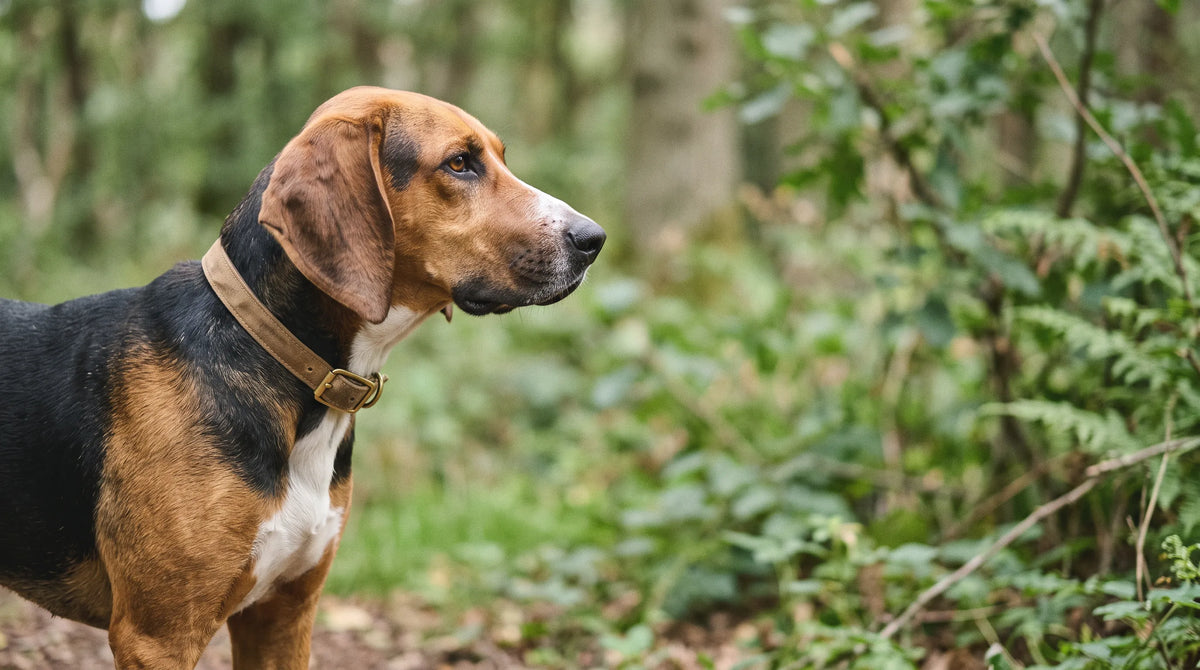
Spanish Hound
- Medium
- FCI Group 6 (Scenthounds and Related Breeds)
The Spanish Hound (Sabueso Español) is a calm, affectionate scenthound from Spain, bred to track hare and wild boar. At home it is gentle and easygoing; on the trail, brave and tenacious with a keen nose.
- Height
- 19 to 22
- inches at the shoulder
- Weight
- 51 to 71
- pounds, adult
- Life expectancy
- 12 to 14
- years, median 13
- Senior from
- 9.8
- years, about
Senior starts in the last quarter of a breed's expected lifespan, following the 2019 AAHA canine life stage guidelines. Individual dogs vary.
About the breed
- Origin
- Spain
- Recognized
- 1957
The Spanish Hound, or Sabueso Español, is a medium-sized scenthound from Spain with a rectangular body, strong limbs, and a sweet, somewhat sad expression. It stands about 19 to 22 inches tall and weighs roughly 51 to 71 pounds, with a typical lifespan of 12 to 14 years.
Calm and affectionate at home, it turns brave and tenacious on the hunt, guided by a keen sense of smell and known for the way its voice changes once it picks up a trail. Because these dogs often worked in small groups, they typically get along well with other dogs.
Ancestors of the breed have accompanied Iberian hunters since at least the Middle Ages. King Alfonso XI, the "hunting king," described what is believed to be the Spanish Hound in the 14th-century manuscript Libro de la Montería. It is best known as a hare and wild boar hound, though in earlier times, when such game was plentiful, it also hunted larger animals like bears and wolves.
The breed nearly disappeared after the Spanish Civil War and the World Wars, surviving thanks to dedicated breeders such as Antonio Miján, who kept it going through the fashion for French hounds in the 1960s and 1970s. Today it is championed by the Club del Sabueso Español y Razas Afines, formed in 1985.
Care
The routines that matter most for this breed. Open one at a time.
Nutrition
An adult Spanish Hound should receive complete, balanced food that it can digest and readily eat. Food type and amount should reflect life stage, activity, and body condition. Measured servings should be paired with monitoring of weight and body condition, followed by intake changes when the dog's needs change. Treat calories belong within the daily total, so meal calories should be reduced accordingly and treats limited to no more than 10 percent of the allowance. Fresh, clean water should be available and replaced daily, while unexpected weight changes and diet choices should be discussed with a veterinarian.
When a Spanish Hound puppy moves from its breeder, it should remain on the breeder's food initially. Any later food change should be gradual and made with veterinary advice.
Grooming
For an adult Spanish Hound, the ears and eyes should receive regular attention to cleanliness. Coat care should suit the coat type, with regular checks for fur loss, injuries, parasites, or other concerns and veterinary review of anything unusual. Bathing should remain occasional; when appropriate, a simple rinse is sufficient. Nail length should be monitored, and nails that remain long through normal activity can be trimmed with veterinary advice. Regular dental care should combine tooth checks with brushing, using a toothbrush and toothpaste intended for dogs.
A Spanish Hound puppy can be groomed daily with a brush suited to the individual coat, with the breeder advising on the tool. The visible outer ear should be checked for dryness or excess wax and cleaned only on the exterior, without cotton swabs, with veterinary advice when there is uncertainty. Puppy nails should be kept short, while clipping is best left to professional help because incorrect clipping can cause pain or bleeding.
Exercise
Spanish Hounds need daily exercise for both body and mind. Hunting is their preferred outlet, but any outdoor activity works well, including brisk walks, hikes, and scent-tracking games that let them put their nose to use.
Like other scent hounds, they tend to wander off once they catch an irresistible smell, so keep them on a leash or in a securely enclosed area. Spanish Hounds need secure outdoor space and suit active families.
Training
An adult Spanish Hound should learn everyday household rules, with stop and recall taught as safety essentials. Training should stay positive rather than forceful. Wanted behavior can be prompted with a cue, marked when it appears, and reinforced with a toy, treat, or another appropriate reward. When extra help is needed, a canine club can advise on the next steps.
Between roughly 3 weeks and 12 to 16 weeks, a Spanish Hound puppy can be introduced to varied people, animals, places, and environments. Toilet training can use one designated area and rewards for the behavior being taught.
Health conditions
1 condition is documented for the Spanish Hound.
A predisposition is not a diagnosis. Ask your vet which screenings make sense for your dog's age.
- EntropionEye
Longevity & Vitality soft chew
Longevity & Vitality is a daily chew built on five active ingredients. Each chew carries Turkey Tail at 600mg, Curcuvet® curcumin at 75mg, Quercefit® quercetin at 40mg, Fibalance® at 275mg and EpiCor® at 50mg. The daily serving follows your dog's weight, from half a chew to three.
