
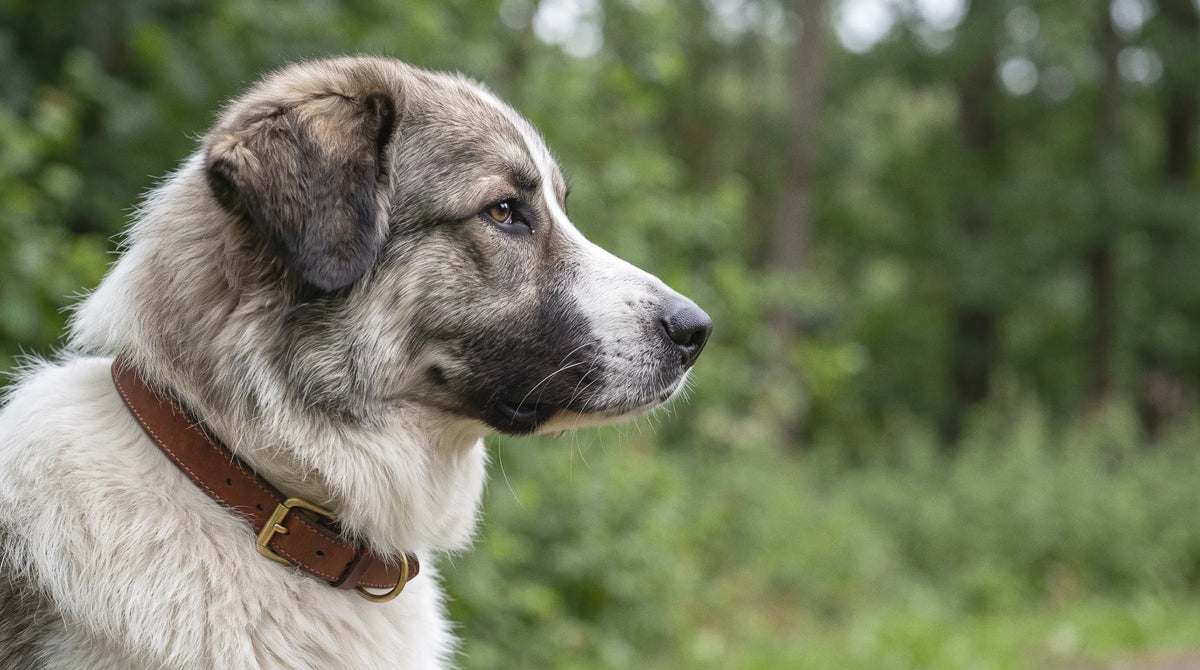
Tornjak
- Large
- Foundation Stock Service
The Tornjak is a large, well-balanced livestock guardian from Croatia and Bosnia and Herzegovina. Friendly and courageous, it bonds closely with its family while keeping a watchful eye over the home, the sheep, and the flock.
- Height
- 23 to 28
- inches at the shoulder
- Weight
- 62 to 110
- pounds, adult
- Life expectancy
- 12 to 14
- years, median 13
- Senior from
- 9.8
- years, about
Senior starts in the last quarter of a breed's expected lifespan, following the 2019 AAHA canine life stage guidelines. Individual dogs vary.
About the breed
- Temperament
- Intelligent, friendly, courageous
- Coat
- Double, medium
- Origin
- Croatia and Bosnia and Herzegovina
The Tornjak, also known as the Bosnian and Herzegovinian or Croatian Shepherd Dog, is a large, strong guardian breed from Croatia and Bosnia and Herzegovina. (The name is pronounced Torn-jak.) Well-proportioned and agile, it carries an almost square body shape and moves with a balanced, harmonious gait.
Males and females stand 23 to 28 inches tall and weigh 62 to 110 pounds. Most live 12 to 14 years.
Temperament is intelligent, friendly, and courageous. Tornjaks are warm with their people but turn protective toward animals or dogs that threaten the owner, home, sheep, pen, or flock. They like to work and take direction readily.
Studies suggest the breed most likely descends from the Tibetan Mastiff, or from the area of modern-day Iran, an environment that shaped a sturdy watchdog with modest needs for food and shelter. The Tornjak is recorded in the Foundation Stock Service.
Temperament and needs
Scored 1 to 5 for the breed overall. Individual dogs vary.
- Affectionate with family5 out of 5
- Good with young children3 out of 5
- Good with other dogs1 out of 5
- Openness to strangers3 out of 5
- Playfulness3 out of 5
- Watchdog and protective nature5 out of 5
- Adaptability3 out of 5
- Trainability3 out of 5
- Energy level3 out of 5
- Mental stimulation needs3 out of 5
- Barking level3 out of 5
- Shedding4 out of 5
- Grooming frequency2 out of 5
- Drooling3 out of 5
Care
The routines that matter most for this breed. Open one at a time.
Nutrition
The Tornjak does well on a high-quality dog food, whether commercially made or home-prepared with your veterinarian's supervision and approval. Match the diet to the dog's life stage, whether puppy, adult, or senior.
Some dogs in this breed are prone to gaining weight, so keep an eye on calorie intake and overall condition. Treats are useful for training, but give them in moderation to avoid overfeeding. Check with your vet about any weight or diet questions, and learn which human foods are safe for dogs and which are not.
Keep clean, fresh water available at all times.
Grooming
The Tornjak carries a thick double coat that benefits from regular weekly brushing, with the occasional bath to keep it clean.
Trim the strong, fast-growing nails regularly with a clipper or grinder to avoid overgrowth, splitting, and cracking. Check the ears often and clear away wax and debris to keep them clean. Brush the teeth regularly.
Exercise
The Tornjak has a moderate energy level and needs daily activity to stay content. Play in a fenced backyard or walks a few times a day cover the basics. In an apartment, even short walks in the hallways help, especially in bad weather.
Outdoor activities can include swimming, hiking, or retrieving balls and flying discs. Indoor games such as hide-and-seek, chasing a rolled ball, or learning new tricks keep the mind engaged when you cannot get outside.
Agility, obedience, and rally provide physical and mental activity.
Training
A Tornjak can learn quickly, retain lessons for a long time, and willingly perform assigned tasks. Continuing with suitable training classes gives the dog regular opportunities to learn and practice skills. Adult lessons can use a cue to prompt a wanted response and a marker when it occurs, followed by a toy, treat, or other suitable reward.
For a Tornjak puppy, the first three months are a time for safe exposure to different people, animals, settings, and stimuli. The pace should ease if the puppy shows excessive fear, withdrawal, or avoidance. The puppy's classes and training at home should use positive reinforcement, with praise, petting, play, or treats offered frequently as rewards.
Health conditions
1 condition is documented for the Tornjak.
A predisposition is not a diagnosis. Ask your vet which screenings make sense for your dog's age.
- Hip DysplasiaBone & Joint
Sources
Thank you. Your report is in, and we will check this page.
Longevity & Vitality soft chew
Longevity & Vitality is a daily chew built on five active ingredients. Each chew carries Turkey Tail at 600mg, Curcuvet® curcumin at 75mg, Quercefit® quercetin at 40mg, Fibalance® at 275mg and EpiCor® at 50mg. The daily serving follows your dog's weight, from half a chew to three.
