
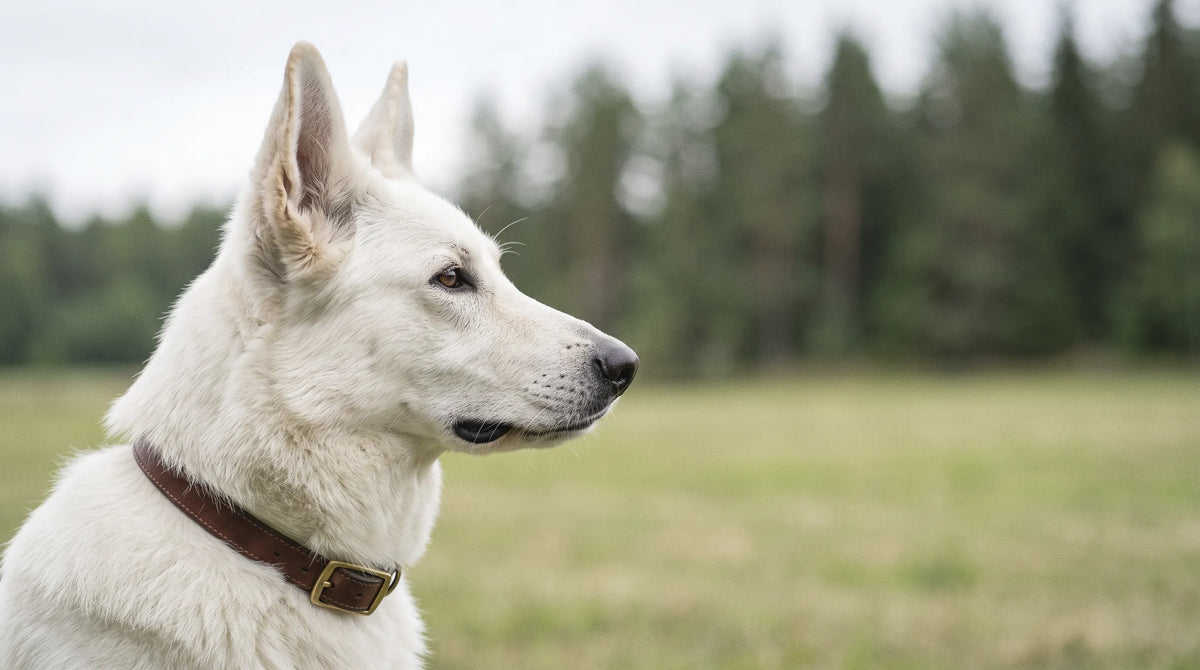
White Swiss Shepherd
- Large
- FCI Group 1 (Sheepdogs and Cattledogs)
The White Swiss Shepherd is a large, loyal, alert, lively herding dog with a German Shepherd-like build and a white coat. It stands 22 to 26 inches, weighs 48 to 97 pounds, and needs an active household and room to work.
- Height
- 22 to 26
- inches at the shoulder
- Weight
- 48 to 97
- pounds, adult
- Life expectancy
- 10 to 14
- years, median 12
- Senior from
- 9
- years, about
Senior starts in the last quarter of a breed's expected lifespan, following the 2019 AAHA canine life stage guidelines. Individual dogs vary.
About the breed
- Origin
- Switzerland
- Recognized
- 2011
The White Swiss Shepherd is a large, active herding dog with a chiseled head, almond-shaped eyes, long triangular ears, a strong jaw, and a firm build.
Temperament-wise the breed is versatile and alert, lively and friendly. It carries a real protective streak and a high prey drive, and it bores easily, so it does best with people who keep it engaged.
The breed traces to the Thuringian region of Germany, where the White Shepherd was a precursor to the German Shepherd and one of the breeds chosen to create that dog. For nearly a century little separated the two. In the 1930s the white-colored dog was removed from shepherd breeding and nearly went extinct.
By the 1960s the White Shepherd had recovered, and in the U.S. and Canada it was recognized as a separate breed. In the early 1970s some of these dogs went to Switzerland, where they prospered. The new White Swiss Shepherd entered the Swiss Stud Book in 1991, and in 2017 the Kennel Club of the United Kingdom recognized the breed as well.
Care
The routines that matter most for this breed. Open one at a time.
Nutrition
White Swiss Shepherd Dogs need a diet matched to their age and activity level. A suitable food is one they digest well and that keeps them in good condition. Owners should watch the dog's weight and adjust portions promptly rather than relying only on package tables.
The breed should remain neither too thin nor too heavy. During puppyhood and growth, owners should continue the food recommended by the breeder.
Grooming
Outside coat-change periods, weekly combing and brushing are generally sufficient. During shedding, daily undercoat combing is recommended. Long coats require somewhat more grooming than medium-length coats.
After a wet or muddy outing, the coat can dry naturally so the dirt falls away. Thorough rinsing followed by towel-drying provides an alternative cleanup method.
Exercise
White Swiss Shepherds can be low-key indoors, but they need a good amount of daily exercise. Two or three walks a day keep them content and head off boredom.
Because they bore easily, they can turn destructive without enough activity and stimulation. White Swiss Shepherds can participate in dog sports such as agility for physical and mental activity.
Training
These dogs are smart but can be sensitive, so reward-based methods work best. Early, consistent training and socialization matter for a breed that can be wary of strangers and bores quickly.
A well-socialized White Swiss Shepherd gets along with people and other animals, and does well with children when raised and trained from a young age. White Swiss Shepherds need early training and socialization for family life.
Health conditions
1 condition is documented for the White Swiss Shepherd.
A predisposition is not a diagnosis. Ask your vet which screenings make sense for your dog's age.
- MDR1 Drug SensitivityMetabolic
Sources
Thank you. Your report is in, and we will check this page.
Longevity & Vitality soft chew
Longevity & Vitality is a daily chew built on five active ingredients. Each chew carries Turkey Tail at 600mg, Curcuvet® curcumin at 75mg, Quercefit® quercetin at 40mg, Fibalance® at 275mg and EpiCor® at 50mg. The daily serving follows your dog's weight, from half a chew to three.
