
Benign Familial Juvenile Epilepsy in Dogs
- Category
- Nervous System & Behavioral
- Inheritance
- Autosomal dominant, incomplete penetrance
- Breeds documented
- 1
- Published sources
- 6
Overview
Signs to watch for
Emergency See a vet immediately if your puppy has a seizure.
Diagnosis and tests
Inheritance
This condition has more than one known form, and different breeds inherit it in different ways. The sources list the form found in each breed.
Autosomal dominant, incomplete penetrance
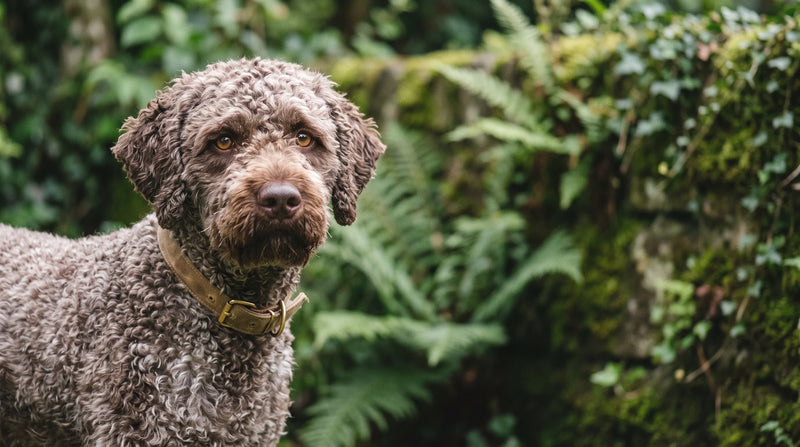
Lagotto Romagnolo
One copy can be enough, but not every dog with the variant develops the condition, and severity can vary. A DNA result shows risk, not certainty.
As stated by OMIA
Autosomal recessive
Lagotto Romagnolo
A dog is affected only if it inherits two copies of the gene variant, one from each parent. A dog with one copy is a carrier: usually healthy, but able to pass the variant on. When two carriers are bred, on average one puppy in four is affected. A DNA test can tell clear, carrier and at-risk dogs apart.
As stated by Laboklin
We've gathered what published sources say about this condition, so you can talk it through with your vet. It isn't veterinary advice: you and your vet know your dog best.
Sources
- europepmc.org
- pmc.ncbi.nlm.nih.gov
- pmc.ncbi.nlm.nih.gov
- merckvetmanual.com
- Lagotto Romagnolo: pubmed.ncbi.nlm.nih.gov
- Lagotto Romagnolo: omia.org
Thank you. Your report is in, and we will check this page.