

Belgian Tervuren
- Large
- Herding Group
- Popularity rank 115
The Belgian Tervuren is an elegant, hardworking herder with a strong drive to learn and to work. Quick, alert, and deeply devoted, this Belgian native thrives with an active owner who gives it a real job.
- Height
- 22 to 26
- inches at the shoulder
- Weight
- 45 to 75
- pounds, adult
- Life expectancy
- 12 to 14
- years, median 13
- Senior from
- 9.8
- years, about
Senior starts in the last quarter of a breed's expected lifespan, following the 2019 AAHA canine life stage guidelines. Individual dogs vary.
About the breed
- Temperament
- Alert, intelligent, courageous
- Coat
- Double, medium
- Origin
- Belgium
- Recognized
- 1959
2015: rank 98, 2016: rank 107, 2017: rank 103, 2018: rank 106, 2019: rank 105, 2020: rank 106, 2021: rank 103, 2022: rank 104, 2023: rank 102, 2024: rank 107, 2025: rank 115
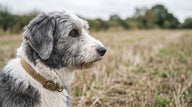
The Belgian Tervuren is an elegant, muscular herding dog from Belgium, recognized as its own breed in 1959. It carries a straight, abundant double coat over a proud, balanced frame, with a sporty collarette around the neck that is more profuse on males, who tend to run larger than females.
This is a large breed, standing 22 to 26 inches tall and weighing 45 to 75 pounds, with a typical lifespan of 12 to 14 years. The expression is alert and intelligent, and the work drive runs deep.
Temperamentally, the Terv is alert, intelligent, and courageous, with a strong need to work that can challenge an owner who does not grasp it. Tervs approach work eagerly and learn tasks quickly, though their intelligence can also challenge an inexperienced owner.
Temperament and needs
Scored 1 to 5 for the breed overall. Individual dogs vary.
- Affectionate with family3 out of 5
- Good with young children3 out of 5
- Good with other dogs3 out of 5
- Openness to strangers3 out of 5
- Playfulness3 out of 5
- Watchdog and protective nature4 out of 5
- Adaptability3 out of 5
- Trainability5 out of 5
- Energy level4 out of 5
- Mental stimulation needs4 out of 5
- Barking level3 out of 5
- Shedding3 out of 5
- Grooming frequency2 out of 5
- Drooling1 out of 5
Care
The routines that matter most for this breed. Open one at a time.
Nutrition
The Belgian Tervuren does well on a high-quality dog food, whether commercially made or home-prepared under your veterinarian's supervision. Match the diet to the dog's life stage (puppy, adult, or senior), and keep clean, fresh water available at all times. Some Tervs gain weight easily, so watch calorie intake; treats help with training, but too many lead to obesity.
Feed an adult Terv a measured amount twice a day, once in the morning and once in the evening. Two daily meals rather than one large one can help reduce the risk of bloat and GDV, to which the breed is prone. Puppies eat more often, usually three or four meals a day.
A few feeding setup notes:
- Skip the elevated food bowl, which can raise the risk of bloat.
- A slow-feeder bowl helps your dog eat at a steadier pace.
- Caloric needs vary with size, metabolism, activity level, and spay or neuter status, so check the feeding guide on your food and talk with your vet to set the right amount.
A lean body and healthy weight help support a Terv's joints. When a Terv eats a complete, balanced food that meets established nutritional standards, it usually will not need supplements unless your vet recommends them. Some Tervs may benefit from added omega-3 fatty acids (DHA and EPA), found in fish oil and some formulated foods, which support the skin, coat, joints, kidneys, and heart.
Grooming
The Belgian Tervuren has a double coat, a dense undercoat beneath a harsher outer coat. It is medium-length, waterproof, and fairly easy to maintain. For most of the year, a thorough brushing once or twice a week with a pin brush and a slicker brush keeps the coat shiny and free of tangles and matting while removing dead hair. A coat conditioner or detangling spray can make brushing easier.
At least once a year the breed blows its coat. During this shedding season, brushing sessions stretch to 20 to 30 minutes and grow more frequent, a rake joins the toolkit to pull dead hair, and daily brushing plus regular baths help you keep up.
Bathe your Terv every four to six weeks. Do not over-bathe, since more than twice a month can strip the skin of its natural oils. Trim the nails regularly to prevent cracking, splitting, and painful overgrowth.
Clean the ears every one or two weeks to keep the canals clear; redness, odor, or debris can signal a problem, so contact your vet if you notice them. Brush the teeth at home and schedule professional dental cleanings. The Terv has no special eye-grooming needs, though the breed is prone to progressive retinal atrophy, so watch for changes in the eyes or vision and see your vet if you notice any.
Exercise
The Belgian Tervuren is a high-energy working dog that needs a lot of exercise every day. The breed standard describes it as always in motion, seemingly never tiring, and a Terv has stamina to spare. Tervs need hard work and challenging play alongside their owners.
Strong herding instinct and quick intelligence make the Terv a natural at herding, agility, obedience, tracking, mushing, and protection sport. They also make great partners for hiking, running, and swimming. A strong prey drive means the dog park may not suit them.
Mental work matters as much as physical work. Provide stimulation with hide-and-seek, puzzle toys, and other interactive games so the dog gets both. Left alone too long or under-exercised, a Terv can grow bored and invent bad habits for entertainment, so this breed fits best with active, experienced owners who can meet its needs.
Training
Socialization and obedience training are a must for the Belgian Tervuren. Exposing the puppy to many people, places, and situations, including well-run puppy classes, helps them grow into a well-adjusted, well-mannered adult. Tervs can be hesitant around new people, so early, consistent socialization matters.
These dogs are highly trainable and learn fast and eagerly; in fact, they treat training like a job and want to master tasks. They are also play-oriented and surprisingly sensitive, so harsh methods seldom work, while turning a task into a game almost always does. Positive reinforcement, rewards, and consistent expectations are the way to go, and they channel that endless energy in good directions.
The Terv is a lively, alert companion, deeply devoted to its family. As a herding breed, a Terv may try to herd children and smaller animals such as cats; patient, positive training can curb this, and a professional trainer can help if needed.
Health conditions
11 conditions are documented for the Belgian Tervuren.
A predisposition is not a diagnosis. Ask your vet which screenings make sense for your dog's age.
- Bloat (Gastric Dilatation-Volvulus)Digestive
- Cardiomyopathy and Juvenile MortalityHeart
- Heat-related illness (including heatstroke)Metabolic
- Hereditary Cerebellar AtaxiaNervous System & Behavioral
- Hip DysplasiaBone & Joint
Show all 11 conditions Show fewer
- HypothyroidismHormonal
- Idiopathic epilepsy, including epilepsy of unknown originNervous System & Behavioral
- Progressive Retinal AtrophyEye
- Spongy Degeneration with Cerebellar Ataxia 1Nervous System & Behavioral
- Spongy Degeneration with Cerebellar Ataxia 2Nervous System & Behavioral
- Von Willebrand DiseaseBlood


Sources
Thank you. Your report is in, and we will check this page.
Longevity & Vitality soft chew
Longevity & Vitality is a daily chew built on five active ingredients. Each chew carries Turkey Tail at 600mg, Curcuvet® curcumin at 75mg, Quercefit® quercetin at 40mg, Fibalance® at 275mg and EpiCor® at 50mg. The daily serving follows your dog's weight, from half a chew to three.
