
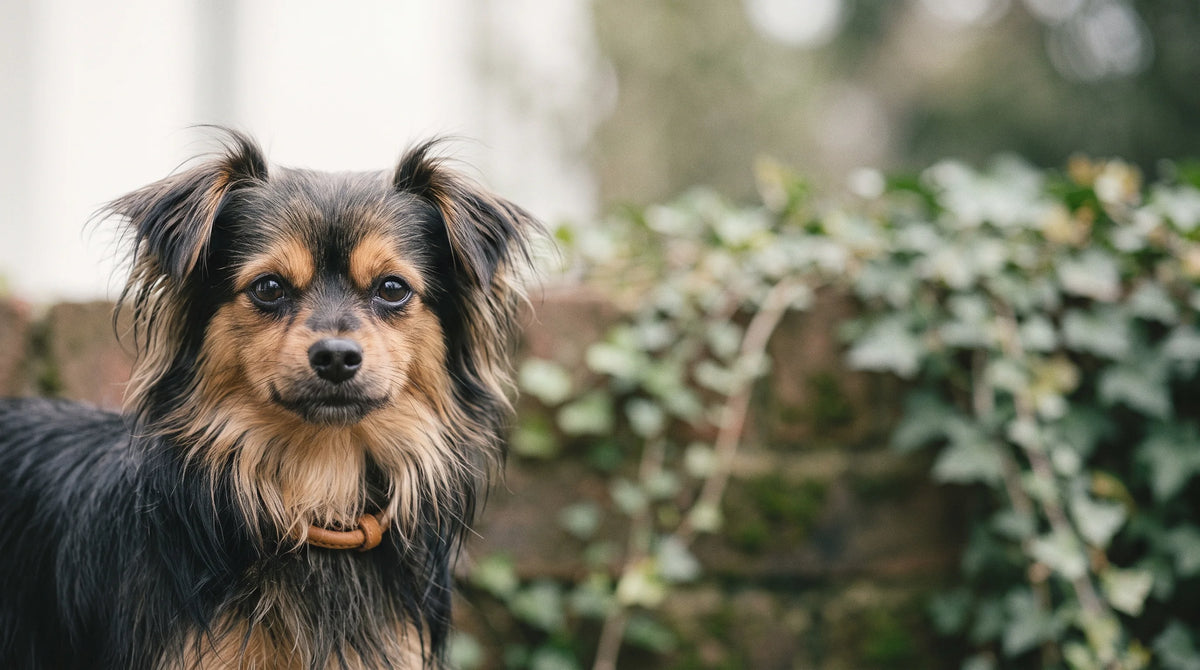
Chorkie
- Toy
The Chorkie crosses a Chihuahua with a Yorkshire Terrier and stays under about 8 inches tall. It is a lap dog with a terrier's temperament and a ready bark, so early socialisation matters more than its size suggests.
- Height
- ≤8
- inches at the shoulder
- Weight
- ≤10
- pounds, adult
- Life expectancy
- 14 to 15
- years, median 14.5
- Senior from
- 10.9
- years, about
Senior starts in the last quarter of a breed's expected lifespan, following the 2019 AAHA canine life stage guidelines. Individual dogs vary.
About the breed
- Temperament
- Affectionate, spirited, alert, loyal, confident, adaptable
- Coat
- Silky, Smooth, long
The Chorkie is a Chihuahua crossed with a Yorkshire Terrier, sometimes called a Yorkiechi or a Chiyorkie. It is new enough that the American Kennel Club does not recognise it, and new enough that PetMD says outright it is highly variable in both temperament and appearance.
What the parents give you is a floor rather than a prediction. Both Chihuahuas and Yorkies stand under 10 inches and weigh less than 10 pounds, and both are described as having a classic terrier-like temperament, so expect sass and spunk in a very small package.
Both parents are also described as ideal city companions, and the Chorkie inherits that. It needs very little space, and even its moderate exercise requirement can be met with indoor games. That makes it one of the more practical apartment dogs in this group.
The catch is noise. Chorkies are alert and wary of strangers, and the talent for barking that follows can make you an unpopular neighbor without early socialisation and consistent positive training. The other catch is fragility: a toy-sized dog is vulnerable to accidental injury around very young children or very large dogs. Lifespan is 14 to 15 years.
Care
The routines that matter most for this breed. Open one at a time.
Nutrition
No single recommendation covers every Chorkie. Build the plan with your vet around your dog's age, weight and health, and check the kibble size, because Chorkies have tiny teeth that need small pieces.
Puppies need three or four meals a day to keep their blood sugar from falling into hypoglycaemia, which is the specific risk in a dog this small. Grown Chorkies eat less often, typically two or three times a day, and your vet can pick the schedule.
The bag's feeding guide gives a general amount from weight alone; ask your vet for a figure matched to your particular dog.
Eating and drinking are also among the triggers for the honking cough of tracheal collapse, which both parent breeds carry an increased risk of, so a cough that turns up around meals is worth reporting rather than ignoring.
Grooming
A Chorkie's grooming needs are genuinely hard to pin down in advance, because they depend entirely on which parent the coat follows.
A Yorkie-type coat puts your dog at the top of the grooming scale. That human-like hair needs a daily brush and regular baths, and it mats if either slips.
A Chihuahua-type coat, long or short, is far less work: a weekly brush and the occasional bath will usually do. Either way shedding is fairly minimal, which is one of the cross's genuine advantages.
Whatever the coat, the teeth are the same job. A Chihuahua's mouth is too small for the teeth in it, which is why gum disease runs so hard on that side of the cross. Brush at home at least three times a week and have professional cleanings when your vet says so, before irritated gums and bad breath progress to loose teeth and exposed roots.
Exercise
Chorkies have moderate exercise requirements and their compact size means those can be met indoors. Short walks and indoor games of fetch cover both the physical and the mental side.
That flexibility is the point of this cross. A dog that can be properly exercised in an apartment on a wet day is a different proposition from one that needs a field.
Keep exertion moderate in heat and humidity. Both parent breeds carry a tracheal collapse risk and both heat and excitement worsen the cough it produces, so a short cool-weather walk beats a long warm one.
Do not skip the exercise on the grounds that the dog is small. Boredom in a terrier-tempered dog goes straight into barking, which is the behaviour this cross is most likely to get you complaints about.
Training
Early socialisation and consistent positive training are a must for a Chorkie, because they temper the alertness and the wariness of strangers that otherwise turn into constant barking.
Start young and go wide. Meeting people, places and other animals calmly in the first months is what produces a confident small dog rather than a defensive one.
Manage the household as much as the dog. A toy-sized Chorkie is vulnerable around very young children and very large dogs, and no amount of training on the dog's side fixes a size mismatch.
Choose the breeder carefully. Work with a breeder committed to health over profit who performs genetic testing before breeding, which matters here because the heart defect this cross can inherit is congenital and best caught early.
Health conditions
4 conditions are documented for the Chorkie.
A predisposition is not a diagnosis. Ask your vet which screenings make sense for your dog's age.
- Dental DiseaseOral & Dental
- Patellar LuxationBone & Joint
- Patent Ductus ArteriosusHeart
- Tracheal CollapseAirway & Lung
May inherit from parent breeds
These conditions are documented in the parent breeds, not in this cross itself. Carrier possible means the condition is recessive: a dog can carry it without showing signs. Ask the breeder which tests the parent dogs had.
- Acquired myasthenia gravisChihuahua
- CryptorchidismChihuahua, Yorkshire Terrier
- DystociaChihuahua
- Eye ProblemsChihuahua
- Heart DiseaseChihuahua
Show all 21 conditions Show fewer
- HydrocephalusChihuahua
- HypoglycemiaChihuahua, Yorkshire Terrier
- Idiopathic lymphoplasmacytic rhinitisYorkshire Terrier
- Intervertebral Disc DiseaseChihuahua
- Legg-Calve-Perthes DiseaseChihuahua
- Liver ShuntsYorkshire Terrier
- Neuronal Ceroid Lipofuscinosis 7Carrier possible · Chihuahua
- Noninfectious rhinitisChihuahua
- ObesityChihuahua
- Primary Lens LuxationCarrier possible · Yorkshire Terrier
- Progressive Retinal Atrophy, crd4/cord1Chihuahua
- Progressive Retinal Atrophy, prcdChihuahua, Yorkshire Terrier
- Puerperal hypocalcemia (eclampsia)Chihuahua
- Spinocerebellar Ataxia with Myokymia and/or SeizuresChihuahua
- Tracheobronchial Collapse and BronchomalaciaChihuahua, Yorkshire Terrier
- Urate Kidney & Bladder StonesYorkshire Terrier

Longevity & Vitality soft chew
Longevity & Vitality is a daily chew built on five active ingredients. Each chew carries Turkey Tail at 600mg, Curcuvet® curcumin at 75mg, Quercefit® quercetin at 40mg, Fibalance® at 275mg and EpiCor® at 50mg. The daily serving follows your dog's weight, from half a chew to three.
