
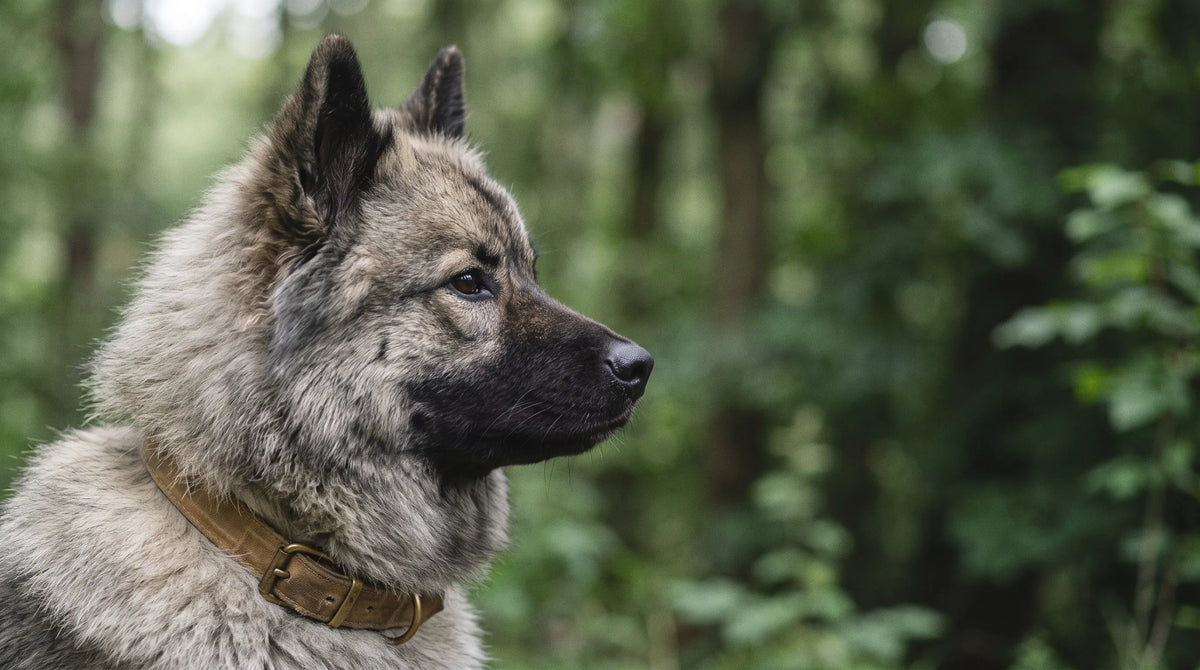
Eurasier
- Medium
- Foundation Stock Service
The Eurasier is a calm, confident German companion bred from Chow Chow, Keeshond, and Samoyed lines. Devoted to family and reserved with strangers, this medium-sized double-coated dog is happiest at your side.
- Height
- 19 to 24
- inches at the shoulder
- Weight
- 40 to 70
- pounds, adult
- Life expectancy
- 12 to 16
- years, median 14
- Senior from
- 10.5
- years, about
Senior starts in the last quarter of a breed's expected lifespan, following the 2019 AAHA canine life stage guidelines. Individual dogs vary.
About the breed
- Temperament
- Confident, calm, family-oriented
- Coat
- Double, medium
- Origin
- Germany
The Eurasier is a medium-sized companion dog from Germany, standing 19 to 24 inches at the shoulder and weighing 40 to 70 pounds, with a dense double coat. The breed comes in a wide range of colors; the standard permits all coat colors except liver, pure white, and irregular white patches. Eurasiers can have purple, pink, or spotted tongues and either a dark face mask or a lighter reverse mask.
This is a modern breed, developed in the 1960s when dog enthusiast Julius Wipfel crossed the Chow Chow, the Keeshond (also called the Wolfspitz), and the Samoyed. The goal was to blend the Chow Chow's gentle demeanor, the Samoyed's friendly nature, and the Keeshond's intelligence into one balanced dog.
In temperament the Eurasier is calm, even-tempered, gentle, intelligent, and confident. These loyal dogs form close bonds with their people and are devoted family companions, though they tend to be reserved with strangers. Known for their empathy, many Eurasiers also do well as therapy dogs.
Temperament and needs
Scored 1 to 5 for the breed overall. Individual dogs vary.
- Affectionate with family4 out of 5
- Good with young children4 out of 5
- Good with other dogs3 out of 5
- Openness to strangers2 out of 5
- Playfulness3 out of 5
- Watchdog and protective nature3 out of 5
- Adaptability3 out of 5
- Trainability4 out of 5
- Energy level3 out of 5
- Mental stimulation needs4 out of 5
- Barking level3 out of 5
- Shedding3 out of 5
- Grooming frequency3 out of 5
- Drooling2 out of 5
Care
The routines that matter most for this breed. Open one at a time.
Nutrition
Feed your Eurasier a high-quality, age-appropriate dog food, whether commercially made or homemade with your veterinarian's supervision and approval. Eurasiers can be picky and do not eat large amounts, and many enjoy variety, so rotating foods can help keep a fussy dog interested. Keep clean, fresh water available at all times.
Match meals to your dog's life stage:
- Puppies up to 6 months: three or four meals a day of a puppy formula, to support rapid growth.
- Adolescents 6 months to 1 year: two or three meals a day.
- Adults: two meals a day of an adult formula, for steady energy and to discourage overeating.
- Seniors: lower-calorie or senior-specific formulas, often in smaller, more frequent meals to suit changing metabolism.
Feeding amounts vary with age, size, activity level, and metabolism, so follow the guidelines on the packaging and adjust with your vet. Always measure meals to help keep your Eurasier at a healthy weight, and monitor body condition. Slow-feeder bowls can moderate eating speed.
A complete, balanced food covers a healthy dog's nutritional needs. Omega-3 fatty acids from fish oil support healthy skin, a shiny coat, and joints, and glucosamine and chondroitin supplements support joint function, especially as a dog ages. Talk with your vet before adding any supplement so it fits your dog's specific needs.
Grooming
The Eurasier's double coat needs a thorough combing or brushing roughly once a week to every two weeks, with regular checks for matted fur. Frequent brushing removes dead hair and keeps the coat in good shape. The coat is not generally prone to matting, though more brushing helps during heavy shedding. Note that spayed or neutered Eurasiers often grow thicker, longer coats that need extra maintenance.
Eurasiers typically shed their entire undercoat once or twice a year over about three weeks. During these periods, daily combing keeps wool balls from collecting around the house.
These dogs have little body odor and need only infrequent bathing. An occasional wash with a gentle dog shampoo keeps the skin and coat healthy without stripping the coat's natural oils.
Wipe away excess ear wax or debris, but routine ear cleaning is usually unnecessary unless your vet recommends it; mention recurring ear infections to your vet, as they can signal autoimmune thyroiditis. Watch the eyes for redness or discharge, and trim the fur around them if it grows long enough to disrupt vision. Trim nails as needed, paying attention to the dewclaws, and brush the teeth regularly.
Exercise
With a moderate energy level, the Eurasier is calm indoors and active outside. Eurasiers are calm indoors and may nap for long periods, but they still need regular daily exercise. A good walk or hike of about an hour a day, with chances to sniff and explore, is usually enough.
Eurasiers enjoy long walks, swimming, and canine sports such as agility, flyball, rally, and competitive obedience. Well-trained Eurasiers often behave reliably off-leash, which makes them good company on hikes and other outdoor adventures. With their good-natured personalities and love of other dogs, many do well at the dog park or daycare.
Because their exercise needs are not extreme, Eurasiers can suit apartment living. They are adaptable, easygoing companions that thrive on joining their people in daily life, whether traveling, running errands, or walking the neighborhood. Though generally quiet, a Eurasier will occasionally bark when a neighbor or delivery person passes by.
Training
The Eurasier is intelligent, loyal, and eager to please, which makes training straightforward, though the breed can show some independence. These dogs have a strong desire for praise and affection and genuinely love to learn and follow commands. Mix in varied, engaging tasks and respect their independent nature, since they bore easily and dislike repetitive drills.
This is a sensitive breed that does not need harsh corrections; rough handling undermines trust. Positive reinforcement and rewards-based training suit Eurasiers well, and mental stimulation keeps them motivated.
The Eurasier is a social dog that needs to be part of the family and can be reserved with strangers, so early socialization with people and other dogs is key. These dogs are typically non-confrontational and defend themselves only when they truly must.
Bred first and foremost to be a companion, the Eurasier does well as a family pet. They get along with other pets and children when well-socialized and properly introduced. As with any dog, teach children to be respectful and gentle.
Health conditions
9 conditions are documented for the Eurasier.
A predisposition is not a diagnosis. Ask your vet which screenings make sense for your dog's age.
- Autoimmune ThyroiditisHormonal
- Bloat (Gastric Dilatation-Volvulus)Digestive
- Cerebellar HypoplasiaNervous System & Behavioral
- Diabetes MellitusHormonal
- Exocrine Pancreatic InsufficiencyDigestive
Show all 9 conditions Show fewer
- HypothyroidismHormonal
- Joint ProblemsBone & Joint
- Stomach CancerCancer
- Transitional VertebraBone & Joint


Sources
Thank you. Your report is in, and we will check this page.
Longevity & Vitality soft chew
Longevity & Vitality is a daily chew built on five active ingredients. Each chew carries Turkey Tail at 600mg, Curcuvet® curcumin at 75mg, Quercefit® quercetin at 40mg, Fibalance® at 275mg and EpiCor® at 50mg. The daily serving follows your dog's weight, from half a chew to three.
