
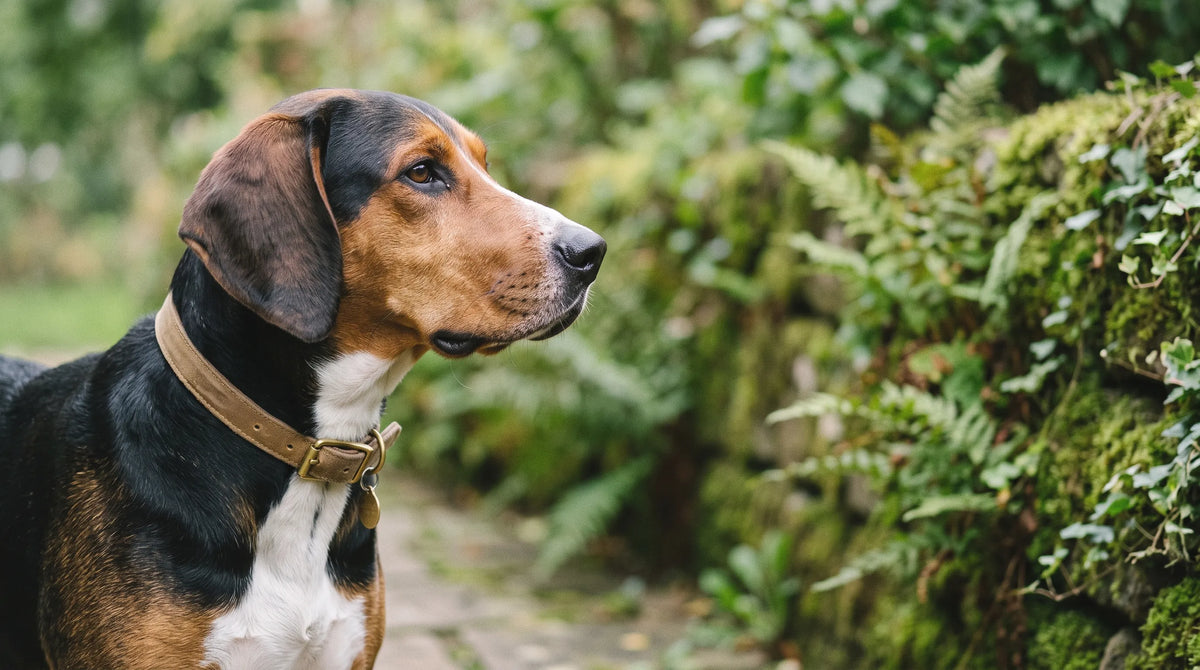
Hamiltonstovare
- Medium
- Foundation Stock Service
Bred in Sweden to hunt by scent and sight, the Hamiltonstovare is a versatile, regal hound that shifts from trail to family sofa. Medium-sized and food-motivated, it pairs an eager mind with an independent streak.
- Height
- 19 to 24
- inches at the shoulder
- Weight
- 40 to 75
- pounds, adult
- Life expectancy
- 14 to 17
- years, median 15.5
- Senior from
- 11.6
- years, about
Senior starts in the last quarter of a breed's expected lifespan, following the 2019 AAHA canine life stage guidelines. Individual dogs vary.
About the breed
- Temperament
- Versatile, agile, regal
- Coat
- Smooth, short
- Origin
- Sweden
The Hamiltonstovare wears several hats at once. The same dog hunts, shows, and lives as a family companion, all in one regal, versatile package from Sweden.
As a hound, it follows its nose wherever the trail leads and may not turn back for a good while, so leashes and secure fences are a necessity. Unlike most scent hounds, it carries a high prey drive for both scent and sight, a combination that makes it an excellent lure-coursing dog.
This is a medium-sized dog, standing 19 to 24 inches and weighing 40 to 75 pounds, with a smooth, short coat. At home the picture flips: it is quiet, low-maintenance, and agile, with a long typical lifespan of 14 to 17 years. The name is pronounced Ham-mil-ton-stov-vare.
One real challenge is access. The United States has only a single breeder, and rescue is scarce, though some Hamiltonstovare turn up in rural shelters across Virginia, North Carolina, West Virginia, Kentucky, South Carolina, and Tennessee.
Temperament and needs
Scored 1 to 5 for the breed overall. Individual dogs vary.
- Affectionate with family5 out of 5
- Good with young children5 out of 5
- Good with other dogs3 out of 5
- Openness to strangers5 out of 5
- Playfulness4 out of 5
- Watchdog and protective nature4 out of 5
- Adaptability3 out of 5
- Trainability4 out of 5
- Energy level4 out of 5
- Mental stimulation needs4 out of 5
- Barking level3 out of 5
- Shedding3 out of 5
- Grooming frequency2 out of 5
- Drooling2 out of 5
Care
The routines that matter most for this breed. Open one at a time.
Nutrition
A Hamiltonstovare needs a high-quality dog food matched to its age, activity level, and size, plus any health concerns. Clean, fresh water should be available at all times.
This is a cold-weather breed that does not do well with certain grain sources, so a grain-free diet is often recommended. Hamiltons rarely have food allergies.
Work with your veterinarian or breeder to set meal frequency for a puppy and the adult diet that supports a long life. Monitor how much your dog eats, and reduce portions if it gains excess weight. Your veterinarian can help you set the right nutrition and feeding guidelines.
Grooming
Hamiltons need very little grooming and stay clean with ease. Their smooth, short coat does not carry much doggy odor, and they do not drool.
They are seasonal shedders, dropping low to moderate amounts of coat in spring and fall. During those sheds, brushing with a grooming mitt twice a week is enough to keep things tidy.
A bath about once a month, plus regular nail trimming, ear cleaning, and tooth brushing, keeps them in good shape. Brush the teeth, trim the nails, and clean the ears regularly.
Exercise
The Hamiltonstovare is active, but it has an off switch. It will warm the sofa one day and cover a 10-mile hike the next. Each day it needs at least a 20-minute free run outside, plus something to engage its mind.
This is a smart breed that thrives on time with its people and on work that pleases them. Because Hamiltons are hounds that follow their nose, a securely fenced yard is recommended.
Their hunting skill and intelligence make them strong candidates for dog sports such as agility, nosework, barn hunting, rally, dock diving, and lure coursing. Keep one thing in mind: when a Hamiltonstovare is under-exercised or left alone too long, it can find trouble.
Training
Hamiltons are smart, eager to please, and very food motivated, which makes them easy to train despite their hound stubbornness. A stubborn, independent streak runs through them, but reward-based, food-based methods tend to work well. Higher levels of competitive obedience usually stay out of reach.
Early socialization and obedience training are essential, given the strong prey drive and hunting instinct. The breed is highly perceptive and devoted to its people, and it generally gets along with everybody and everything, including young children.
The high prey drive is the caveat. This may not be the right dog for homes with pet rodents, or even some cats.
Health conditions
5 conditions are documented for the Hamiltonstovare.
A predisposition is not a diagnosis. Ask your vet which screenings make sense for your dog's age.
- CryptorchidismUrinary & Reproductive
- Diabetes MellitusHormonal
- EpilepsyNervous System & Behavioral
- Hip DysplasiaBone & Joint
- Patent Ductus ArteriosusHeart


Sources
Thank you. Your report is in, and we will check this page.
Longevity & Vitality soft chew
Longevity & Vitality is a daily chew built on five active ingredients. Each chew carries Turkey Tail at 600mg, Curcuvet® curcumin at 75mg, Quercefit® quercetin at 40mg, Fibalance® at 275mg and EpiCor® at 50mg. The daily serving follows your dog's weight, from half a chew to three.
