
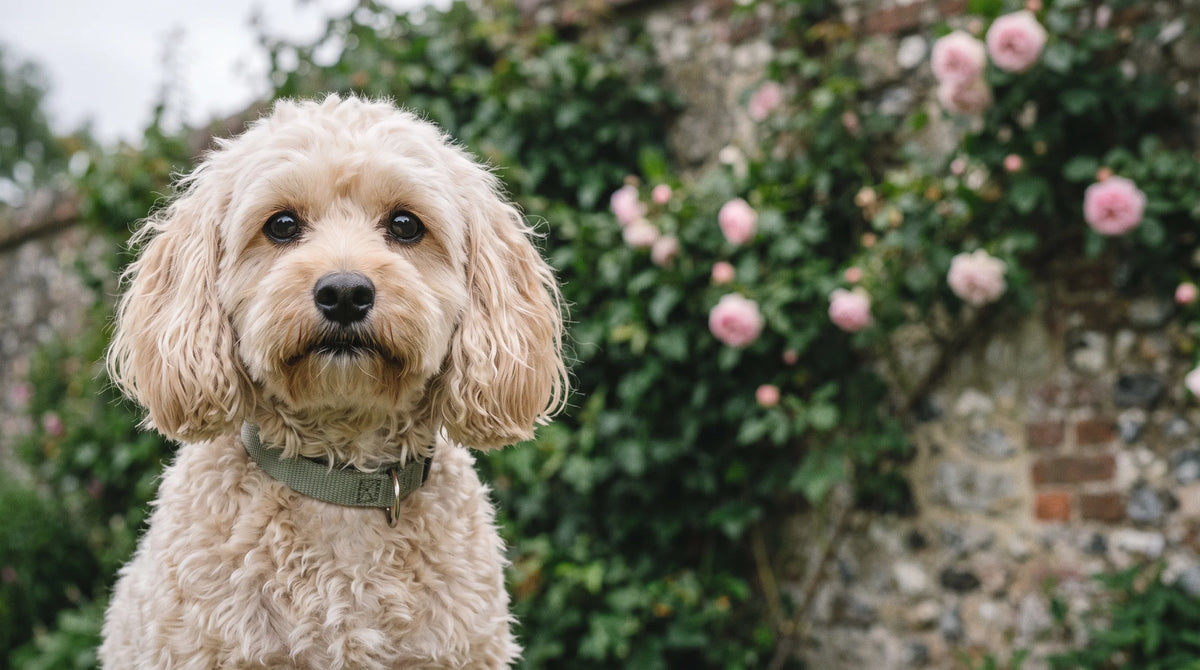
Havapoo
- Small
The Havapoo crosses a Havanese with a Miniature or Toy Poodle and stays under 15 pounds. It is friendly, clever and long-lived at 14 to 16 years, and its luxurious coat needs brushing every single day.
- Weight
- ≤15
- pounds, adult
- Life expectancy
- 14 to 16
- years, median 15
- Senior from
- 11.3
- years, about
Senior starts in the last quarter of a breed's expected lifespan, following the 2019 AAHA canine life stage guidelines. Individual dogs vary.
About the breed
- Temperament
- Friendly, playful, adaptable, intelligent, affectionate, energetic
- Coat
- Curly, Wavy, long
The Havapoo is a mix of the Havanese, Cuba's only native dog breed, and the Poodle, the national dog of France. A full-grown one should not weigh more than 15 pounds, since the Havanese parent runs 7 to 13 pounds and the Poodle parent is typically a Miniature at 10 to 15 or a Toy at 4 to 6.
The American Kennel Club does not recognise the cross, so there is no breed standard to describe it. What there is instead is two very well documented parents, and both score highly for friendliness, playfulness, adaptability and intelligence, with the Poodle side bringing more energy and a greater need for mental work.
Expect a dog that wants company. Havanese descend from lap dogs and Miniature and Toy Poodles descend from hunting dogs, and what they have in common is a need for close companionship. A bored, lonely Havapoo with energy left over is the one that barks the house down.
Size is the thing to plan around. A Havapoo gets on with people of all ages and with other pets, but very small children and very large dogs can hurt one without meaning to, so interactions need real supervision. Lifespan is 14 to 16 years.
Care
The routines that matter most for this breed. Open one at a time.
Nutrition
There is no one-size-fits-all plan for a Havapoo. Work with your vet on something nutritionally complete and balanced for your dog's age, weight and health, and pay attention to kibble size while you are at it, because small teeth need small kibble.
Puppies need three or four meals a day, and the reason is specific: frequent feeding is what keeps a very small puppy from going hypoglycaemic. Adults can eat two or three times a day, and your vet can say which suits yours.
The feeding guide on the bag gives a rough amount by weight. A better figure comes from your vet, who will factor in body condition score, lifestyle and health. Treats carry calories too and should stay under 10 percent of the daily requirement.
On a complete and balanced diet meeting the Association of American Feed Control Officials (AAFCO) nutrient profiles, no supplements are needed. Your vet may suggest dental chews given how prone the parent breeds are to gum disease, but a chew does not replace a toothbrush.
Grooming
Matting is the constant problem with a Havapoo. Both parents are known for long fur, the coat barely sheds, and the price of that is daily brushing plus regular professional grooming. A shorter haircut genuinely lightens the load if the daily brush is not realistic.
Coat care is skin care here. A mat traps moisture, debris and irritants against the skin, so keeping the hair clear is what keeps the skin healthy. Ask your vet how often to bathe, because over-bathing strips the natural oils and leaves the skin dry and itchy.
Watch the eyes closely, since both parent breeds are prone to eye problems: cloudiness or inflammation are worth a call, and the hair around the eyes should be kept trimmed so it does not irritate them. Tear staining is common in both parents and usually harmless, though a sudden appearance of the reddish-brown streaks is worth mentioning to your vet.
Ears are a weak point, particularly in a Havapoo that has taken after the Poodle and loves the water. Ask your vet how and how often to clean them, and treat redness, odour, pain or itchiness as an infection until proven otherwise. Brush the teeth at least three times a week.
Exercise
A Havapoo is energetic and active but needs only a moderate amount of exercise a day, which makes it one of the easier small crosses to keep well exercised.
Variety does more than distance. Walking, swimming, fetch, hide-and-seek and nose work all suit the size, and food puzzles cover a wet afternoon.
The mental half is not optional. Havapoos are clever, and the behaviours people complain about, excessive barking chief among them, come from a dog that is bored and under-attended rather than under-walked.
Keep the company up. This cross does not enjoy being alone for long, and time with you is part of the daily requirement rather than a bonus on top of it.
Training
Havapoos are brainy and respond well to training, but the two sides of the cross want slightly different handling. The Havanese parent can be sensitive and the Poodle parent needs consistency, so a lifelong rewards-based approach is the one that works for both.
Get the socialisation done early. The first sixteen weeks are the critical learning window, and safe exposure to different animals, people, environments, activities and objects in that period is what produces a dog that is comfortable in new places later. Ask your vet which activities are age-appropriate.
Training doubles as exercise here, which is convenient in a dog with moderate physical needs and high mental ones. Skills work, obedience and nose work all count.
If you reward with treats, count them into the daily calories. Play, toys and anything else your Havapoo likes work as rewards too, and they will not put weight on a 15-pound dog.
Health conditions
4 conditions are documented for the Havapoo.
A predisposition is not a diagnosis. Ask your vet which screenings make sense for your dog's age.
- Dental DiseaseOral & Dental
- Legg-Calve-Perthes DiseaseBone & Joint
- Patellar LuxationBone & Joint
- Progressive Retinal AtrophyEye
May inherit from parent breeds
These conditions are documented in the parent breeds, not in this cross itself. Carrier possible means the condition is recessive: a dog can carry it without showing signs. Ask the breeder which tests the parent dogs had.
- Addison's DiseaseMiniature Poodle, Toy Poodle
- BronchiectasisMiniature Poodle, Toy Poodle
- Chronic BronchitisMiniature Poodle, Toy Poodle
- CryptorchidismMiniature Poodle, Toy Poodle
- DyschondroplasiaMiniature Poodle
Show all 22 conditions Show fewer
- DystociaMiniature Poodle, Toy Poodle
- Ear InfectionsToy Poodle
- Ectopic UreterMiniature Poodle, Toy Poodle
- Eye ProblemsMiniature Poodle
- Geriatric-onset laryngeal paralysis polyneuropathy, GOLPPMiniature Poodle, Toy Poodle
- HypothyroidismMiniature Poodle, Toy Poodle
- Idiopathic epilepsy, including epilepsy of unknown originMiniature Poodle, Toy Poodle
- Immune-mediated thrombocytopeniaMiniature Poodle, Toy Poodle
- Intervertebral Disc DiseaseHavanese, Miniature Poodle, Toy Poodle
- Mitral Valve DiseaseMiniature Poodle
- Noise aversion (noise sensitivity; noise phobia when clinically diagnosed)Miniature Poodle, Toy Poodle
- Puerperal hypocalcemia (eclampsia)Miniature Poodle, Toy Poodle
- Systemic lupus erythematosusMiniature Poodle, Toy Poodle
- Systemic lupus erythematosus-associated polyarthritisMiniature Poodle, Toy Poodle
- Tracheal CollapseMiniature Poodle, Toy Poodle
- Tracheobronchial Collapse and BronchomalaciaMiniature Poodle, Toy Poodle
- Von Willebrand DiseaseToy Poodle



Longevity & Vitality soft chew
Longevity & Vitality is a daily chew built on five active ingredients. Each chew carries Turkey Tail at 600mg, Curcuvet® curcumin at 75mg, Quercefit® quercetin at 40mg, Fibalance® at 275mg and EpiCor® at 50mg. The daily serving follows your dog's weight, from half a chew to three.
