
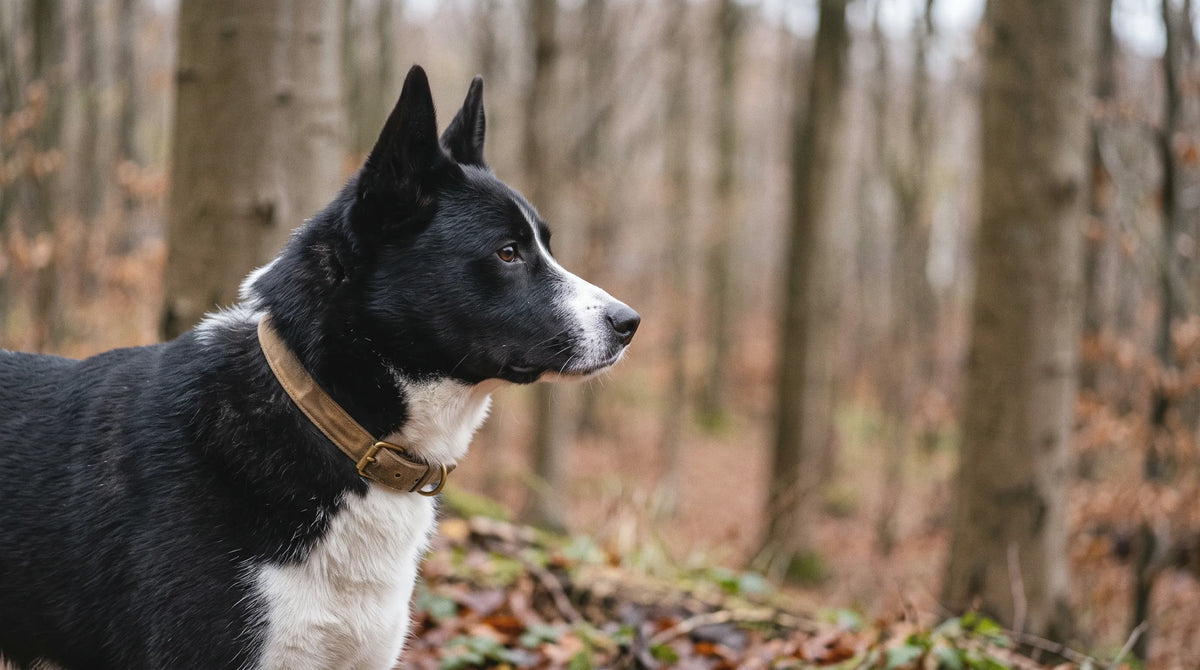
Karelian Bear Dog
- Medium
- Foundation Stock Service
Bred in Finland to hunt large game alone, the Karelian Bear Dog is a medium-sized spitz with a black-and-white double coat. Independent, loyal, and courageous, it is a silent, intense worker who needs an experienced owner.
- Height
- 19 to 23.5
- inches at the shoulder
- Weight
- 44 to 49
- pounds, adult
- Life expectancy
- 11 to 13
- years, median 12
- Senior from
- 9
- years, about
Senior starts in the last quarter of a breed's expected lifespan, following the 2019 AAHA canine life stage guidelines. Individual dogs vary.
About the breed
- Temperament
- Independent, loyal, courageous
- Coat
- Double, medium
- Origin
- Finland
The Karelian Bear Dog is a medium-sized spitz from Finland, standing 19 to 23.5 inches tall and weighing 44 to 49 pounds. The Karelian Bear Dog carries a dense, black-and-white double coat of medium length, and in build its standard sits closer to non-spitz dogs such as the Samoyed and Siberian Husky.
The Karelian Bear Dog was bred to hunt large, aggressive game on its own, and its whole build reflects that work. The Karelian Bear Dog is a silent hunter who barks only once the game is stopped or treed, and working alongside an experienced hunter, it signals the kind of animal it has found by the sound of that bark.
Independent, loyal, and courageous, it can show real self-control around people. The Karelian Bear Dog's fighting spirit surfaces around other dogs, though, and can be hard to handle, since this is a breed that loves a challenge. Karelian Bear Dogs typically live 11 to 13 years.
Temperament and needs
Scored 1 to 5 for the breed overall. Individual dogs vary.
- Affectionate with family3 out of 5
- Good with young children1 out of 5
- Good with other dogs3 out of 5
- Openness to strangers3 out of 5
- Playfulness3 out of 5
- Watchdog and protective nature5 out of 5
- Adaptability3 out of 5
- Trainability4 out of 5
- Energy level3 out of 5
- Mental stimulation needs3 out of 5
- Barking level3 out of 5
- Shedding3 out of 5
- Grooming frequency3 out of 5
- Drooling2 out of 5
Care
The routines that matter most for this breed. Open one at a time.
Nutrition
The Karelian Bear Dog does well on a high-quality diet, whether commercially manufactured or home-prepared with your veterinarian's supervision and approval. Match the food to the dog's life stage, whether puppy, adult, or senior, and keep clean, fresh water available at all times.
How much to feed depends on ideal body weight, life stage, and activity level. Follow the guidelines on the food, measure each meal, and ask your vet about portion size. Some dogs gain weight easily, so watch calorie intake and cut back if the scale creeps up.
- Feed two meals a day, one in the morning and one in the evening.
- Keep treats to no more than 10% of daily calories, leaving about 90% for complete dog food.
- If your dog eats too quickly, a slow-feeder bowl can help settle the meal.
A healthy Karelian Bear Dog meets its needs on a complete and balanced diet, so this breed generally should not need supplements. If your dog is diagnosed with a condition such as hip dysplasia or chondrodysplasia, your vet may suggest a joint supplement, an omega-3 supplement, or a prescription joint diet. Check with your veterinarian about any concerns.
Grooming
The black-and-white double coat sheds a moderate amount. Brush at least once or twice a week to cut down on loose fur and prevent mats, and add the occasional bath to keep your Karelian Bear Dog clean. This breed has no special skin needs beyond infrequent baths, so ask your vet when to bathe and use only dog-friendly shampoo, since human products can irritate the skin.
The strong, fast-growing nails need regular trimming with a clipper or grinder to prevent overgrowth, splitting, and cracking. Check the ears often for wax and debris, and keep them clean, since clean ears stay healthier and less prone to infection.
Dental care matters too. Alongside professional cleanings, build an at-home routine of daily tooth brushing plus dental chews or treats. Watch the eyes and vision for changes such as redness, discharge, cloudiness, reluctance to go outside, or new clumsiness, and contact your vet if you notice anything new in the skin or eyes.
Exercise
Karelian Bear Dogs love to move, whether that is play in a fenced area or a leisurely walk. Aim to run them several times a day, and on bad-weather days fall back on indoor games like hide-and-seek, chasing a ball rolled along the floor, or learning new tricks. Even short walks down apartment hallways help.
Swimming, hiking, and retrieving balls or flying discs all give a good outlet for pent-up energy, and dog sports such as agility, obedience, and rally suit the breed well. Their exercise needs tie closely to their hunting history.
Because their prey drive is strong, never let a Karelian Bear Dog off-leash outdoors, since it may chase whatever catches its eye. The ideal home has a large, fenced yard where they can run, though they can manage in smaller homes and apartments when they are well-socialized, well-trained, and given plenty of time outside.
Training
Karelian Bear Dogs are independent and can be stubborn, which makes them harder to train and a poor match for a first-time owner. Establish firm leadership through confident, consistent, gentle methods. Reward-based training with treats, praise, and a gentle stroke after a job well done keeps your dog engaged.
Begin socialization early. Enroll puppies in obedience classes young so they grow easier to train and learn to stay well-mannered, confident, and calm around new things. This breed prefers its independence and stays reserved around new people, so it can be standoffish with strangers.
The breed is rated as not good with young children, and its strong prey drive means it often does better as the only pet at home. Around other dogs it does fine in general company, but its fighting spirit can surface, so steady early exposure and supervision matter. These traits make the Karelian Bear Dog best suited to experienced, patient pet parents.
Health conditions
8 conditions are documented for the Karelian Bear Dog.
A predisposition is not a diagnosis. Ask your vet which screenings make sense for your dog's age.
- CataractsEye
- ChondrodysplasiaBone & Joint
- ChondrodystrophyBone & Joint
- Hip DysplasiaBone & Joint
- HypophosphatasiaBone & Joint
Show all 8 conditions Show fewer
Sources
Thank you. Your report is in, and we will check this page.
Longevity & Vitality soft chew
Longevity & Vitality is a daily chew built on five active ingredients. Each chew carries Turkey Tail at 600mg, Curcuvet® curcumin at 75mg, Quercefit® quercetin at 40mg, Fibalance® at 275mg and EpiCor® at 50mg. The daily serving follows your dog's weight, from half a chew to three.
