
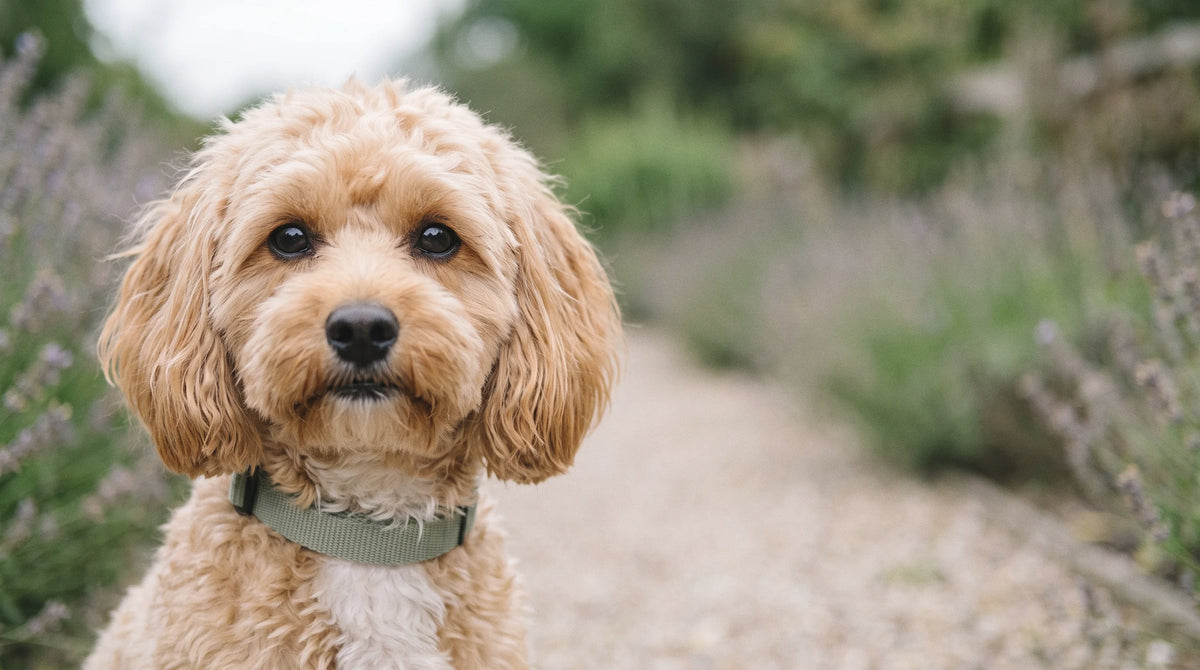
Maltipoo
- Small
The Maltipoo crosses a Maltese with a Toy or Miniature Poodle, giving a bouncy 5 to 20 pound dog. It is charming and well-mannered with training, and it will still bark at the mail carrier as if it owned the place.
- Height
- 8 to 14
- inches at the shoulder
- Weight
- 5 to 20
- pounds, adult
- Life expectancy
- 12 to 16
- years, median 14
- Senior from
- 10.5
- years, about
Senior starts in the last quarter of a breed's expected lifespan, following the 2019 AAHA canine life stage guidelines. Individual dogs vary.
About the breed
- Temperament
- Friendly, outgoing, gentle, sensitive, intelligent, playful
- Coat
- Curly, Silky, long
The Maltipoo is a Maltese crossed with a Toy or Miniature Poodle, standing 8 to 14 inches and weighing 5 to 20 pounds. Where a particular dog lands in that range depends mostly on which Poodle was involved.
It is a small dog with a large opinion of itself. Maltipoos are friendly and outgoing, gentle with children, adults, older people and other pets when properly socialised, and genuinely easy company. They also do not appear to know how small they are, and will bark to alert the household to anything unfamiliar, from the mail carrier to a squirrel.
That is worth thinking about before choosing one for an apartment. The size suits apartment living; the volume may not suit your neighbors, and it is a training problem rather than a fixed trait.
Maltipoos are sensitive dogs that do best on a routine, in a settled environment, with their people around for most of the day. Left alone too long they are prone to separation anxiety. The coat is low-shedding and high-maintenance, and with good training a Maltipoo stays puppy-like for most of a 12 to 16 year life.
Care
The routines that matter most for this breed. Open one at a time.
Nutrition
Choose a food that follows Association of American Feed Control Officials (AAFCO) guidelines, which is what tells you your Maltipoo is getting the nutrients it needs rather than an approximation of them.
Feed a puppy on a regular schedule, four times a day while it is very young to keep its blood sugar from dropping into hypoglycaemia, scaling back to three small meals as it grows and two as an adult.
Measure every meal. This is a small breed that becomes obese easily, and eyeballing portions on a dog that might weigh eight pounds is how it happens. The label gives an amount and your vet gives a better one.
Most Maltipoos get everything they need from their food. Joint supplements benefit some, given the luxating patella and the Legg-Calve-Perthes disease this cross carries, but that is a recommendation to get from your vet rather than a default addition.
Grooming
Maltipoos are a high-maintenance breed for grooming despite the low shedding, and a professional appointment every four to six weeks is the schedule a master groomer recommends. Regular bathing and brushing at home are the two tasks that matter most in between.
Every Maltipoo coat is different. Some are curly like the Poodle parent and some straight and silky like the Maltese, so the exact routine follows your dog rather than the breed name. What is constant is that the coat mats if it is left.
Teeth are the non-negotiable part. One veterinarian's advice on the breed is blunt: every tooth, every surface, every day, with dog-specific toothpaste, starting in puppyhood so the dog grows up accepting it. A Maltipoo should never have bad breath, and if it does, that smell is bacteria.
Get the puppy used to being handled early, because a lifetime of daily tooth brushing and six-weekly grooming only works on a dog that tolerates both.
Exercise
Maltipoos are playful and intelligent without the always-on-the-go temperament of some breeds. A daily walk plus some play in the yard usually works off the energy they have stored up.
Fetch, chase and tug-of-war are the games this cross reliably enjoys, and all three work indoors on a bad day, which is part of why the breed suits smaller homes.
The exercise is also the anti-barking measure. A Maltipoo with an outlet is less inclined to announce every passer-by, and a Maltipoo with nothing to do will find the window.
Keep an eye on the joints while you play. Sudden limping, a skip in the gait or a bunny-hopping stride is worth reporting rather than watching, because both of the orthopaedic conditions this cross carries present that way.
Training
Training a Maltipoo is relatively easy. The breed is intelligent and eager to make you happy, and positive reinforcement is all that is called for.
Mind the treat count. Calories add up fast on a dog this size, so use praise and toys as rewards alongside food rather than paying for every repetition in treats.
Socialise early and thoroughly. The gentleness this breed is known for around children, older people and other pets comes with the condition that the dog was properly socialised, and the small size cuts both ways: a young child can injure a Maltipoo without meaning to, so supervise closely.
Crate train from the start. This is a sensitive dog that thrives on routine and a controlled environment, and a crate it feels safe in is the practical answer for the times it has to be left. Separation anxiety is the behaviour problem to prevent rather than to treat.
Health conditions
4 conditions are documented for the Maltipoo.
A predisposition is not a diagnosis. Ask your vet which screenings make sense for your dog's age.
- Dental DiseaseOral & Dental
- EpilepsyNervous System & Behavioral
- Legg-Calve-Perthes DiseaseBone & Joint
- Patellar LuxationBone & Joint
May inherit from parent breeds
These conditions are documented in the parent breeds, not in this cross itself. Carrier possible means the condition is recessive: a dog can carry it without showing signs. Ask the breeder which tests the parent dogs had.
- Addison's DiseaseMiniature Poodle, Toy Poodle
- BronchiectasisMiniature Poodle, Toy Poodle
- Chronic BronchitisMiniature Poodle, Toy Poodle
- CryptorchidismMaltese, Miniature Poodle, Toy Poodle
- DyschondroplasiaMiniature Poodle
Show all 26 conditions Show fewer
- DystociaMiniature Poodle, Toy Poodle
- Ear InfectionsToy Poodle
- Ectopic UreterMiniature Poodle, Toy Poodle
- Eye ProblemsMiniature Poodle
- Geriatric-onset laryngeal paralysis polyneuropathy, GOLPPMiniature Poodle, Toy Poodle
- Glycogen Storage Disease Type IAMaltese
- HypothyroidismMiniature Poodle, Toy Poodle
- Idiopathic epilepsy, including epilepsy of unknown originMiniature Poodle, Toy Poodle
- Immune-mediated thrombocytopeniaMiniature Poodle, Toy Poodle
- Intervertebral Disc DiseaseMaltese, Miniature Poodle, Toy Poodle
- Liver ShuntsMaltese
- Mitral Valve DiseaseMiniature Poodle
- Noise aversion (noise sensitivity; noise phobia when clinically diagnosed)Miniature Poodle, Toy Poodle
- Patent Ductus ArteriosusMaltese
- Progressive Retinal AtrophyCarrier possible · Toy Poodle
- Puerperal hypocalcemia (eclampsia)Miniature Poodle, Toy Poodle
- Systemic lupus erythematosusMiniature Poodle, Toy Poodle
- Systemic lupus erythematosus-associated polyarthritisMiniature Poodle, Toy Poodle
- Tracheal CollapseMiniature Poodle, Toy Poodle
- Tracheobronchial Collapse and BronchomalaciaMaltese, Miniature Poodle, Toy Poodle
- Von Willebrand DiseaseToy Poodle



Longevity & Vitality soft chew
Longevity & Vitality is a daily chew built on five active ingredients. Each chew carries Turkey Tail at 600mg, Curcuvet® curcumin at 75mg, Quercefit® quercetin at 40mg, Fibalance® at 275mg and EpiCor® at 50mg. The daily serving follows your dog's weight, from half a chew to three.
