
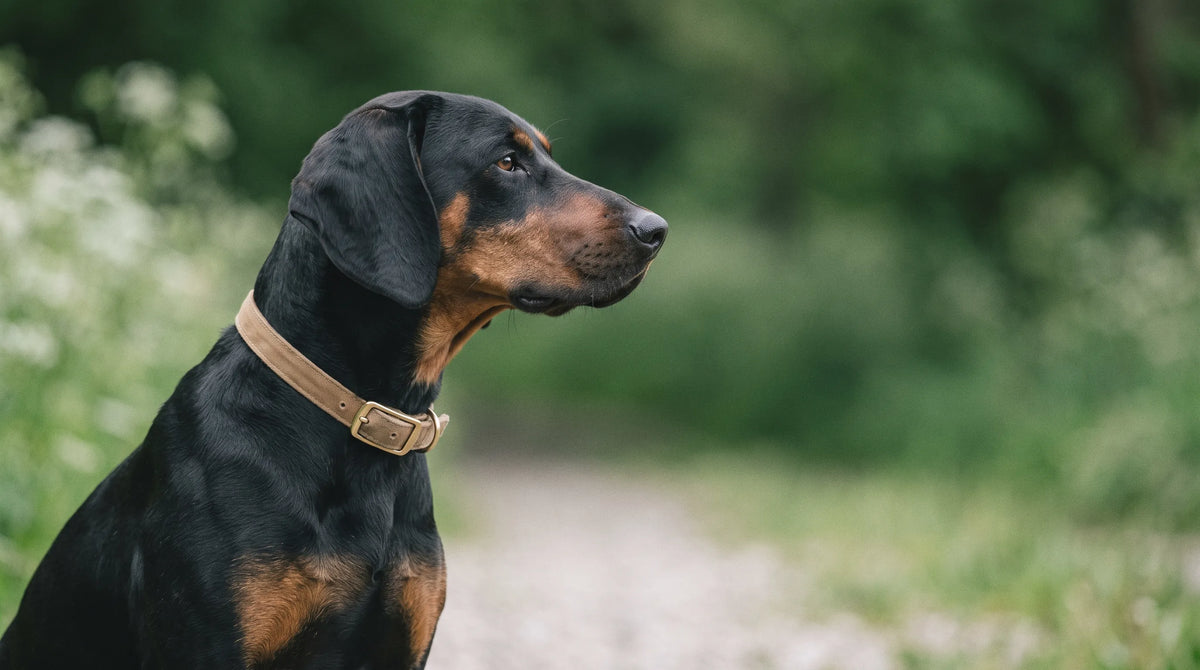
Polish Hunting Dog
- Medium
- FCI Group 6 (Scent Hounds and Related Breeds)
The Polish Hunting Dog is an intelligent scent hound bred for the field, courageous at work and gentle at home. This medium-sized Polish breed pairs strong hunting instincts with real devotion to its family.
- Height
- 20 to 23
- inches at the shoulder
- Weight
- 44 to 55
- pounds, adult
- Life expectancy
- 10 to 13
- years, median 11.5
- Senior from
- 8.6
- years, about
Senior starts in the last quarter of a breed's expected lifespan, following the 2019 AAHA canine life stage guidelines. Individual dogs vary.
About the breed
- Origin
- Poland
- Recognized
- 2017
The Polish Hunting Dog is an intelligent, alert scent hound with a medium-sized, compact build and strong bone that never turns heavy. Bred for the field, these dogs are courageous hunters and gentle companions who make devoted family dogs.
They can be wary of strangers, which makes them capable watchdogs. Their keen sense of smell is always at work, and because they will follow a scent wherever it leads, keep them on a leash or in a securely enclosed area.
Like many European hounds, the Polish Hunting Dog (also called the Polish scenthound) is thought to descend from the St. Hubert Hound. Those ancestral dogs came to Poland mainly from France and Italy, and written accounts of Polish hunters using them date to the 13th century. By at least the 17th century, two types were documented: a heavier brach and a lighter scent hound.
Both types nearly went extinct during World War II, then breeding efforts in the 1950s brought them back. At first the larger Kartawik variety and the smaller Pawlusiewicz variety, each named for its breeder, were recognized by the FCI as a single breed, the Polish Hound (Ogar Polski). Hunters kept breeding the smaller Polish Hunting Dog type as a working dog, and 20 years later it was recognized as a separate breed, the Gonczy Polski. Today's standard is based on Pawlusiewicz's dogs, and the breed is still favored by hunters for mountainous, challenging terrain.
Care
The routines that matter most for this breed. Open one at a time.
Nutrition
Meals for a Polish Hunting Dog should be measured, then reviewed against the dog's activity, weight, and body condition. The food itself should be complete and balanced for the current life stage. Food type and amount for an adult should also take age and size into account. For a healthy adult in ideal body condition, calorie guidance is only a starting point because individual needs may be higher or lower.
As those needs change, intake should be adjusted instead of leaving the serving fixed. Treats should be counted within the dog's daily calorie total and kept to no more than 10 percent of that allowance. Unexpected weight changes and diet choices should be discussed with a veterinarian. Fresh water should be kept clean, available, and replaced each day.
Grooming
The Polish Hunting Dog has an easy-care coat, and weekly grooming provides a practical routine. Summer brings the shedding of its winter undercoat, so loose coat deserves attention during that period. Regular coat care should keep the coat clean and free of mats, while bathing remains occasional and may sometimes be replaced by a thorough rinse.
For a puppy, the breeder can recommend a brush suited to the individual coat. Ears and eyes should be checked regularly for cleanliness. Nail length should also be checked; if the nails do not wear naturally, veterinary advice should guide trimming. Regular skin and coat inspections should look for fur loss, injuries, parasites, or other concerns, with any issue discussed with a veterinary professional. Dental care should include regular tooth checks and at-home brushing with a toothbrush and toothpaste made for dogs.
Exercise
Polish Hunting Dogs need more than two hours of exercise each day. Hunting supplies the mental stimulation needed alongside that physical work.
Their strong hunting interest means this work also requires access to suitable hunting grounds. Polish Hunting Dogs can live as active, loyal family pets, but a home that expects companionship alone is not a suitable match.
Training
This intelligent breed has a stubborn streak that can challenge first-time pet parents. For strong results, lead with confidence and keep your training consistent and firm.
Polish Hunting Dogs benefit from early socialization. Help them get comfortable with different people and places while young, and they grow into well-adjusted adults.
Sources
- Wisdom Panel: Polish Hunting Dog
- Royal Kennel Club: Polish Hunting Dog
- Swedish Kennel Club: Gończy Polski
Thank you. Your report is in, and we will check this page.
Longevity & Vitality soft chew
Longevity & Vitality is a daily chew built on five active ingredients. Each chew carries Turkey Tail at 600mg, Curcuvet® curcumin at 75mg, Quercefit® quercetin at 40mg, Fibalance® at 275mg and EpiCor® at 50mg. The daily serving follows your dog's weight, from half a chew to three.
