
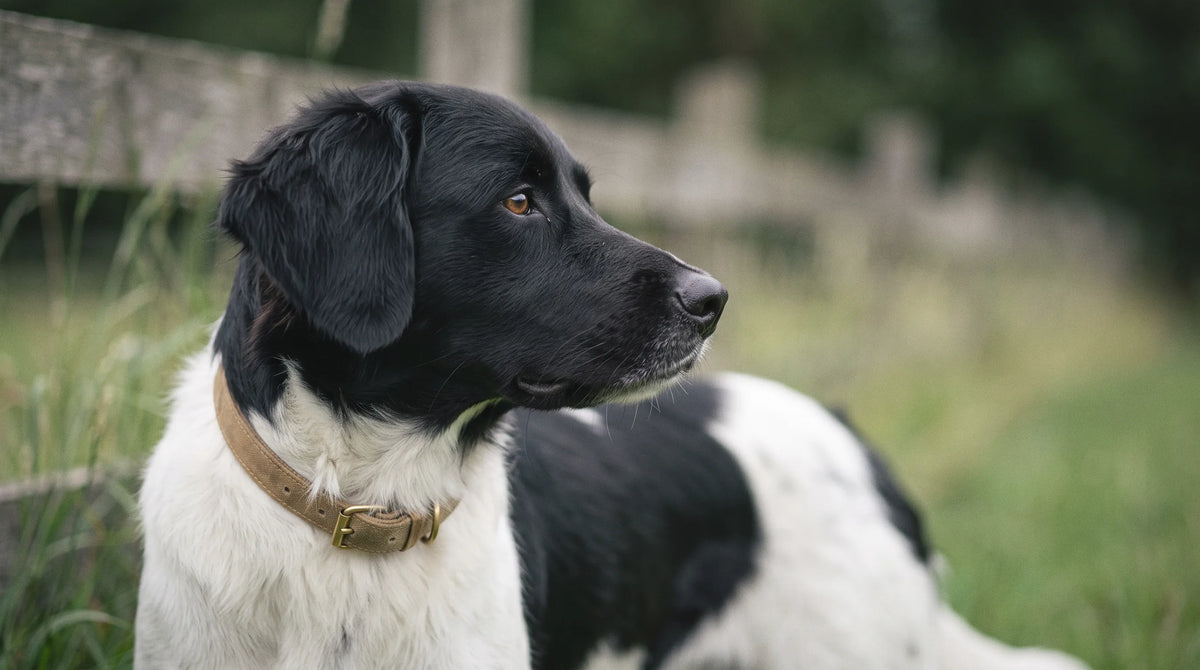
Stabyhoun
- Medium
- Foundation Stock Service
The Stabyhoun is a gentle, intelligent Dutch farm dog. Loyal and patient, this medium-size pointer stands 19 to 21 inches and can live well with children and other pets when given exercise and a job to do.
- Height
- 19 to 21
- inches at the shoulder
- Weight
- 40 to 60
- pounds, adult
- Life expectancy
- 13 to 15
- years, median 14
- Senior from
- 10.5
- years, about
Senior starts in the last quarter of a breed's expected lifespan, following the 2019 AAHA canine life stage guidelines. Individual dogs vary.
About the breed
- Temperament
- Intelligent, loving, responsive
- Coat
- Double, Smooth, short
- Origin
- Netherlands
The Stabyhoun (pronounced Stab-bee-houn) is a strong, functional pointing dog from the Netherlands. Bred as a multipurpose farm dog, it is known as a gentle, loyal family companion.
Longer than it is tall, the Staby has a balanced, medium-size build with a head that shows more length than width. Most are black and white, with brown and white also seen in the Netherlands and orange and white now very rare. Feathering on the chest, collar, forelegs, trousers, and tail gives the look of a longhaired dog.
The breed is even-tempered, intelligent, responsive, and usually good with children and other pets. With enough exercise and attention, it can settle indoors.
The breed carries a deliberate independent streak. Poor farmers in the Friesland forest land needed one dog that could do everything, so they bred a hunter that could work moles and rabbits on its own, guard livestock and property, and clear vermin. That versatility likely gave the breed its name: Stabyhoun comes from sta mij bij ("stand by me") and houn, the Frisian word for dog.
Established in the Netherlands in the 1800s, the Staby arrived in the United States with its first litter in 1994 and was recorded in the major US kennel registry's Foundation Stock Service just over a decade later.
Temperament and needs
Scored 1 to 5 for the breed overall. Individual dogs vary.
- Affectionate with family5 out of 5
- Good with young children5 out of 5
- Good with other dogs4 out of 5
- Openness to strangers3 out of 5
- Playfulness3 out of 5
- Watchdog and protective nature3 out of 5
- Adaptability3 out of 5
- Trainability5 out of 5
- Energy level4 out of 5
- Mental stimulation needs4 out of 5
- Barking level3 out of 5
- Shedding3 out of 5
- Grooming frequency1 out of 5
- Drooling2 out of 5
Care
The routines that matter most for this breed. Open one at a time.
Nutrition
The Stabyhoun does well on a high-quality dog food, whether commercially made or home-prepared with your veterinarian's supervision and approval. Match the food to your dog's life stage, puppy, adult, or senior, and to their activity level, and keep clean, fresh water available at all times.
Some Stabys gain weight easily, so watch their food intake and overall weight. Treats are useful for training but add up quickly, so as a guideline keep them to no more than 10% of daily calories.
Learn which human foods are safe for dogs and which are not, and check with your vet about any concerns over weight or diet.
Grooming
A Stabyhoun has low grooming needs. The coat is largely self-cleaning, so once it dries the dirt falls away and a single brush removes the last bits of sand. Weekly brushing usually keeps it looking tidy, though you may need to brush more often during seasonal shedding.
Baths are rarely needed. Even when it is very dirty, a rinse or a swim in a clean pool is usually enough. Save shampoo for when it has rolled in something smelly, and use a neutral dog shampoo so you do not strip the natural oils from its skin.
Unless it is neutered, any necessary trimming you can do yourself. A neutered dog can develop a thicker undercoat (sometimes called a castrated coat) that needs a bit more grooming.
Trim the nails regularly so they stay short, since nails that grow too long cause discomfort and trouble walking. Keep up dental care too, with professional cleanings and an at-home routine of regular, ideally daily, tooth brushing.
Exercise
Daily exercise keeps a Staby in good physical and mental shape, and a solid hour a day is usually enough. Afterward they are content to rest quietly indoors. Walks, jogs, and hikes with the family suit them well, since they love being around their people.
Just as important is a mental challenge. Stabys need varied physical and mental activity. Agility, field trials, tracking, scent work, lure coursing, and obedience provide both.
Training
Stabys are self-motivated, quick learners that are eager to please, a legacy of a history that asked them to think and work pests on their own. Begin patient, consistent training when the dog is young.
This breed responds best to gentle, reward-based training using favorite treats and toys. A fair, consistent coach matters, and a tough or heavy-handed approach simply backfires: too much pressure and the Staby will stop working and lose its willingness to perform.
To help your Stabyhoun grow into a well-mannered adult, socialize them early. The breed is naturally good with children and other dogs, and tends to bark to alert its family, a holdover from its days guarding livestock and property.
Health conditions
7 conditions are documented for the Stabyhoun.
A predisposition is not a diagnosis. Ask your vet which screenings make sense for your dog's age.
- Degenerative MyelopathyNervous System & Behavioral
- Elbow DysplasiaBone & Joint
- EpilepsyNervous System & Behavioral
- Hip DysplasiaBone & Joint
- Idiopathic epilepsy, including epilepsy of unknown originNervous System & Behavioral
Show all 7 conditions Show fewer
Sources
Thank you. Your report is in, and we will check this page.
Longevity & Vitality soft chew
Longevity & Vitality is a daily chew built on five active ingredients. Each chew carries Turkey Tail at 600mg, Curcuvet® curcumin at 75mg, Quercefit® quercetin at 40mg, Fibalance® at 275mg and EpiCor® at 50mg. The daily serving follows your dog's weight, from half a chew to three.
