
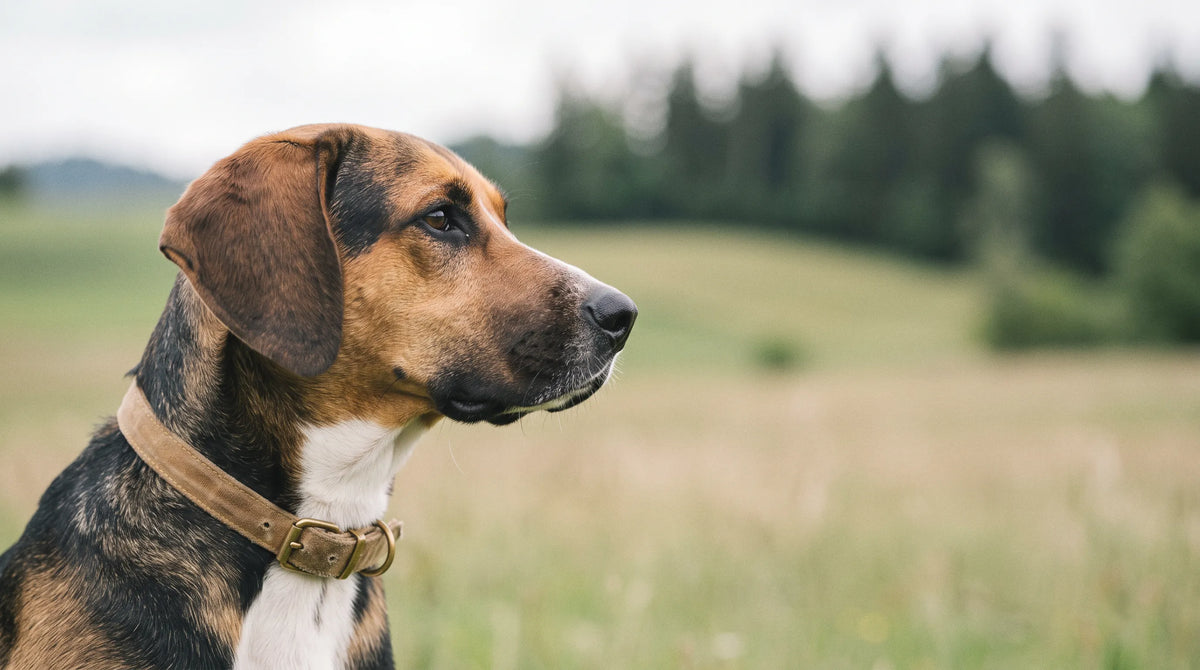
Swiss Hound
- Medium
- FCI Group 6 (Scent Hounds and Related Breeds)
Bred in Switzerland to hunt hare by scent, the Swiss Hound is a medium-sized tracker with a keen nose and great endurance. The breed is lively and driven on the trail, docile and devoted at home, and forms close bonds with its owners.
- Height
- 19 to 23
- inches at the shoulder
- Weight
- 18 to 40
- pounds, adult
- Life expectancy
- 10 to 12
- years, median 11
- Senior from
- 8.2
- years, about
Senior starts in the last quarter of a breed's expected lifespan, following the 2019 AAHA canine life stage guidelines. Individual dogs vary.
About the breed
- Origin
- Switzerland
- Recognized
- 1954
The Swiss Hound is a medium-sized scent hound with a keen sense of smell. It stands about 19 to 23 inches tall, weighs 18 to 40 pounds, and is built for strength and endurance.
Swiss Hounds are confident hunters and even-tempered at home. They are loyal, affectionate, and friendly. Their baying can be loud enough to disturb neighbors in apartments.
The breed's roots trace back to Roman times, with depictions in mosaics from Avenches, Switzerland. Italian dog lovers sought it out in the 15th century, and in the 18th century French hunters favored it for its talented nose and aptitude for hunting hare, with French scent hounds brought by mercenaries shaping its lines. Today the Swiss Hound remains a valued hunting companion in Switzerland, though it is uncommon outside Europe.
Care
The routines that matter most for this breed. Open one at a time.
Nutrition
For an adult Swiss Hound, general veterinary guidance starts with a complete, balanced, and safe diet chosen for the dog's life stage, lifestyle, activity, and body condition. Portions should be measured, while weight and body condition should be tracked so the amount can be adjusted as needs change. Fresh, clean water should remain available and be replaced daily. Unexpected weight changes and major diet choices should be reviewed with a veterinarian.
For a Swiss Hound puppy, the change to adult food depends on individual development, with the attending veterinarian consulted when the timing is uncertain. The transition should then proceed gradually over at least two weeks. The puppy should be weighed regularly against a reliable growth curve instead of relying only on the package allowance, with expert review when growth and intake do not align. Any home-prepared puppy ration should follow a recipe created or checked by a veterinary nutrition expert.
Grooming
The Swiss Hound's short coat keeps grooming fairly simple. Even so, regular brushing helps clear loose hair and dirt and keeps the coat looking healthy.
The long ears can trap moisture and debris, so check them regularly for dirt or wax build-up and clean them as needed. Trim the nails regularly and provide dental care with at-home brushing and professional cleanings.
Exercise
Swiss Hounds carry plenty of energy and stamina. On a hunt they can follow a scent for hours, and when they are not working they need generous daily exercise and mental stimulation.
They enjoy hiking, jogging, and long walks. True to their hound heritage, they also take to canine sports that put their strong nose to work, such as tracking and nose work.
Training
Swiss Hounds are intelligent and eager to please, which makes them very trainable. They respond well to positive reinforcement and short sessions that keep them from getting bored.
Early socialization is essential. Begin socialization young by introducing the dog to different people, places, and pets.
The hunting and tracking instinct runs strong, so they can be unpredictable around small animals and may chase little critters that cross their path. Steady training and supervision around smaller pets help manage this drive.
Health conditions
4 conditions are documented for the Swiss Hound.
A predisposition is not a diagnosis. Ask your vet which screenings make sense for your dog's age.
- CryptorchidismUrinary & Reproductive
- EpilepsyNervous System & Behavioral
- HypothyroidismHormonal
- Symmetrical Lupoid OnychodystrophySkin & Connective Tissue
Longevity & Vitality soft chew
Longevity & Vitality is a daily chew built on five active ingredients. Each chew carries Turkey Tail at 600mg, Curcuvet® curcumin at 75mg, Quercefit® quercetin at 40mg, Fibalance® at 275mg and EpiCor® at 50mg. The daily serving follows your dog's weight, from half a chew to three.
