
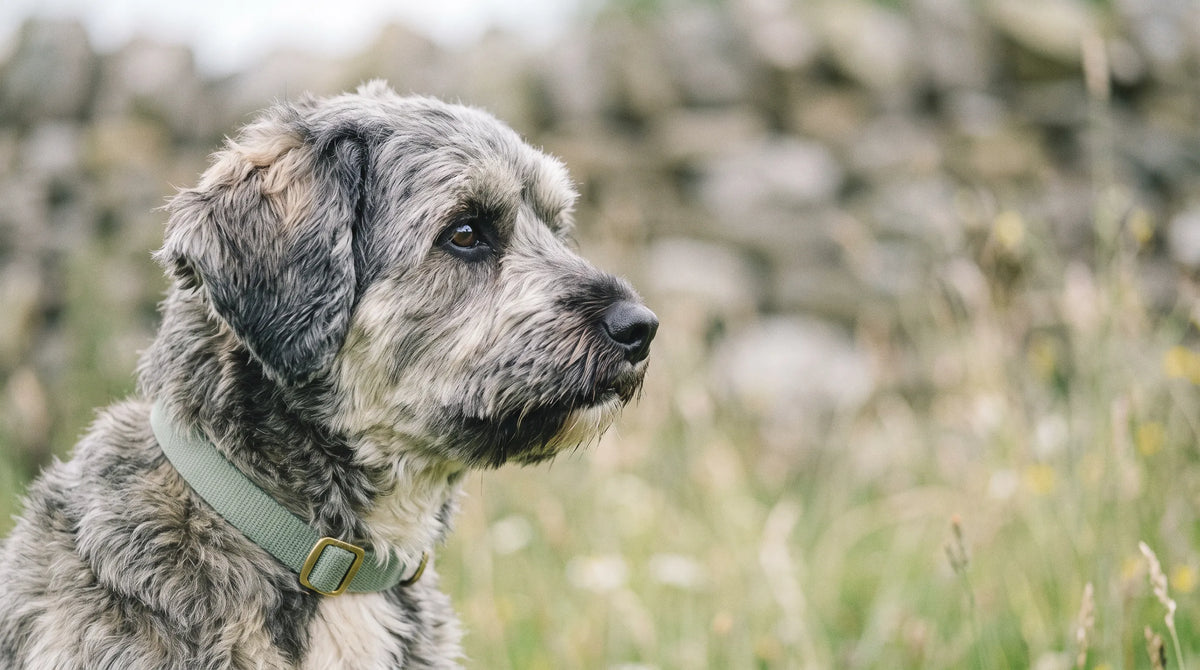
Tibetan Terrier
- Small
- Non-Sporting Group
- Popularity rank 118
The Tibetan Terrier is a small, long-coated companion bred in the monasteries of Tibet. Loyal, affectionate, and sensitive, it pairs a profuse double coat with large snowshoe feet built for crossing mountain terrain.
- Height
- 14 to 17
- inches at the shoulder
- Weight
- 18 to 30
- pounds, adult
- Life expectancy
- 15 to 16
- years, median 15.5
- Senior from
- 11.6
- years, about
Senior starts in the last quarter of a breed's expected lifespan, following the 2019 AAHA canine life stage guidelines. Individual dogs vary.
About the breed
- Temperament
- Loyal, affectionate, sensitive
- Coat
- Double, long
- Origin
- Tibet
- Recognized
- 1973
2015: rank 90, 2016: rank 91, 2017: rank 101, 2018: rank 96, 2019: rank 103, 2020: rank 99, 2021: rank 112, 2022: rank 106, 2023: rank 108, 2024: rank 117, 2025: rank 118
The Tibetan Terrier is a small companion dog from Tibet, where it was kept in monasteries and earned nicknames like the Holy Dog of Tibet and the Luck Bringer. Despite the name, it is not a true terrier. It belongs to the Non-Sporting Group and was recognized in 1973.
Adults stand about 14 to 17 inches at the shoulder and weigh 18 to 30 pounds. A breed hallmark is the profuse double coat, wooly underneath with a long, fine topcoat. Tibetan Terriers are also unusual for their large, flat snowshoe feet, adapted over centuries to help them cross the snowy, mountainous terrain of their homeland.
This is a loyal, affectionate, and sensitive breed that bonds closely with its family. It can live 15 to 16 years.
Temperament and needs
Scored 1 to 5 for the breed overall. Individual dogs vary.
- Affectionate with family5 out of 5
- Good with young children3 out of 5
- Good with other dogs3 out of 5
- Openness to strangers3 out of 5
- Playfulness3 out of 5
- Watchdog and protective nature4 out of 5
- Adaptability4 out of 5
- Trainability3 out of 5
- Energy level4 out of 5
- Mental stimulation needs4 out of 5
- Barking level3 out of 5
- Shedding3 out of 5
- Grooming frequency3 out of 5
- Drooling2 out of 5
Care
The routines that matter most for this breed. Open one at a time.
Nutrition
Tibetan Terriers evolved in a hard land that knew both feast and fast. They are naturally lean dogs that savor their food and chew it, so it is not unusual for one to leave a little in the bowl. Feed an honest food with real ingredients and trust a Tibetan Terrier to eat what it needs rather than the bag's instructions.
Feed adult Tibetan Terriers twice daily. Puppies need to eat more often, up to three or four times a day. Match the food to the dog's life stage, whether puppy, adult, or senior, and keep treats to no more than 10 percent of the diet.
Food packaging gives feeding guidance based on ideal weight, but your veterinarian gives the most reliable advice for your dog's age, lifestyle, and health. A healthy Tibetan Terrier on a complete, balanced diet generally needs nothing extra.
In some cases a vet may suggest a supplement, such as an omega-3 with EPA and DHA to support skin and coat, or a joint supplement to support comfortable movement. Talk with your veterinarian about whether your Tibetan Terrier would benefit from one.
Grooming
Under the manicured show coat is an agile, versatile dog with a practical, weather-resistant coat. The double coat has a wool undercoat that resists moisture and insulates well, and textures vary from softer to harder and from more to less prone to matting.
Despite the long hair, grooming needs are modest. Brush the coat several times a week to prevent mats. A puppy cut can keep the fur shorter and easier to manage for outdoor adventures, though even a shorter cut still needs frequent brushing. Use grooming sessions to inspect the dog's condition.
Bathe a Tibetan Terrier only when the coat gets dirty or smelly; frequent bathing is not needed. They can develop allergy-related skin issues, so check the skin often and contact your veterinarian about changes like redness or dryness. Provide regular dental care with at-home tooth brushing and professional cleanings.
Tibetan Terriers are not especially prone to ear infections, but they can develop them, particularly with allergies or water left in the ears after a bath. An ear cleaner with a drying agent helps; clean the ears after a bath or swim, and ask your vet how often if your dog has allergies.
The breed is genetically prone to several eye conditions. Choose a breeder who examines and tests their breeding dogs for eye health, schedule a wellness exam to have your pup's eyes checked, and repeat once a year. See your vet promptly if you notice changes in the eyes or vision, such as bumping into things or hesitating to go out after dark. Tear staining can be wiped away with a pet-safe wipe or a warm, moist washcloth, and keeping the fur around the eyes trimmed short helps it stay out of the way.
Exercise
Exercise drive varies among Tibetan Terriers. A breeder may help identify a puppy's likely activity level. They do not need a great deal of activity, but they appreciate at least an hour a day, whether long daily walks, a hike, backyard games, or trips to the dog park. They also self-exercise and will play with toys to burn off energy. Without enough activity, they can turn destructive.
Many enjoy working alongside their owners in agility, rally, and nose work. As one-time watchdogs, they like a post where they can look out a window and survey their surroundings; a stair landing or balcony is even better.
Bred as companions and devoted to their family, Tibetan Terriers can develop separation anxiety when left alone. They do well with people who work from home or who can bring them along on errands and adventures. Crate training puppies early and providing interactive toys helps keep them settled and occupied.
They may bark at anything they read as a threat, such as a passing neighbor or a delivery at the door. This can make them a better fit for a house than for apartment living. They do not require a fenced yard, but they do need that daily outlet to stay content.
Training
This is an independent-minded breed that learns quickly but wilts under repetition or harsh methods. Training that lets the dog choose the right behavior works well, and clicker and reward-based training suit them. The independent streak means a quick learner may still choose not to follow directions, so keep sessions fresh by mixing mental and physical work.
Tibetan Terriers respond to household jobs and training based on cooperation. Use positive reinforcement and praise for basic commands and new tricks.
Socialization matters for their curious, outgoing personalities. Because of their history as monastery guardians, they can be wary of new people. Enroll puppies in socialization, obedience, and puppy training classes early, ideally before 16 weeks, so they grow comfortable around new people, young children, and other dogs.
They can be good with young children and other dogs when introductions are supervised and done properly.
Health conditions
9 conditions are documented for the Tibetan Terrier.
A predisposition is not a diagnosis. Ask your vet which screenings make sense for your dog's age.
- AllergiesImmune System
- Diabetes MellitusHormonal
- Dystrophin-Deficient Muscular DystrophyMuscle
- Eye ProblemsEye
- Hip DysplasiaBone & Joint
Show all 9 conditions Show fewer
- HypothyroidismHormonal
- Patellar LuxationBone & Joint
- Primary Lens LuxationEye
- Progressive Retinal Atrophy 3Eye
Sources
Thank you. Your report is in, and we will check this page.
Longevity & Vitality soft chew
Longevity & Vitality is a daily chew built on five active ingredients. Each chew carries Turkey Tail at 600mg, Curcuvet® curcumin at 75mg, Quercefit® quercetin at 40mg, Fibalance® at 275mg and EpiCor® at 50mg. The daily serving follows your dog's weight, from half a chew to three.
