
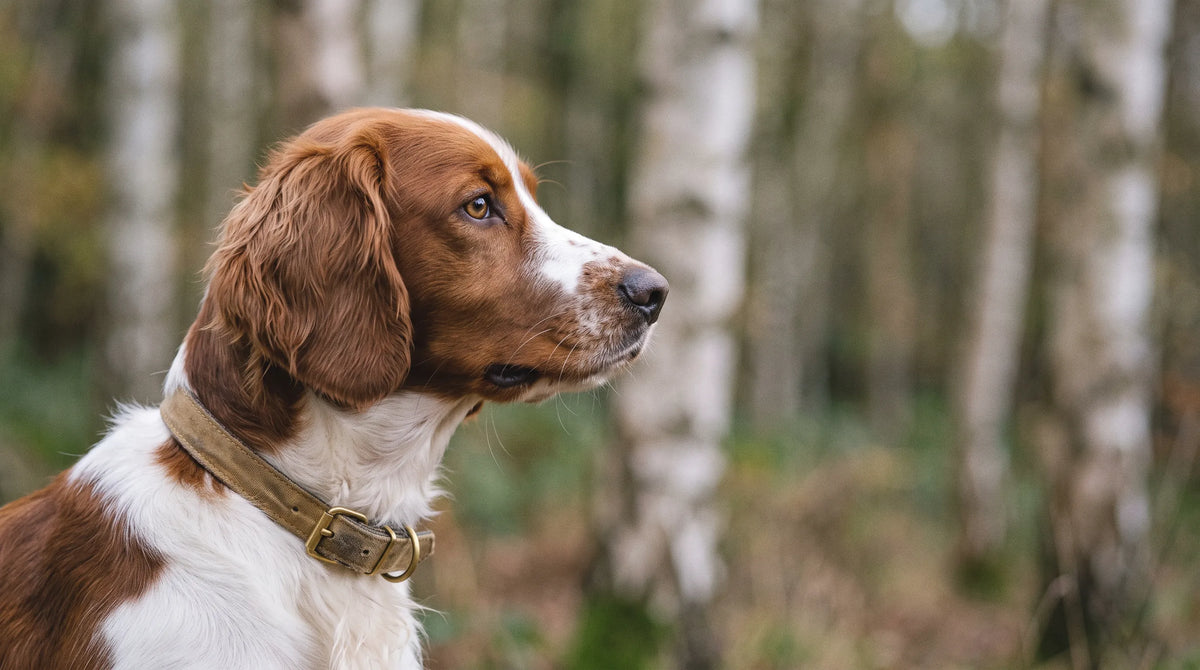
Welsh Springer Spaniel
- Medium
- Sporting Group
- Popularity rank 141
The Welsh Springer Spaniel, or Welshie, is a medium-sized Welsh bird dog with a bold red and white coat. Reserved with strangers but devoted to family, this happy, upbeat spaniel needs daily activity.
- Height
- 17 to 19
- inches at the shoulder
- Weight
- 35 to 55
- pounds, adult
- Life expectancy
- 12 to 15
- years, median 13.5
- Senior from
- 10.1
- years, about
Senior starts in the last quarter of a breed's expected lifespan, following the 2019 AAHA canine life stage guidelines. Individual dogs vary.
About the breed
- Temperament
- Reserved, happy, upbeat
- Coat
- Double, medium
- Origin
- United Kingdom
- Recognized
- 1914
2015: rank 128, 2016: rank 123, 2017: rank 133, 2018: rank 128, 2019: rank 132, 2020: rank 128, 2021: rank 126, 2022: rank 126, 2023: rank 132, 2024: rank 138, 2025: rank 141
The Welsh Springer Spaniel, or Welshie, is a medium-sized sporting dog that stands 17 to 19 inches at the shoulder and weighs 35 to 55 pounds. Welsh Springer Spaniels are bigger and stronger than Cocker Spaniels but smaller than English Springers. The breed standard describes a compact dog, not leggy, built for hard work and endurance.
Welsh Springer Spaniels have a tapered head, a bold red and white coat, soft brown eyes, floppy ears, and a typically docked tail. Tail docking is a controversial practice opposed by the national veterinary medical association.
The Welshie is an ancient bird-hunting breed from Wales that gained recognition from the major US kennel registry in 1914. Welsh Springer Spaniels are cheerful, energetic, and need frequent companionship from familiar people. With new people they tend to be reserved, so they do best with a family that is present and at home.
Temperament and needs
Scored 1 to 5 for the breed overall. Individual dogs vary.
- Affectionate with family5 out of 5
- Good with young children5 out of 5
- Good with other dogs4 out of 5
- Openness to strangers1 out of 5
- Playfulness3 out of 5
- Watchdog and protective nature3 out of 5
- Adaptability4 out of 5
- Trainability5 out of 5
- Energy level4 out of 5
- Mental stimulation needs4 out of 5
- Barking level3 out of 5
- Shedding3 out of 5
- Grooming frequency2 out of 5
- Drooling2 out of 5
Care
The routines that matter most for this breed. Open one at a time.
Nutrition
The Welsh Springer Spaniel does well on a high-quality dog food, whether commercially manufactured or home-prepared with your veterinarian's supervision and approval. Match the diet to the dog's life stage: puppy, adult, or senior. Clean, fresh water should be available at all times.
Some Welshies gain weight easily, so watch calorie intake and body condition. Reduce portions if your dog puts on pounds, and learn which human foods are safe for dogs and which are not. Check with your vet if you have any concerns about weight or diet.
Most adult Welshies eat two meals a day, morning and evening. Puppies run higher metabolisms, so add a midday feeding for three meals total. The feeding guide on the food packaging gives a general starting point, but your veterinarian can give more accurate guidance based on age, weight, body condition score, lifestyle, and health needs.
Treats help with training, but count them in the daily calorie total, and keep them to no more than 10 percent of daily calories. A Welshie eating a complete and balanced food that meets the recognized nutrition standard generally does not need supplements. If your dog is older or develops a health condition, your veterinarian might suggest one, such as a joint supplement. Always talk to your vet before adding anything new to the diet.
Grooming
The red and white double coat needs at least weekly grooming. A once-over with a soft brush works well, with a slicker brush or metal comb to break apart any mats or tangles. Brush more often during seasonal shedding, when Welshies leave behind tumbleweeds of fur.
A bath every month or so with a gentle dog shampoo keeps the coat and skin clean. Never use a shampoo meant for humans, and avoid over-bathing, which strips the skin of healthy oils. Regular grooming also removes twigs, burrs, and debris that can catch in the coat, and it is a good time to check for ticks. Trim the nails every three to four weeks.
The long, floppy ears can invite infection. Check and clean them regularly, and ask your veterinary team which ear-cleaning products to use and how often. Call your vet if you notice redness, odor, pain, excess wax, itchiness, or head shaking. Frequent ear infections can point to hypothyroidism, so the thyroid may need checking. Welshies are also prone to eye issues, so watch for redness, discharge, cloudiness, or vision trouble, and call your vet with any concerns.
Provide regular at-home teeth brushing alongside professional dental cleanings.
Exercise
Welsh Springer Spaniels are active, energetic, and need substantial exercise and frequent company. Long daily walks or play sessions in a securely fenced yard work well. If they get bored, they find their own entertainment, often the destructive kind, so channel that energy into productive activities. Boredom can also raise barking and chewing.
These spaniels love water. Throw tennis balls or floating toys for them to retrieve. They also take to field trials, hunting, tracking, agility, and competitive obedience, sports that work both body and mind.
The breed was originally a bird dog, so a strong nose and prey drive call for careful handling. Keep them on leash or inside a securely fenced area at all times, since a scent can lead them into trouble. For the same reason, Welshies may not suit homes with small pets such as birds and rabbits.
Welsh Springer Spaniels need frequent company, daily exercise, secure leash or fence handling, and long-term veterinary care.
Training
The breed standard calls the Welsh Springer reserved with strangers. That does not mean timid or shy, but it does mean early socialization and puppy training classes are essential. During the first four months, expose your puppy to new people, animals, sights, sounds, and situations, a crucial learning period that helps a Welshie feel comfortable in many settings as it grows.
Welshies are intelligent and eager to please, with a sensitive, slightly stubborn streak, so use gentle handling and plenty of positive reinforcement. Most pups basically house-train themselves, and a reward-based approach teaches skills and builds the bond. Food is an effective motivator: use favorite treats to reward the behavior you want, and offer a trade for objects your dog has retrieved and claimed, like a new pair of slippers. Play and favorite toys work as rewards too. Factor any training treats into the daily calorie count.
Welsh Springer Spaniels retain an instinct to chase birds and small mammals. Most puppies learn quickly to respect a resident cat or another dog, and Welshies can get along with other dogs and even cats when properly socialized, introduced, and supervised. They are loyal, affectionate, devoted family members who still need a job each day. If you do not hunt, other forms of mental and physical exercise are fine.
Health conditions
6 conditions are documented for the Welsh Springer Spaniel.
A predisposition is not a diagnosis. Ask your vet which screenings make sense for your dog's age.
- Elbow DysplasiaBone & Joint
- Eye ProblemsEye
- Factor VII DeficiencyBlood
- Familial NephropathyUrinary & Reproductive
- Hip DysplasiaBone & Joint
Show all 6 conditions Show fewer
- HypothyroidismHormonal


Sources
- American Kennel Club: Welsh Springer Spaniel
- PetMD: Welsh Springer Spaniel
- Wisdom Panel: Welsh Springer Spaniel
Thank you. Your report is in, and we will check this page.
Longevity & Vitality soft chew
Longevity & Vitality is a daily chew built on five active ingredients. Each chew carries Turkey Tail at 600mg, Curcuvet® curcumin at 75mg, Quercefit® quercetin at 40mg, Fibalance® at 275mg and EpiCor® at 50mg. The daily serving follows your dog's weight, from half a chew to three.
