
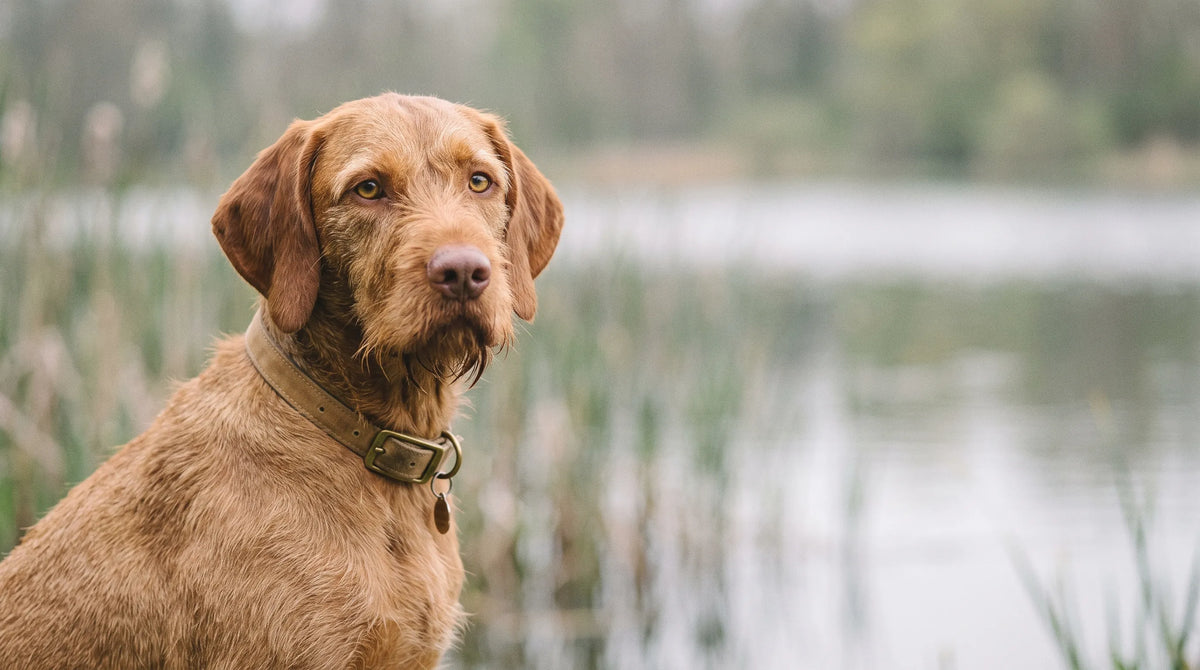
Wirehaired Vizsla
- Medium
- Sporting Group
- Popularity rank 130
The Wirehaired Vizsla is a smart, sporty Hungarian gundog in a wiry golden rust coat with a shaggy beard and bushy brows. Loyal and gentle, this medium-sized athlete thrives on daily exercise and close companionship.
- Height
- 21.5 to 25
- inches at the shoulder
- Weight
- 45 to 65
- pounds, adult
- Life expectancy
- 12 to 14
- years, median 13
- Senior from
- 9.8
- years, about
Senior starts in the last quarter of a breed's expected lifespan, following the 2019 AAHA canine life stage guidelines. Individual dogs vary.
About the breed
- Temperament
- Loyal, gentle, trainable
- Coat
- Wiry, short
- Origin
- Hungary
- Recognized
- 2014
2015: rank 156, 2016: rank 157, 2017: rank 155, 2018: rank 167, 2019: rank 147, 2020: rank 155, 2021: rank 144, 2022: rank 142, 2023: rank 142, 2024: rank 159, 2025: rank 130
The Wirehaired Vizsla is a close relative of the Vizsla, but a distinctly separate breed, and the coat is the key difference. Where the Vizsla is sleek, the Wirehaired Vizsla wears a dense, weather-resistant wiry coat, with a shaggy beard and eyebrows that frame a bright, lively expression. Both breeds share the same golden rust coloring, with nose and eyes that match the coat.
A medium-sized dog, the Wirehaired Vizsla weighs 45 to 65 pounds and stands up to 25 inches tall, a shade taller and heavier than its smooth-coated cousin. The breed standard describes a strong, lean dog with movement that is strong yet graceful, built to hunt across field, forest, and water.
Hunters and falconers developed the breed in Hungary in the 1930s by crossing Vizslas with German Wirehaired Pointers, aiming for a sturdy, versatile gundog able to withstand harsh winters. It earned full recognition as a breed in 2014.
Wirehaired Vizslas are loyal, gentle, trainable, and need substantial exercise and frequent companionship. With enough activity, this dog is content and calm indoors.
Temperament and needs
Scored 1 to 5 for the breed overall. Individual dogs vary.
- Affectionate with family5 out of 5
- Good with young children5 out of 5
- Good with other dogs3 out of 5
- Openness to strangers5 out of 5
- Playfulness5 out of 5
- Watchdog and protective nature3 out of 5
- Adaptability4 out of 5
- Trainability5 out of 5
- Energy level5 out of 5
- Mental stimulation needs5 out of 5
- Barking level3 out of 5
- Shedding3 out of 5
- Grooming frequency1 out of 5
- Drooling2 out of 5
Care
The routines that matter most for this breed. Open one at a time.
Nutrition
The Wirehaired Vizsla does well on a high-quality dog food, whether commercially made or home-prepared with your veterinarian's supervision and approval. Match the diet to the dog's life stage, whether puppy, adult, or senior. High-energy sporting breeds need a nutrient-dense diet when they are working, which differs from what they need as a puppy or a more sedentary pet.
Wirehaired Vizslas are very food-oriented and will happily seek out a snack whenever they can, so watch the calorie count and weight. Treats help with training, but too many can lead to obesity. Account for treats in the daily total and keep them to no more than 10% of your dog's calories. Learn which human foods are safe for dogs and which are not, and keep clean, fresh water available at all times.
Most adult Wirehaired Vizslas do well on two meals a day, one in the morning and one in the evening. Puppies have a higher metabolism and may need three feedings: morning, midday, and evening. Your dog food packaging lists feeding guidance based on size, which is a good starting point, but work with your vet to confirm the right amount and schedule as your dog ages.
A complete and balanced dog food delivers the nutrients your Wirehaired Vizsla needs. Your vet may still recommend supplements such as joint support for dogs with hip or elbow concerns. Talk to your veterinarian before adding any supplement to your dog's diet.
Grooming
The Wirehaired Vizsla needs minimal routine grooming. Expect regular shedding, especially when the dog drops its dense undercoat twice a year, but a brushing a few times a week helps keep loose hair down. During heavy shedding, a grooming mitt or shedding knife cuts down on hair around the home, and some dogs benefit from stripping the old, dead undercoat so coarser hair can grow back.
Coats vary a lot within the breed. Some dogs show little to no wire texture, while others may have a very wooly coat, so your routine depends on the coat your dog inherits. Bathing frequency depends in part on lifestyle, and too many baths strip the skin of healthy oils, so ask your veterinarian how often a bath is needed. A wipe-down with a damp cloth usually does the job between baths.
Trim the toenails about every four weeks, which many owners find easiest during the monthly bath. Inspect the nails for splits or cracks, since nails that grow too long cause discomfort and trouble walking. Start a dental routine early: brush the teeth regularly at home and schedule professional cleanings.
Clean the ears after your dog has been in water, such as after a swim or bath, and watch for redness, discharge, or cloudiness. Ask your vet whether a regular ear-cleaning schedule fits your dog and which products to use. Bushy eyebrows can irritate the eyes if they grow too shaggy, so an occasional eyebrow trim may help. If your dog spends time outdoors, check for ticks, twigs, and burrs caught in the coat, and call your vet if the skin looks irritated.
Exercise
The Wirehaired Vizsla is a high-energy dog who needs a lot of daily exercise. Wirehaired Vizslas need frequent company and can join people on hikes, bicycle outings, or jogs. Most also enjoy a good swim.
Long walks, hikes, and backyard fetch give the dog ways to burn off energy. Flyball, hunt-and-field trials, agility, tracking, and competitive obedience are good outlets too, providing both physical exercise and mental stimulation. This is a smart dog that needs work for the mind as much as the body, several times a day.
Wirehaired Vizslas have a strong prey drive. Keep them leashed or in a secure fenced area, and supervise them around small animals.
Bored, lonely dogs with energy to spare are more likely to bark too much and act out, and they may develop separation anxiety. Wirehaired Vizslas need frequent company and should not be left alone for long periods. Wirehaired Vizslas may live 14 years or more and need substantial daily time, activity, and care.
Training
The Wirehaired Vizsla is lively, happy, and eager to please. These dogs are very smart but bore easily, which can make training harder, so keep sessions short, varied, and fun to hold your dog's attention. They need structure and boundaries delivered with a light, firm, and consistent hand.
This is a sensitive, soft-tempered breed, so avoid harsh words and physical punishment. Use reward-based training with Wirehaired Vizslas. Training also provides mental and physical activity. Wirehaired Vizslas are very food-motivated, so favorite treats make smart rewards.
Socialize early to help your dog grow into a well-mannered adult. Safely expose puppies to different animals, people, environments, and objects during their first 16 weeks so they stay comfortable and confident in new settings as they age. Talk to your breeder about how they approach socialization, and ask your veterinarian about activities that are safe for your puppy's age.
Loyal, affectionate, and gentle, the Wirehaired Vizsla adjusts well to family life and is gentle enough to play with children. Its hunting instincts, though, can cause friction with other pets that might be mistaken for something to chase, so introductions and supervision matter.
Health conditions
5 conditions are documented for the Wirehaired Vizsla.
A predisposition is not a diagnosis. Ask your vet which screenings make sense for your dog's age.
- Elbow DysplasiaBone & Joint
- Eye ProblemsEye
- Hip DysplasiaBone & Joint
- Subaortic StenosisHeart
- Urate Kidney & Bladder StonesUrinary & Reproductive


Sources
Thank you. Your report is in, and we will check this page.
Longevity & Vitality soft chew
Longevity & Vitality is a daily chew built on five active ingredients. Each chew carries Turkey Tail at 600mg, Curcuvet® curcumin at 75mg, Quercefit® quercetin at 40mg, Fibalance® at 275mg and EpiCor® at 50mg. The daily serving follows your dog's weight, from half a chew to three.
