
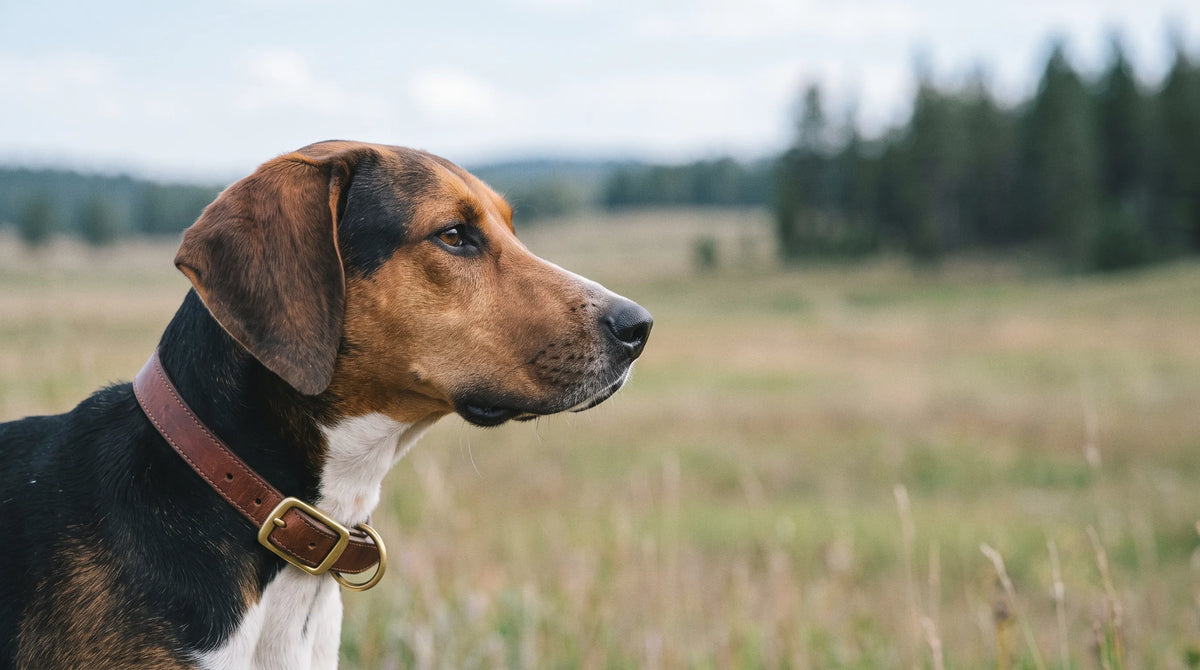
American Foxhound
- Large
- Hound Group
- Popularity rank 188
A sleek, rangy scenthound bred for Colonial-era foxhunts, the American Foxhound is sweet and easy-going at home but built to run. Expect big energy, a booming bay, and a nose that locks onto a scent and won't let go.
- Height
- 21 to 25
- inches at the shoulder
- Weight
- 60 to 70
- pounds, adult
- Life expectancy
- 11 to 13
- years, median 12
- Senior from
- 9
- years, about
Senior starts in the last quarter of a breed's expected lifespan, following the 2019 AAHA canine life stage guidelines. Individual dogs vary.
About the breed
- Temperament
- Independent, easy-going, sweet-tempered
- Coat
- Smooth, short
- Origin
- United States
- Recognized
- 1886
2015: rank 181, 2016: rank 189, 2017: rank 187, 2018: rank 186, 2019: rank 191, 2020: rank 192, 2021: rank 195, 2022: rank 196, 2023: rank 182, 2024: rank 193, 2025: rank 188
The American Foxhound is a sleek, rangy hound known for speed, endurance, and a strong work ethic. You can tell one from the English Foxhound by its longer, more finely boned legs and a slightly arched loin. Large, soft eyes give it a gentle, pleading expression.
Adults weigh 60 to 70 pounds and stand 21 to 25 inches tall, with a muscular build and a tough, medium coat made for the outdoors. Foxhounds come in any color but usually show black, tan, and white, with a gently curved, slightly brushed tail and long, broad ears that flap like wings on the run.
The breed was developed to lead Colonial-era foxhunts and owes part of its existence to George Washington, an expert breeder who crossed English, French, and American dogs to help create it. Now the official state dog of Virginia, it has been recognized by the major US registry since 1886 yet remains rare.
Temperament is independent, easy-going, and sweet. This is a mild-mannered companion at heart, though some of the traits that make Foxhounds fine hunters are less welcome indoors.
Temperament and needs
Scored 1 to 5 for the breed overall. Individual dogs vary.
- Affectionate with family3 out of 5
- Good with young children5 out of 5
- Good with other dogs5 out of 5
- Openness to strangers3 out of 5
- Playfulness3 out of 5
- Watchdog and protective nature3 out of 5
- Adaptability3 out of 5
- Trainability3 out of 5
- Energy level4 out of 5
- Mental stimulation needs3 out of 5
- Barking level5 out of 5
- Shedding3 out of 5
- Grooming frequency1 out of 5
- Drooling1 out of 5
Care
The routines that matter most for this breed. Open one at a time.
Nutrition
Foxhounds love to eat and gain weight easily, so measure meals rather than free-feeding.
Most adults do well on two measured meals a day, one in the morning and one in the evening. Puppies have a higher metabolism, so add a midday feeding for three meals total. Your vet can set the right schedule for your dog's age.
The guide on the food bag gives a general starting point by weight, but your veterinarian can tailor amounts to age, body condition, lifestyle, and health. Remember that treats add up fast during training, so count them in the daily total and keep them to no more than 10% of daily calories.
A Foxhound eating a complete and balanced AAFCO-approved diet generally does not need extra supplementation. Talk to your veterinary team before adding anything new, and check in about any concerns with your dog's weight or diet.
Grooming
The American Foxhound's coat is short and lies close to the body. Its hard texture once protected the dog from the underbrush it ran through on the hunt, and it is easy to care for. A short weekly session with a bristle brush, rubber grooming mitt, or hound glove is usually enough to manage stray hairs and keep shedding in check.
Bathing is not usually necessary unless your Foxhound gets into something messy outdoors. After outdoor adventures, check the skin for ticks and scrapes, and trim the nails regularly.
Because Foxhounds are prone to ear infections, see your vet if you notice redness, odor, pain, or itchiness. They are not prone to eye problems, but call your vet if you spot anything unusual such as redness or discharge.
Exercise
Foxhounds were bred to spend long hours chasing prey, and an American Foxhound needs a solid one to two hours of exercise every day. Without enough activity, it can grow bored and turn to chewing, barking, and baying.
These dogs are happiest living indoors with their people and make good companions on long walks and hikes. Because they were bred to chase and follow a scent, let them loose only in securely fenced areas and keep every walk on a leash. Once a Foxhound locks onto a scent, calling it back can be near impossible.
The breed also works mind and body in canine sports such as tracking, rally, and coursing ability tests, which dog and owner can enjoy together. Before bringing one home, weigh the commitment honestly: are you fine with a more talkative dog, do you live where baying will not bother neighbors, and do you have time for one to two hours of exercise a day? If you can answer yes with enthusiasm, you may be ready for an American Foxhound.
Training
American Foxhounds are amiable but can be stubborn and self-directed. Bred to work on their own, they bring an independent streak that turns training into an exercise in patience. Their noses lead them into trouble, so as scenthounds it may never be safe to have them off-leash.
Use consistent, positive training that relies on rewards rather than punishment. It builds the bond and works both brain and body. Treats, play, toys, and other things your dog enjoys all make good rewards, and if you use treats, factor them into the daily calorie count. Obedience classes are recommended, and like all breeds, Foxhound puppies need consistent socialization so they grow up confident in new situations.
A steady exercise routine is one of the strongest ways to prevent misbehavior, since hounds can develop unwanted habits without enough activity. In the home, Foxhounds get along well with children and make fast friends with other dogs and with people of all ages. Their prey drive can be a concern around small animals, so supervise introductions with cats and other small pets.
Health conditions
5 conditions are documented for the American Foxhound.
A predisposition is not a diagnosis. Ask your vet which screenings make sense for your dog's age.
- Ear InfectionsEar & Hearing
- Factor VII DeficiencyBlood
- Hip DysplasiaBone & Joint
- HypocatalasiaOral & Dental
- ThrombopathiaBlood



Sources
Thank you. Your report is in, and we will check this page.
Longevity & Vitality soft chew
Longevity & Vitality is a daily chew built on five active ingredients. Each chew carries Turkey Tail at 600mg, Curcuvet® curcumin at 75mg, Quercefit® quercetin at 40mg, Fibalance® at 275mg and EpiCor® at 50mg. The daily serving follows your dog's weight, from half a chew to three.
