
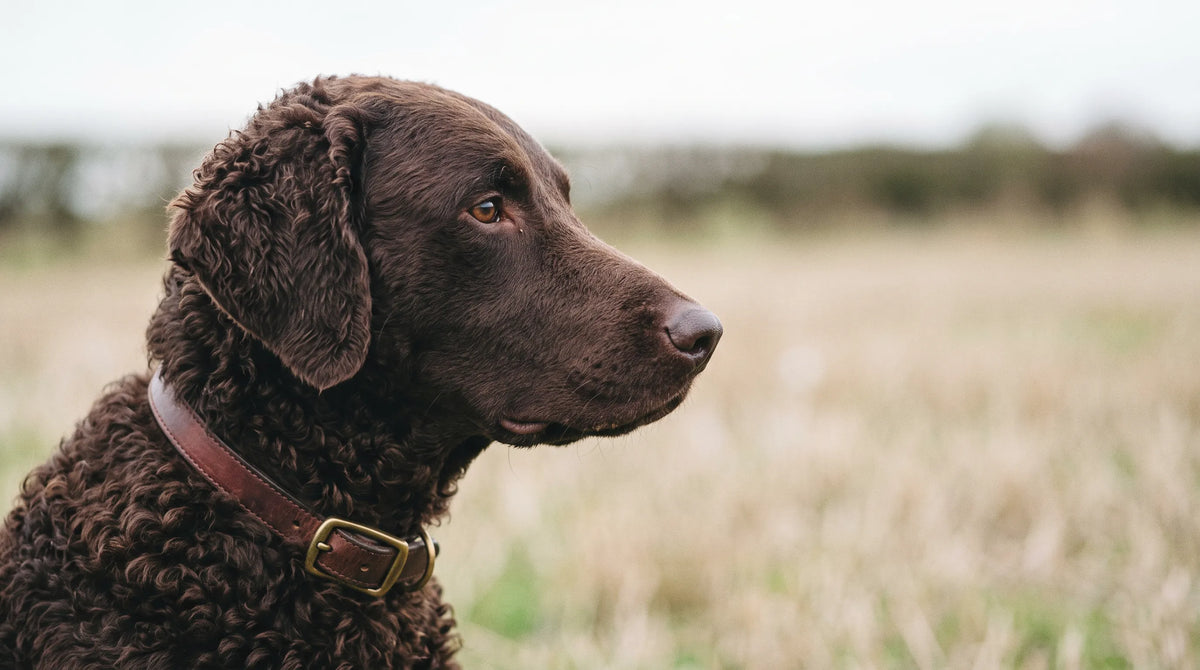
Curly-coated Retriever
- Large
- Sporting Group
- Popularity rank 168
The Curly-Coated Retriever wears tight, crisp curls over a tall, athletic frame, topped with a distinctive wedge-shaped head. Confident and intelligent, this large gun dog is playful at home and somewhat aloof with strangers.
- Height
- 23 to 27
- inches at the shoulder
- Weight
- 60 to 95
- pounds, adult
- Life expectancy
- 10 to 12
- years, median 11
- Senior from
- 8.2
- years, about
Senior starts in the last quarter of a breed's expected lifespan, following the 2019 AAHA canine life stage guidelines. Individual dogs vary.
About the breed
- Temperament
- Confident, proud, wickedly smart
- Coat
- Curly, Double, short
- Origin
- United Kingdom
- Recognized
- 1924
2015: rank 151, 2016: rank 164, 2017: rank 171, 2018: rank 162, 2019: rank 165, 2020: rank 159, 2021: rank 167, 2022: rank 156, 2023: rank 167, 2024: rank 163, 2025: rank 168
The Curly-Coated Retriever wears tight, crisp curls in either black or liver. That coat works as waterproof, thorn-resistant gear, made for thick bramble and icy lakes, and a tapered, wedge-shaped head sets the breed apart from the usual retriever look.
Standing 23 to 27 inches and weighing 60 to 95 pounds, this is a big, durable gun dog, more elegant and graceful than other retrievers. Like other popular retrievers, Curlies are affectionate and gentle, but a bit more independent and less needy. Their typical lifespan is 10 to 12 years.
Confident, proud, and smart, they are playful and mischievous with the people they love and can be aloof with strangers. That wariness makes them more discerning watchdogs than the more outgoing retrievers. Recognized in the United Kingdom in 1924, the breed pairs a working background with a devoted home presence.
Temperament and needs
Scored 1 to 5 for the breed overall. Individual dogs vary.
- Affectionate with family5 out of 5
- Good with young children5 out of 5
- Good with other dogs3 out of 5
- Openness to strangers3 out of 5
- Playfulness4 out of 5
- Watchdog and protective nature4 out of 5
- Adaptability4 out of 5
- Trainability4 out of 5
- Energy level4 out of 5
- Mental stimulation needs3 out of 5
- Barking level3 out of 5
- Shedding2 out of 5
- Grooming frequency1 out of 5
- Drooling1 out of 5
Care
The routines that matter most for this breed. Open one at a time.
Nutrition
Most Curly-Coated Retrievers do well on a good-quality food matched to their life stage, whether puppy, adult, or senior. Some owners add meat or canned food, and a few feed raw. A food that meets recognized nutritional standards supplies what a Curly needs, and your veterinarian can help you set the right amount and keep your dog at a healthy weight.
Feed an adult twice a day, morning and evening. Curlies love to eat and tend to eat fast, so if your dog gobbles its food, a slow-feeding bowl regulates how much it takes at once and eases the stomach upset that can follow eating too quickly. Puppies grow in rapid spurts, so increase portions as they mature, following the guidelines on the bag.
Treats help with training, but too many lead to weight gain. A simple guideline:
- Keep treats to no more than 10 percent of daily calories.
- Learn which human foods are safe for dogs and which are not.
- Check with your veterinarian about any weight or diet concerns.
Your veterinarian may suggest a supplement based on your individual dog's health, such as a joint supplement started early in life. Never start a supplement without consulting your veterinarian first.
Grooming
The Curly-Coated Retriever is a low-maintenance breed that needs only minimal grooming. There is no undercoat, and the dog does not shed much except during the spring and fall shedding seasons. Females usually shed a fair amount about every six months and can look relatively bare when out of coat.
During shedding seasons, a rake-type tool with metal prongs lifts dead hair well, and the coat can then be scissored down. Most owners never brush a Curly, since brushing makes the curls frizz. The curls do not mat, so a professional groomer is not necessary, and a wet-down and air-dry is easy and often enhances the curls.
Bathe only when the dog swims or gets particularly dirty, then let the coat air-dry to protect the curls. Clean the ears every two to three weeks with a cleaner that contains a drying agent, and again after baths and swimming. Trim nails regularly, since overly long nails can cause pain or trouble walking and running.
Provide ongoing dental care with at-home tooth brushing and professional cleanings. Book a veterinary appointment if you notice eye redness, drainage, squinting, or vision trouble.
Exercise
True to their sporting background, Curly-Coated Retrievers need a fair amount of daily exercise, about two hours a day. They love the outdoors but settle and relax well at home, so their living space does not need to be large as long as they are with their people and get enough activity. The ideal setup is a large, fenced yard where the dog can run and burn off energy.
These are not dogs that do well left alone for long stretches. A bored or pent-up Curly may turn to destructive behavior to burn energy or entertain itself, so give them an outlet: a long walk or run, outdoor play, or a swim.
They thrive in an active family that takes them on long walks, weekend hikes, swimming sessions, and hunting trips. They enjoy hunting, tracking, field trials, agility, retrieving, rally, and competitive obedience, and their love of swimming makes them strong jogging and hiking companions.
Curlies are not excessive barkers, though they may bark to alert their people or to entertain themselves when bored. Pairing physical activity with this kind of work keeps a smart dog engaged and well behaved.
Training
Curly-Coated Retrievers are intelligent and may lose interest in unclear or repetitive training. Use kind, consistent, reward-based methods, and allow extra time while the breed matures.
Two things help: avoid too much repetition, which bores them, and make learning as enjoyable as possible. They respond well to reward-based training. This is useful when teaching them to release inappropriate items they have retrieved, a common retriever habit, by simply offering a favorite treat or toy in exchange. Some Curlies do very well in the obedience ring, while others lose interest in repeated exercises.
Curlies are extremely affectionate with their family and do well with children who know how to interact with dogs correctly. They are not as outgoing as some other retrievers and may be reserved around new people at first. With proper socialization when young, they can do well with other pets too.
Start socialization as soon as you bring a puppy home, and ask your veterinarian how to safely expose your pup to new people, animals, environments, and situations. For new dog parents, a reputable trainer with experience in this breed is a sound choice. Field training in particular takes a knowledgeable, gentle approach, so consider watching a local training group's methods before joining.
Health conditions
6 conditions are documented for the Curly-coated Retriever.
A predisposition is not a diagnosis. Ask your vet which screenings make sense for your dog's age.
- Bloat (Gastric Dilatation-Volvulus)Digestive
- CancerCancer
- Exercise-Induced CollapseNervous System & Behavioral
- Eye ProblemsEye
- Glycogen Storage Disease Type IIIALiver
Show all 6 conditions Show fewer
- Hip DysplasiaBone & Joint


Sources
- American Kennel Club: Curly-Coated Retriever
- PetMD: Curly-Coated Retriever
- Wisdom Panel: Curly-Coated Retriever
Thank you. Your report is in, and we will check this page.
Longevity & Vitality soft chew
Longevity & Vitality is a daily chew built on five active ingredients. Each chew carries Turkey Tail at 600mg, Curcuvet® curcumin at 75mg, Quercefit® quercetin at 40mg, Fibalance® at 275mg and EpiCor® at 50mg. The daily serving follows your dog's weight, from half a chew to three.
