
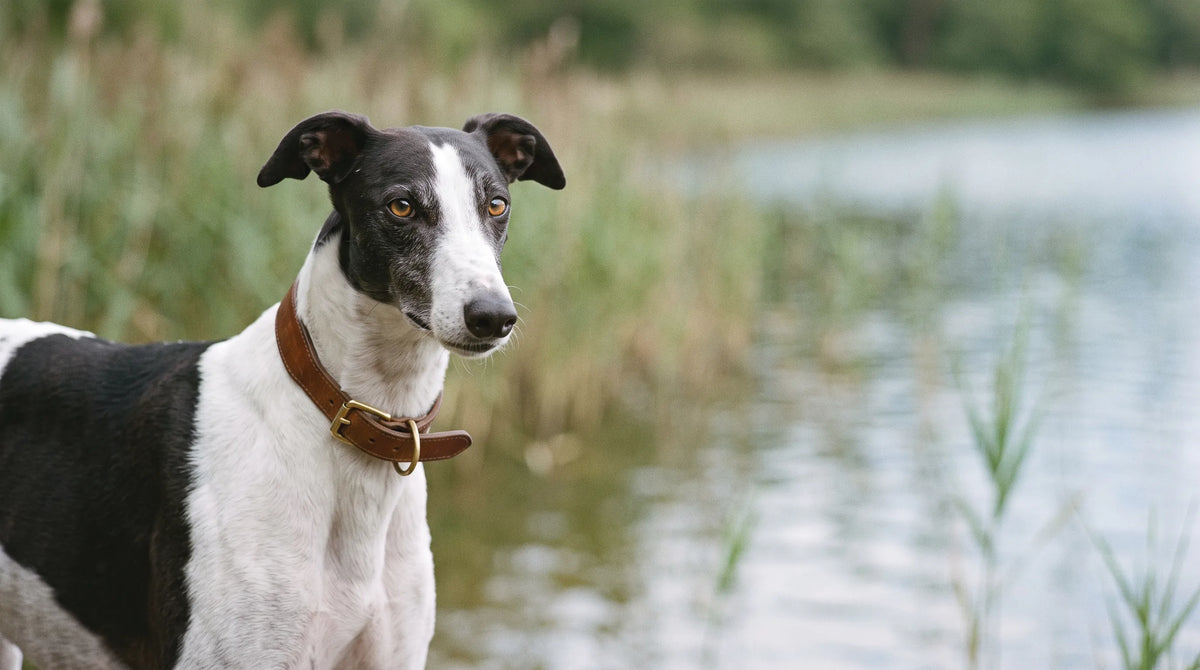
Greyhound
- Large
- Hound Group
- Popularity rank 151
Built for the chase, the Greyhound pairs explosive sprinting speed with a gentle, easygoing nature at home. This large, short-coated sighthound is a noble, independent companion that loves a good run and an even better nap.
- Height
- 27 to 30
- inches at the shoulder
- Weight
- 60 to 70
- pounds, adult
- Life expectancy
- 10 to 13
- years, median 11.5
- Senior from
- 8.6
- years, about
Senior starts in the last quarter of a breed's expected lifespan, following the 2019 AAHA canine life stage guidelines. Individual dogs vary.
About the breed
- Temperament
- Independent, gentle, noble
- Coat
- Smooth, short
- Origin
- United Kingdom
- Recognized
- 1885
2015: rank 147, 2016: rank 151, 2017: rank 156, 2018: rank 145, 2019: rank 164, 2020: rank 142, 2021: rank 132, 2022: rank 129, 2023: rank 127, 2024: rank 118, 2025: rank 151
The Greyhound is the essence of form following function. From the narrow, aerodynamic skull to the shock-absorbing pads of the feet, this large hound is built for high-speed pursuit. The lean inverted-S shape, where the deep chest curves gently into a tightly tucked waist, has drawn artists, poets, and kings for as long as people have called themselves civilized.
The Greyhound is a Hound Group breed from the United Kingdom, recognized in 1885, that influenced other coursing hounds. It stands about 27 to 30 inches tall and typically weighs 60 to 70 pounds, with a short, smooth coat.
Greyhounds are independent and gentle.
Temperament and needs
Scored 1 to 5 for the breed overall. Individual dogs vary.
- Affectionate with family4 out of 5
- Good with young children3 out of 5
- Good with other dogs4 out of 5
- Openness to strangers3 out of 5
- Playfulness3 out of 5
- Watchdog and protective nature3 out of 5
- Adaptability4 out of 5
- Trainability3 out of 5
- Energy level4 out of 5
- Mental stimulation needs3 out of 5
- Barking level3 out of 5
- Shedding2 out of 5
- Grooming frequency1 out of 5
- Drooling1 out of 5
Care
The routines that matter most for this breed. Open one at a time.
Nutrition
Feed your Greyhound a high-quality, age-appropriate diet, whether puppy, adult, or senior, and whether commercially made or home-prepared under a veterinarian's supervision. As an athletic breed, the Greyhound often does well on somewhat higher calories and protein than some dogs, provided it gets the exercise to burn the extra food.
Two meals a day, morning and evening, are usually well tolerated, and most Greyhounds need no special feeding instructions. For an average dog of roughly 60 to 70 pounds, that means about 3 to 3 1/3 cups of food daily, divided into two meals. Always check the feeding guide on the bag and ask your vet to tailor amounts to your dog's life stage and lifestyle.
Watch food and treats, since some dogs gain weight as they age. Reduce portions if your dog puts on weight, and check with your vet if you have concerns about weight or diet.
For Greyhounds in sporting activities, glucosamine and chondroitin can support joint health. Omega-3 supplements can also support the joints and help keep the skin and coat sleek and soft.
Grooming
The Greyhound's short, smooth coat needs little care beyond a recurring bath and a weekly rubdown with a damp cloth or hound glove. This breed does not generally have sensitive skin, and coat problems are rare.
Trim the strong, fast-growing nails regularly if they don't wear down naturally, since overly long nails cause discomfort. With enough exercise the nails often stay worn down, but inspect them regularly.
Check the ears at least weekly for wax or debris, and clean them with a veterinary-approved cleanser when needed, especially any time your dog has been in water. To clean, fill the ear canal with the solution, massage the base of the ear to loosen debris, then gently wipe away the excess with a cotton ball. You don't need to remove all of the cleanser, and cotton-tip swabs are not recommended inside the ear canal.
Brush the teeth regularly, daily if you can manage it, with a toothpaste made for dogs, and pair at-home brushing with professional cleanings. Wiping around the eyes with a soft, damp cloth helps keep normal tearing from building up.
Exercise
The Greyhound is the cheetah of the dog world. Perfectly happy to lounge around the house all day, it can produce striking speed when faced with the chance to chase a tennis ball or a coursing lure. To stay in top form it needs daily, vigorous exercise and the chance to safely run full out.
Greyhounds were bred to hunt by sight, so a strong prey drive responds quickly to small, fast-moving objects or animals. Let them off leash only in a securely fenced area, since they may not resist the urge to chase, and keep them leashed on walks otherwise. That high prey drive also makes them a poor fit for homes with small pets such as cats, rabbits, hamsters, or guinea pigs, though some can be socialized to live alongside them.
Less vocal than most breeds, Greyhounds aren't loud or steady barkers, though many communicate through a unique crying or whining sound. Given ample physical and mental stimulation, they enjoy a little alone time and tend not to dig or chew destructively. Once spent, they enjoy nothing more than dropping onto the couch beside their people.
Training
The Greyhound's sighthound origins shape its independent approach to training. As a sighthound, it was developed to course game by sight and make its own decisions, unlike hunting breeds that take direction, so training can be challenging and the dog may prefer to choose rather than take orders. Greyhounds are more interested in doing things with you than for you, so patience through the training phase matters.
Socialize your Greyhound from an early age with young children and small animals. With a mild, sensitive personality, this dog needs a gentle approach, never harsh, and does best with short lessons since it bores quickly.
Greyhounds are very affectionate with family yet often reserved or shy with strangers, and their independent streak can read as aloof and cat-like, though most will befriend anyone offering a treat. Despite being bred for high-energy work, they are typically calm at home and don't get overly excited about new people or places.
Greyhounds can be patient with children and are more likely to walk away than snap, but they value their own space, which young children can easily invade, so a calmer household often suits them best.
Health conditions
5 conditions are documented for the Greyhound.
A predisposition is not a diagnosis. Ask your vet which screenings make sense for your dog's age.
- Bloat (Gastric Dilatation-Volvulus)Digestive
- Delayed Postoperative BleedingBlood
- Delayed recovery from thiobarbiturate or propofol anesthesiaMetabolic
- Heat-related illness (including heatstroke)Metabolic
- PolyneuropathyNervous System & Behavioral

Sources
Thank you. Your report is in, and we will check this page.
Longevity & Vitality soft chew
Longevity & Vitality is a daily chew built on five active ingredients. Each chew carries Turkey Tail at 600mg, Curcuvet® curcumin at 75mg, Quercefit® quercetin at 40mg, Fibalance® at 275mg and EpiCor® at 50mg. The daily serving follows your dog's weight, from half a chew to three.
