
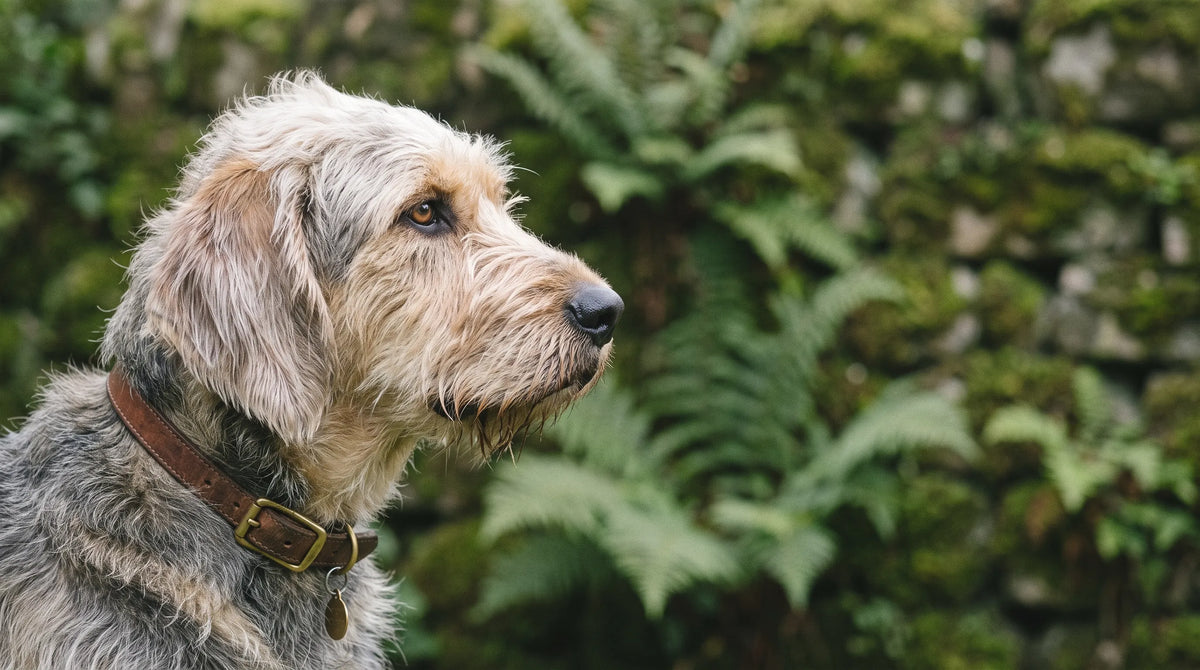
Otterhound
- Large
- Hound Group
- Popularity rank 189
The Otterhound is a big, bouncy scent hound bred to hunt otters, built for all-day swimming with a rough, waterproof coat and webbed feet. Even-tempered and amiable, it is also boisterous and famous for a loud, carrying bay.
- Height
- 24 to 27
- inches at the shoulder
- Weight
- 80 to 115
- pounds, adult
- Life expectancy
- 10 to 13
- years, median 11.5
- Senior from
- 8.6
- years, about
Senior starts in the last quarter of a breed's expected lifespan, following the 2019 AAHA canine life stage guidelines. Individual dogs vary.
About the breed
- Temperament
- Even-tempered, amiable, boisterous
- Coat
- Double, Rough, medium
- Origin
- United Kingdom
- Recognized
- 1909
2015: rank 180, 2016: rank 166, 2017: rank 186, 2018: rank 182, 2019: rank 174, 2020: rank 176, 2021: rank 178, 2022: rank 176, 2023: rank 189, 2024: rank 196, 2025: rank 189
The Otterhound is a large, boisterous scent hound that was bred for hunting otters. Standing 24 to 27 inches and weighing 80 to 115 pounds, the Otterhound has a rough, waterproof coat and webbed feet suited to swimming. A broad chest and strong shoulders let it swim for long stretches without tiring.
The large black nose is sensitive and can follow a scent trail over great distances. The breed's size and strength let it take on a sharp-toothed, razor-clawed otter that might weigh 20 pounds.
Recognized in 1909 and part of the Hound Group, the Otterhound comes from the United Kingdom. It is even-tempered and amiable, deeply affectionate with its family, and today a rare breed. It typically lives 10 to 13 years.
Temperament and needs
Scored 1 to 5 for the breed overall. Individual dogs vary.
- Affectionate with family5 out of 5
- Good with young children3 out of 5
- Good with other dogs3 out of 5
- Openness to strangers4 out of 5
- Playfulness3 out of 5
- Watchdog and protective nature3 out of 5
- Adaptability4 out of 5
- Trainability4 out of 5
- Energy level3 out of 5
- Mental stimulation needs3 out of 5
- Barking level5 out of 5
- Shedding2 out of 5
- Grooming frequency2 out of 5
- Drooling3 out of 5
Care
The routines that matter most for this breed. Open one at a time.
Nutrition
The Otterhound does well on a high-quality dog food, whether commercially made or home-prepared with your veterinarian's supervision and approval. Match the diet to the dog's age, activity level, and size, plus any health concerns, and keep clean, fresh water available at all times. Some Otterhounds are prone to gaining weight, so watch calorie intake and body condition, especially as they age.
Most Otterhounds do well with twice-daily feedings, one in the morning and one in the evening, sized to their life stage (puppy, adult, or senior). Follow the guidelines on your dog food packaging, and ask your vet for amounts tailored to your dog's health, age, and lifestyle. As with all dogs, the daily diet should be about 90% dog food and up to 10% treats.
Some members of the breed are prone to bloating. If yours is, feed several smaller meals through the day rather than a few large ones. If your dog gobbles its food, a slow-feeding bowl regulates how much it eats at once and can reduce the risk of regurgitation, upset stomach, and GDV.
A complete and balanced food provides all the essential nutrients, so supplements are often unnecessary. Because this breed can develop hip dysplasia and arthritis with age, your vet may suggest starting a joint supplement early to support the joints. Always ask your veterinarian before adding any supplement.
Grooming
The Otterhound's rough double coat needs brushing once or twice a week, depending on length and texture. A slicker brush and a medium comb work well, removing debris like sticks and leaves that the fur can trap and helping to ward off mats. Despite the shaggy look, the Otterhound does not traditionally shed heavily.
The beard often needs cleaning at the same time, since these dogs tend to drag it on the ground and store snacks in it. Trim nails every week or two. The coat is kept long for protection outdoors, so a professional groomer is not required, and regular baths are not necessary unless the coat gets particularly dirty or smelly.
Otterhounds can develop ear infections, especially since they love to swim and have floppy ears that trap moisture. To reduce the risk, clean the ears with a vet-recommended product that contains a drying agent every two to three weeks, plus after swimming or bathing. Signs of an ear infection include a foul odor, head-shaking, or discharge, so talk to your vet if you notice them.
Provide regular dental care with at-home teeth brushing and professional cleanings. The breed does not need special skin care, but because these dogs love being outside, keep yours on a flea and tick preventative year-round. Talk to your vet if the skin looks red or flaky or your dog seems itchier than usual.
Exercise
Otterhounds need both mental and physical exercise. This active hunting breed wants a good amount of activity, at least two hours a day, to stay healthy and to keep from inventing less desirable hobbies like digging. A large, securely fenced yard is a good start, though some hounds will lie under a tree rather than exercise themselves.
Long walks to sniff the world and greet passersby are good for both owners and hounds, as long as the dog stays on a leash. Obedience classes, tracking, and agility provide mental stimulation along with good exercise. As a scent hound, that strong nose can lead an Otterhound into trouble, so keep it in a fenced area or on a leash when outdoors.
Otterhounds are very affectionate and love to be close to their people, sometimes trying to wiggle into a lap despite their size. Left alone for long periods, they can develop separation anxiety, and a bored, lonely Otterhound may bark or bay loudly and often. Breed-club guidance suggests that working owners keep a second dog at home to keep the social Otterhound company.
Because of the loud baying, the ideal home has a large, fenced yard rather than an apartment or a setting with close neighbors. These dogs suit people who can take them on long walks, hikes, or swims.
Training
Otterhounds are large, strong, and sensitive. Use positive, reward-based methods and praise during training. Food works well in training, and food and praise together work even better; clicker training can also help. Like people, Otterhounds love to be told how wonderful they are when they master something.
Otterhounds can take extra patience to train because of their size, strength, independence, and occasional stubbornness. Most respond best to a calm, gentle leader. Begin training as soon as you bring your puppy home.
Otterhounds make great family companions and can do well with children and other pets when properly trained and socialized as puppies. They can be lively as puppies, and they need to learn to be calm around small children and other animals so they do not knock anyone over with their large body.
Early socialization is essential. Exposing a puppy to new people, animals, and situations helps it grow into an accepting, confident adult.
Health conditions
3 conditions are documented for the Otterhound.
A predisposition is not a diagnosis. Ask your vet which screenings make sense for your dog's age.
- Bloat (Gastric Dilatation-Volvulus)Digestive
- Glanzmann's ThrombastheniaBlood
- Hip DysplasiaBone & Joint

Sources
Thank you. Your report is in, and we will check this page.
Longevity & Vitality soft chew
Longevity & Vitality is a daily chew built on five active ingredients. Each chew carries Turkey Tail at 600mg, Curcuvet® curcumin at 75mg, Quercefit® quercetin at 40mg, Fibalance® at 275mg and EpiCor® at 50mg. The daily serving follows your dog's weight, from half a chew to three.
