

Petit Basset Griffon Vendéen
- Medium
- Hound Group
- Popularity rank 161
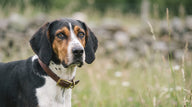
The Petit Basset Griffon Vendéen is a small French scent hound with short, strong legs and a rough, tousled coat. Happy and vivacious, this little extrovert was bred to chase rabbits and still loves a good adventure.
- Height
- 13 to 15
- inches at the shoulder
- Weight
- 25 to 40
- pounds, adult
- Life expectancy
- 14 to 16
- years, median 15
- Senior from
- 11.2
- years, about
Senior starts in the last quarter of a breed's expected lifespan, following the 2019 AAHA canine life stage guidelines. Individual dogs vary.
About the breed
- Temperament
- Alert, happy, vivacious
- Coat
- Double, Rough, long
- Origin
- France
- Recognized
- 1990
2015: rank 143, 2016: rank 148, 2017: rank 160, 2018: rank 156, 2019: rank 154, 2020: rank 164, 2021: rank 161, 2022: rank 154, 2023: rank 158, 2024: rank 155, 2025: rank 161
The Petit Basset Griffon Vendéen is a small hound from the Vendée region of France, and its name says a lot about it. Petit means small, basset means low, griffon means shaggy, and Vendéen points to its home region. Put together, you get a low-set dog standing 13 to 15 inches at the shoulder and weighing 25 to 40 pounds, with short but strong legs and a rough, tousled coat.
Distinctive features include a proudly carried head, a saber tail, and a loud, houndy bark. Often called the PBGV for short, this is an alert, happy, vivacious little extrovert with a competitive streak.
The breed was developed to hunt rabbits and other small game across the rugged French countryside, working in groups with people and relying on a sharp nose and fast feet. The major US kennel registry recognized the PBGV in 1990, and a PBGV named Buddy Holly became the first of its breed to win Best in Show at the 2023 Westminster Dog Show.
Temperament and needs
Scored 1 to 5 for the breed overall. Individual dogs vary.
- Affectionate with family4 out of 5
- Good with young children5 out of 5
- Good with other dogs5 out of 5
- Openness to strangers4 out of 5
- Playfulness4 out of 5
- Watchdog and protective nature4 out of 5
- Adaptability4 out of 5
- Trainability3 out of 5
- Energy level4 out of 5
- Mental stimulation needs4 out of 5
- Barking level5 out of 5
- Shedding2 out of 5
- Grooming frequency2 out of 5
- Drooling2 out of 5
Care
The routines that matter most for this breed. Open one at a time.
Nutrition
The PBGV does well on a high-quality dog food, whether commercially made or home-prepared with your veterinarian's supervision and approval. Match the diet to your dog's life stage, whether puppy, adult, or senior, and keep clean, fresh water available at all times.
Feed an adult PBGV twice a day. Puppies need to eat more often, about three or four times per day. If your dog eats too quickly, a slow feeder bowl can help. The right amount varies, so use your dog food label as a starting point and ask your vet how much to offer based on your dog's weight, lifestyle, age, and health history.
Some PBGVs gain weight easily, so watch calorie intake and body condition. Treats are useful for training, but too many can lead to excess weight, and it helps to know which human foods are safe for dogs and which are not. As long as you feed a nutritious food formulated to meet established canine nutrition standards, your dog should not need supplements unless your veterinarian recommends them.
Grooming
The coat is one of the PBGV's most distinctive qualities. The coat should be harsh and thick, with a texture sometimes compared to goat hair, and needs little trimming. Shedding is low, but regular brushing keeps the coat in good shape.
Give your PBGV a complete brushing at least once a week to remove dead hair and prevent mats. After brushing, you should be able to run a comb through the coat easily. The breed club recommends a pin brush or comb. PBGVs do not need a fixed bathing schedule, so bathe your dog when it gets dirty or starts to smell, which for many owners works out to about once a month alongside a nail trim.
The breed has floppy, hairy ears, which makes it easy for moisture, debris, and bacteria to get trapped in the ear canals. Check the ears weekly, remove excess hair and wax, and clean them when they are dirty, contacting your vet if you notice redness, odor, or debris. The PBGV can be prone to some eye conditions, so keep an eye on your dog's eyes and call your veterinarian if you notice cloudiness or redness.
Provide regular dental care with at-home brushing and professional cleanings.
Exercise
The PBGV is a very active, curious dog who needs a great deal of exercise and room to wander and explore. The Petit Basset Griffon Vendéen makes a good companion for a hiker, runner, or biker who wants an active partner, and it is well suited to people and families who enjoy an active lifestyle. These dogs are no couch potatoes.
The PBGV has a strong prey drive and a keen sense of smell. Once it catches a scent, it will follow its nose and ignore everything else, including a passing rabbit or squirrel. For that reason, always exercise it on a leash outside the yard or inside a securely fenced space.
The breed's strong build makes it a good fit for field events like agility, tracking, and scent work. PBGVs also need plenty of mental stimulation, so keep them busy with training sessions, outdoor adventures, and puzzles. They are social dogs who want attention from their humans, and they will let you know when they are not getting enough.
Training
PBGVs have a reputation for being hard to train. In truth they are very intelligent, but they have a mind of their own and a strong, independent hunting instinct. It is not that the PBGV is unwilling to please; its agenda just might differ from yours and seem far more interesting to it. A trainer needs to stay a step ahead to keep it entertained and interested, and a professional trainer can help if needed.
Start socialization and obedience training early to raise a good companion and canine citizen. This is a confident, not timid, breed that is affectionate and loyal with the people it loves. If a PBGV does not get the attention it wants, it will bark about it and find its own, sometimes destructive, ways to stay busy.
PBGVs are very social and usually love both people and other dogs, scoring high for getting along with young children and other dogs, according to the breed club. They enjoy doggy daycare and the dog park, and like any dog they can develop behavioral issues if isolated, so give them quality time with family and canine companions. PBGVs may not suit homes with cats, though some can live with cats after early introductions. Obedience, rally, tracking, scent work, and agility provide training and activity.
Health conditions
5 conditions are documented for the Petit Basset Griffon Vendéen.
A predisposition is not a diagnosis. Ask your vet which screenings make sense for your dog's age.
- Eye ProblemsEye
- Hip DysplasiaBone & Joint
- HypothyroidismHormonal
- Idiopathic epilepsy, including epilepsy of unknown originNervous System & Behavioral
- Patellar LuxationBone & Joint

Sources
- American Kennel Club: Petit Basset Griffon Vendéen
- PetMD: Petit Basset Griffon Vendéen
- Wisdom Panel: Petit Basset Griffon Vendeen
Thank you. Your report is in, and we will check this page.
Longevity & Vitality soft chew
Longevity & Vitality is a daily chew built on five active ingredients. Each chew carries Turkey Tail at 600mg, Curcuvet® curcumin at 75mg, Quercefit® quercetin at 40mg, Fibalance® at 275mg and EpiCor® at 50mg. The daily serving follows your dog's weight, from half a chew to three.
