
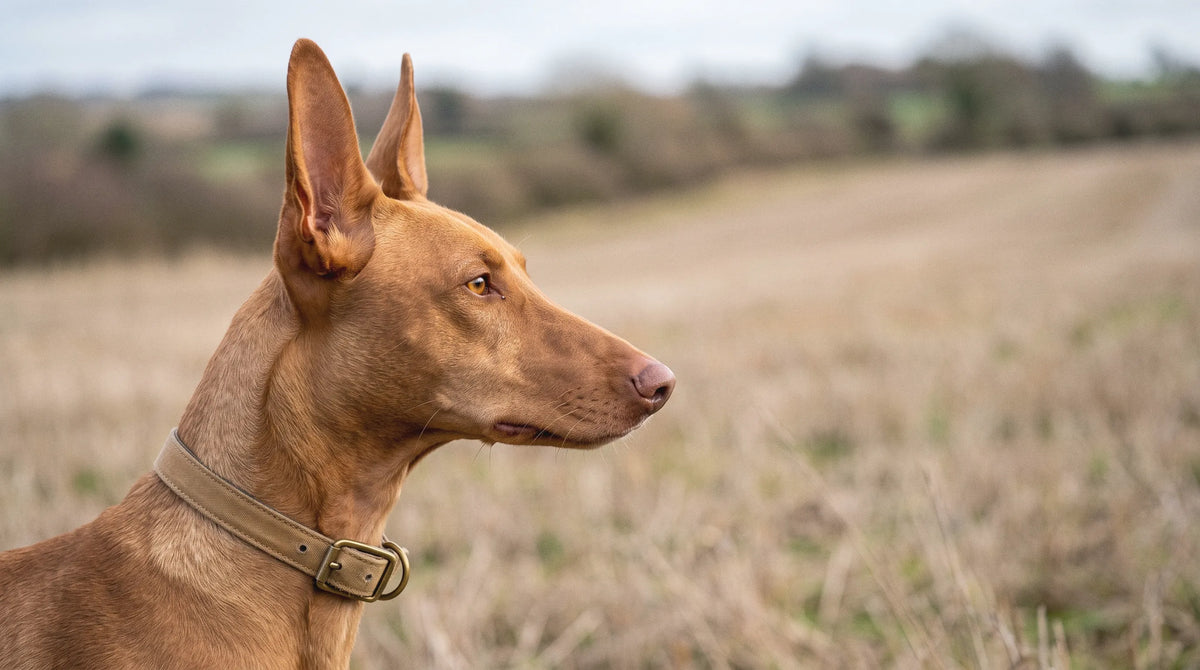
Pharaoh Hound
- Medium
- Hound Group
- Popularity rank 180
The Pharaoh Hound is an ancient Maltese sighthound, sleek and fast, with amber eyes and a habit of blushing when happy. Smart and noble, this medium-sized hound descends from Bronze Age coursers and stands 21 to 25 inches.
- Height
- 21 to 25
- inches at the shoulder
- Weight
- 45 to 55
- pounds, adult
- Life expectancy
- 12 to 14
- years, median 13
- Senior from
- 9.8
- years, about
Senior starts in the last quarter of a breed's expected lifespan, following the 2019 AAHA canine life stage guidelines. Individual dogs vary.
About the breed
- Temperament
- Friendly, smart, noble
- Coat
- Smooth, short
- Origin
- Malta
- Recognized
- 1983
2015: rank 171, 2016: rank 168, 2017: rank 174, 2018: rank 172, 2019: rank 163, 2020: rank 180, 2021: rank 176, 2022: rank 174, 2023: rank 176, 2024: rank 185, 2025: rank 180
The Pharaoh Hound is a sleek, aerodynamic coursing hound from Malta, bred for high-speed pursuit over rocky terrain. A medium-sized dog, it stands 21 to 25 inches tall and weighs 45 to 55 pounds, with a build made for graceful, fast movement.
Its short, smooth coat is a tight tan, with matching leather on the nose, ears, and eye rims. Distinctive touches include striking amber eyes, a white-tipped tail, the ability to smile, and a unique way of blushing when happy or excited. An admirer some 3,000 years ago wrote that its face glows like a god.
Friendly, smart, and noble in temperament, the Pharaoh Hound descends from Bronze Age hounds and was recognized as a breed in 1983. It typically lives 12 to 14 years.
Temperament and needs
Scored 1 to 5 for the breed overall. Individual dogs vary.
- Affectionate with family5 out of 5
- Good with young children3 out of 5
- Good with other dogs5 out of 5
- Openness to strangers3 out of 5
- Playfulness3 out of 5
- Watchdog and protective nature3 out of 5
- Adaptability3 out of 5
- Trainability4 out of 5
- Energy level4 out of 5
- Mental stimulation needs4 out of 5
- Barking level3 out of 5
- Shedding3 out of 5
- Grooming frequency2 out of 5
- Drooling1 out of 5
Care
The routines that matter most for this breed. Open one at a time.
Nutrition
The Pharaoh Hound does well on a high-quality dog food, whether commercially manufactured or home-prepared with your veterinarian's supervision and approval. Match the diet to the dog's life stage, whether puppy, adult, or senior. Some dogs gain weight easily, so watch calorie intake and body condition.
Treats help with training, but too many lead to obesity. Learn which human foods are safe for dogs and which are not, and keep clean, fresh water available at all times.
Feeding amounts vary with age, size, activity level, and health. A general rhythm:
- Adults: two to three small meals a day to help maintain energy
- Puppies: three to four small meals a day
Food packaging formulated to meet established canine nutrition standards gives guidance on serving sizes, and a slow-feeder bowl can promote better digestion and add enrichment at mealtime. For advice tailored to your dog, talk to your veterinarian.
A well-balanced diet provides all the nutrition a Pharaoh Hound needs. Supplements like omega-3 fatty acids can support skin and coat health, and glucosamine can support joint health. Consult your veterinarian before starting any supplements.
Grooming
Pharaoh Hounds do not need much grooming. Their short, smooth coats stay healthy with light daily brushing or a heavier weekly brushing, which removes dead hair and keeps the coat sleek and shiny. They shed, but not as much as many other breeds. A bath is only needed when the dog is dirty or smelly, which is rare.
Pay attention to the ears and nails. Clean the ears routinely with a veterinary-approved cleanser to help prevent infections, and ask your vet how often to do so. Trim the nails short enough that they don't tap on the floor when the dog walks. Provide regular dental care with at-home brushing and professional cleanings.
This breed typically does not have sensitive skin, and Pharaohs do not normally have a doggy odor. If an odor is present, check the dog to find the cause, and let regular checkups confirm no skin issues are developing.
Watch your dog's eyes and vision. If you notice cloudiness, discharge, or signs of trouble seeing, such as bumping into things or getting lost at night, contact your veterinarian. Pharaoh Hounds may also develop normal tear staining, which you can clean with a veterinary-approved wipe.
Exercise
The Pharaoh Hound needs a regular exercise schedule to stay happy and in good condition. A natural self-runner can be let loose to run 15 to 20 minutes twice a day, which calls for a securely fenced area of at least 50 by 50 feet with a six-foot-high fence (the height the breed club recommends). If that isn't possible, or if the dog isn't a natural runner, be prepared to walk it at least 20 minutes twice a day.
As a sighthound, the Pharaoh Hound was bred to hunt by sight and responds fast to small, moving objects or animals. That instinct is why it should never be off-lead in an open, unenclosed space: keep it in the fenced yard or on a leash anytime it is outside.
Pharaoh Hounds are playful and need engaging activity every day, from backyard play to organized dog sports. Pharaoh Hounds can also be very vocal, especially when excited or during play. An ideal home is an active, attentive family with a spacious, securely fenced yard.
Training
The Pharaoh Hound is quick to learn and eager to please. It takes well to positive reinforcement and picks up most obedience cues readily. Like many sighthounds, the breed is also bred to think and act independently, so it needs patience during training.
Recall is unreliable in this breed. Time and again, most Pharaohs, no matter how obedient, will not come when called once they are loose, which is the reason the containment described above matters so much. Train in an area with few distractions.
Pharaoh Hounds are good-natured, loving, and get along well with children and other dogs. They can also live with cats and pocket pets, but introductions should go slowly and carefully. Well-exercised Pharaoh Hounds are fairly laid-back at home.
Health conditions
4 conditions are documented for the Pharaoh Hound.
A predisposition is not a diagnosis. Ask your vet which screenings make sense for your dog's age.
- CancerCancer
- Eye ProblemsEye
- Hip and Elbow DysplasiaBone & Joint
- Patellar LuxationBone & Joint

Sources
Thank you. Your report is in, and we will check this page.
Longevity & Vitality soft chew
Longevity & Vitality is a daily chew built on five active ingredients. Each chew carries Turkey Tail at 600mg, Curcuvet® curcumin at 75mg, Quercefit® quercetin at 40mg, Fibalance® at 275mg and EpiCor® at 50mg. The daily serving follows your dog's weight, from half a chew to three.
