
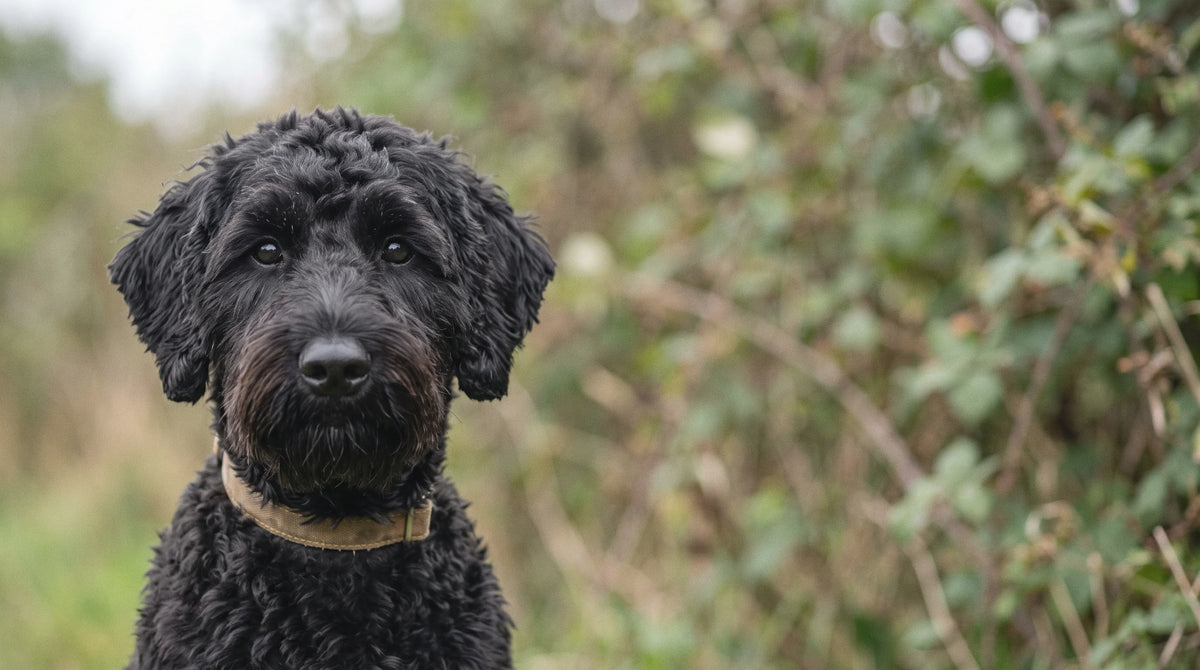
Standard Schnoodle
- Medium
The Standard Schnoodle crosses a Schnauzer with a Poodle at 50 to 60 pounds. It is level-headed and quick to learn, a dog of real size, and both the grooming and the bill for it grow along with the coat.
- Weight
- 50 to 60
- pounds, adult
- Life expectancy
- 10 to 16
- years, median 13
- Senior from
- 9.8
- years, about
Senior starts in the last quarter of a breed's expected lifespan, following the 2019 AAHA canine life stage guidelines. Individual dogs vary.
About the breed
- Temperament
- Intelligent, lively, loving, playful, sociable, trainable
- Coat
- Wavy, Curly, medium
The Standard Schnoodle weighs 50 to 60 pounds, sitting between the Miniature and the Giant in a cross where adult size depends on which of each parent's three sizes were bred. It is the middle of three and the one with the tightest published weight range.
Temperament reads the same at every size: smart, loving and level-headed, quick with cues, capable of a long list of tricks, and happiest in company. Schnoodles thrive surrounded by their people, children and other household pets, and a well-socialised one is a good family dog.
At this size the exercise requirement is real rather than nominal. A daily walk often meets a Schnoodle's needs, but a 55-pound dog with two energetic working breeds behind it will want more of one than a 15-pound dog will.
The coat runs between wavy and curly with some straighter individuals, in white, brown, red, cream, black or grey. It is a lot of coat and it needs near-daily attention. Lifespan is 10 to 16 years for the breed, with the larger sizes toward the lower end.
Care
The routines that matter most for this breed. Open one at a time.
Nutrition
One well-balanced food carrying an Association of American Feed Control Officials (AAFCO) nutritional adequacy statement for the life stage your Standard Schnoodle is in is the whole requirement. Ask your vet if you are choosing between brands.
Two meals a day for an adult; three or four for a puppy on a consistent schedule.
Watch the weight closely. Poodles and Miniature Schnauzers are both predisposed to diabetes and the cross can be, and hip and elbow dysplasia sit in this dog's background as well, so every extra pound on a 55-pound frame raises both risks.
Portions start with the bag's guide against ideal weight and get refined by your vet for lifestyle and health. A slow feeder or snuffle mat slows a fast eater. Supplements are unnecessary on good food unless your vet adds joint support for a diagnosed problem.
Grooming
A Standard Schnoodle carries a substantial coat and grooming it is a scheduled commitment: a professional appointment every four to six weeks, plus brushing at home a few times a week and preferably daily.
The texture is usually between wavy and curly, occasionally straighter, and the colour makes no difference to the work. All of them mat if left.
Skin care is light. Occasional baths keep the dog healthy, and abrasions, flaky skin or rashes are a reason to call your vet.
Wipe under the eyes with a damp cloth or dog face wipe when tear stains appear, and report cloudiness, redness or discharge. Clean the ears after every swim or bath so moisture does not sit in the canal, and watch for odour, redness or debris. Teeth daily; nails when you can hear them on the floor.
Exercise
A daily walk often meets a Standard Schnoodle's exercise needs, and at this size it should be a proper one. Both parent breeds carry plenty of energy, and a dog that does not get walked and played with turns the surplus into destruction.
Give it structure where you can. Agility and nose work suit a fast, level-headed dog, and swimming and dock diving play to the Poodle half. Fetch and tug-of-war cover the ordinary days.
Trick training counts toward the total. Schnoodles learn quickly and enjoy it, and thirty minutes of new work often settles this dog better than an extra mile of leash walking.
Many Schnoodles live well in apartments, and a Standard can, but it makes more use of a yard than the Miniature does.
Training
Two highly trainable parents make a Standard Schnoodle straightforward to teach. It picks up basic cues quickly and moves on to complex tricks without much difficulty, and positive reinforcement is all that is required.
Do the socialisation as a puppy. New people, animals, sounds and situations, met early and calmly, are what produce a polite adult, and at 55 pounds politeness is worth more than it is on a lap dog.
Well-socialised Schnoodles get on with children and other pets, and interactions between children and any dog should be supervised regardless.
Keep the training going into adulthood. The mental work is half of what keeps this breed settled, and a Standard Schnoodle with nothing to think about finds a project.
Health conditions
4 conditions are documented for the Standard Schnoodle.
A predisposition is not a diagnosis. Ask your vet which screenings make sense for your dog's age.
- Diabetes MellitusHormonal
- Elbow DysplasiaBone & Joint
- EpilepsyNervous System & Behavioral
- Hip DysplasiaBone & Joint
May inherit from parent breeds
These conditions are documented in the parent breeds, not in this cross itself. Carrier possible means the condition is recessive: a dog can carry it without showing signs. Ask the breeder which tests the parent dogs had.
- Addison's DiseaseMiniature Poodle, Standard Poodle, Toy Poodle
- BronchiectasisMiniature Poodle, Standard Poodle, Toy Poodle
- Chronic BronchitisMiniature Poodle, Standard Poodle, Toy Poodle
- CryptorchidismMiniature Poodle, Standard Poodle, Toy Poodle
- DystociaMiniature Poodle, Standard Poodle, Toy Poodle
Show all 17 conditions Show fewer
- Ectopic UreterMiniature Poodle, Standard Poodle, Toy Poodle
- Geriatric-onset laryngeal paralysis polyneuropathy, GOLPPMiniature Poodle, Standard Poodle, Toy Poodle
- HypothyroidismGiant Schnauzer, Miniature Schnauzer, Miniature Poodle, Standard Poodle, Toy Poodle, Standard Schnauzer
- Idiopathic epilepsy, including epilepsy of unknown originMiniature Poodle, Standard Poodle, Toy Poodle
- Immune-mediated thrombocytopeniaMiniature Poodle, Standard Poodle, Toy Poodle
- Intervertebral Disc DiseaseMiniature Poodle, Standard Poodle, Toy Poodle
- Noise aversion (noise sensitivity; noise phobia when clinically diagnosed)Miniature Poodle, Standard Poodle, Toy Poodle
- Puerperal hypocalcemia (eclampsia)Miniature Poodle, Standard Poodle, Toy Poodle
- Systemic lupus erythematosusMiniature Poodle, Standard Poodle, Toy Poodle
- Systemic lupus erythematosus-associated polyarthritisMiniature Poodle, Standard Poodle, Toy Poodle
- Tracheal CollapseMiniature Poodle, Standard Poodle, Toy Poodle
- Tracheobronchial Collapse and BronchomalaciaMiniature Poodle, Standard Poodle, Toy Poodle


Longevity & Vitality soft chew
Longevity & Vitality is a daily chew built on five active ingredients. Each chew carries Turkey Tail at 600mg, Curcuvet® curcumin at 75mg, Quercefit® quercetin at 40mg, Fibalance® at 275mg and EpiCor® at 50mg. The daily serving follows your dog's weight, from half a chew to three.
